Home » Posts tagged 'Grand Palace'
Tag Archives: Grand Palace
Royals & Ruins
Southeast Asia Travel Day Twelve: Today was the second of our most anticipated tour days of this vacation. One day in Bangkok is not nearly enough time to see everything, even on a surface level. Bangkok has such a rich cultural history with many historic landmarks dating back centuries in time.
A couple months ago, Michael and I found ourselves unable to decide between two of the excursions that were offered; wanting to visit the main attractions of both tours. It took some time but with the help of our travel agent, we were able arrange a private tour that allowed us to see both and then some.
Instead of breaking today up into separate posts, I’ll just hit the highlights. At some later point I’ll try to add another photo essay (post) like I plan to do with the Angkor photos.
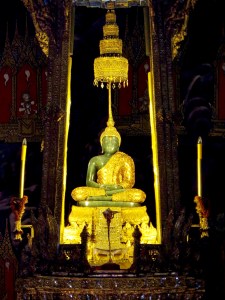
The Emerald Buddha.
Grand Palace. The Grand Palace has been the residence of the Kings of Siam since 1782. The incredible maze of buildings in the complex feature intricate and highly ornamented details that are simply breathtaking.
One of the most famous attractions at the palace is the temple, Wat Phra Kaew and the Emerald Buddha. Emerald is used to represent the color of the statute that is actually made of jade.
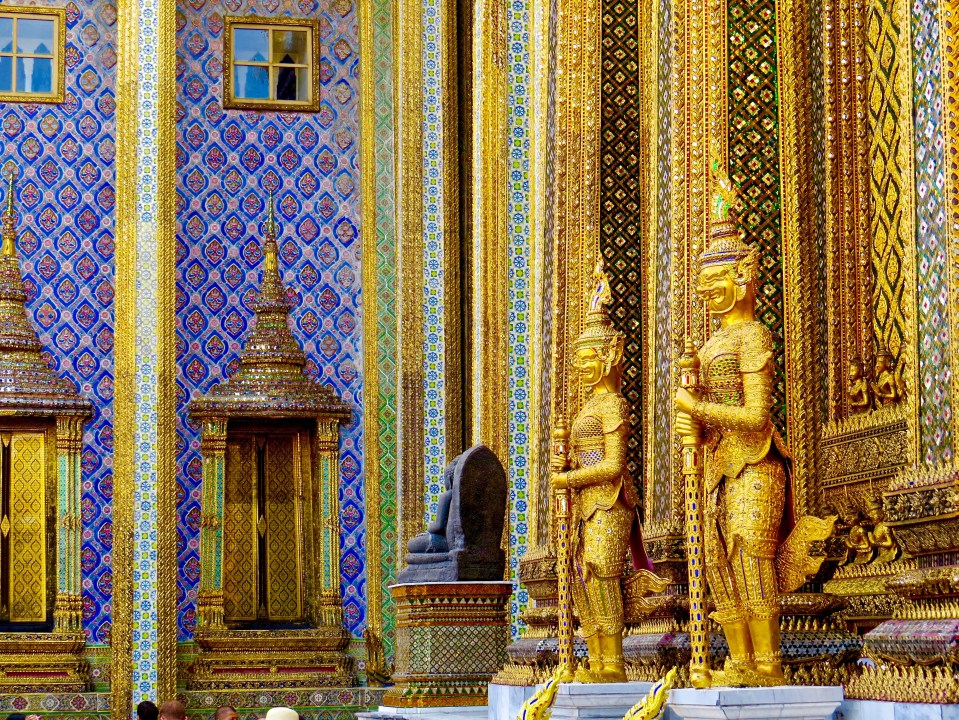
Stunning ornamentation at the Grand Palace.
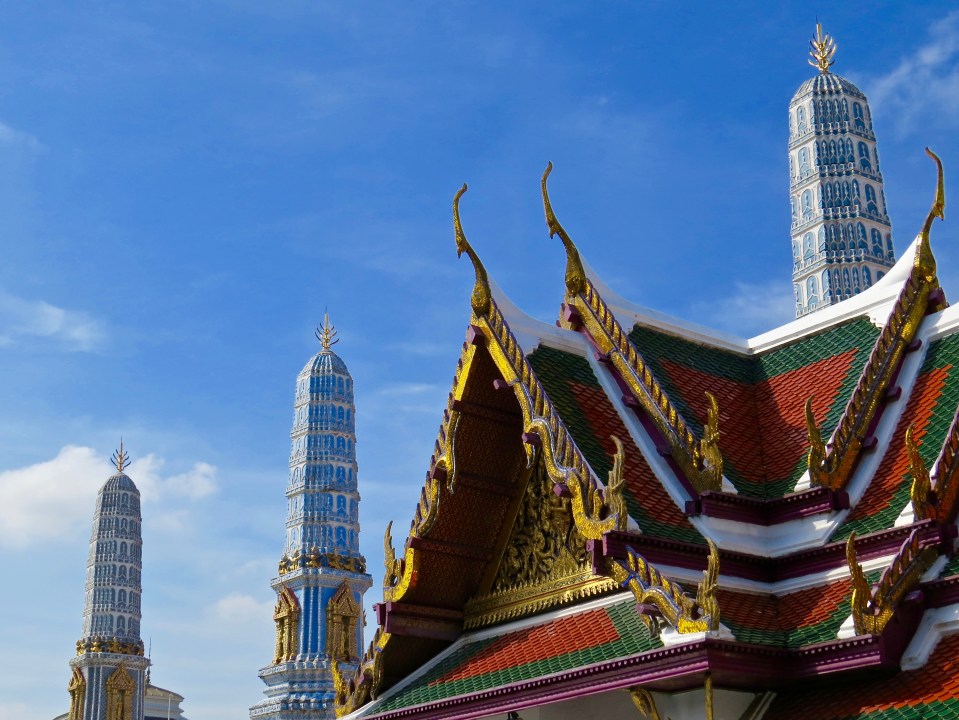
At the Grand Palace.


At the Grand Palace.

At Bang Pa-In.
Bang Pa-In Royal Palace. The Summer Palace dates back to 1632. Most of the existing buildings were built by King Chulalonghorn; son of King Mongkut of The King and I fame. These newer buildings reflect Victorian architecture in style.
We buzzed around the site on a golf cart in a relatively short amount of time. In addition to several of the buildings, we stopped at the Aisawan Thyphia Art Pavilion because Michael wanted to feed bread to the fish and turtles in the pond.
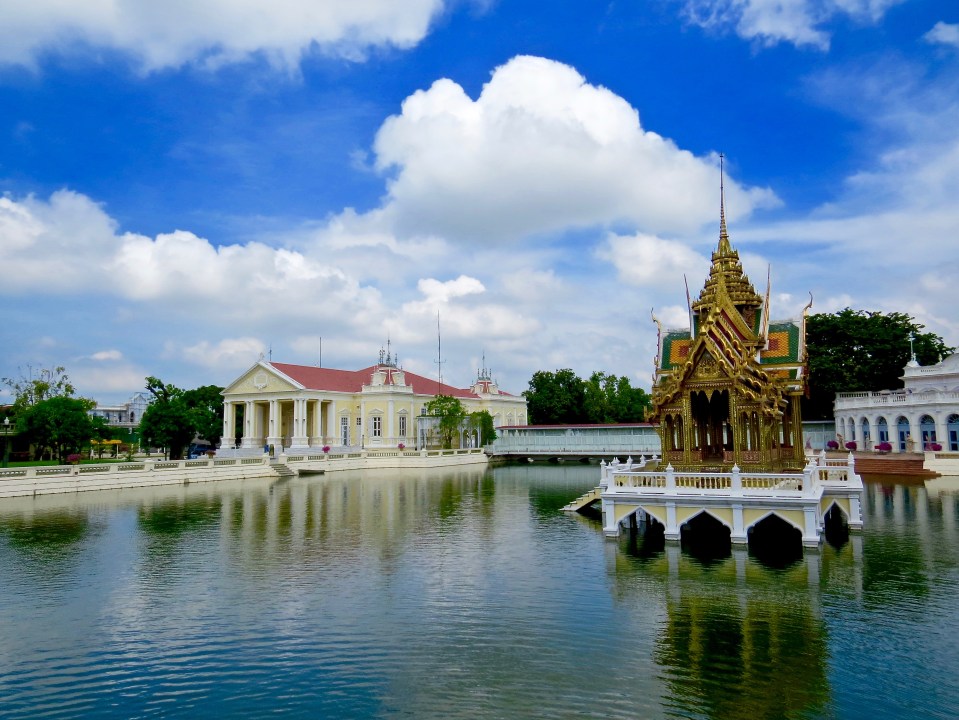
The royal residence and the Aisawan Thyphia Art Pavilion.

At the Summer Palace, Bang Pa-In.

Michael and I at one of the temple ruins in Ayutthaya.
Ayutthaya. There are at least 18 temple ruins in Ayutthaya, north of Bangkok. At one point in history, it was the capital of the Kingdom of Siam (Thailand). We had time to visit the ruins of five temples plus one temple that is still in use. Unlike the temples in Cambodia, the Thai temples are primarily composed of brick covered in stucco. Surprisingly, even with the small bricks, most of the temples here took a shorter time to build than the stone Angkor temples of Cambodia.
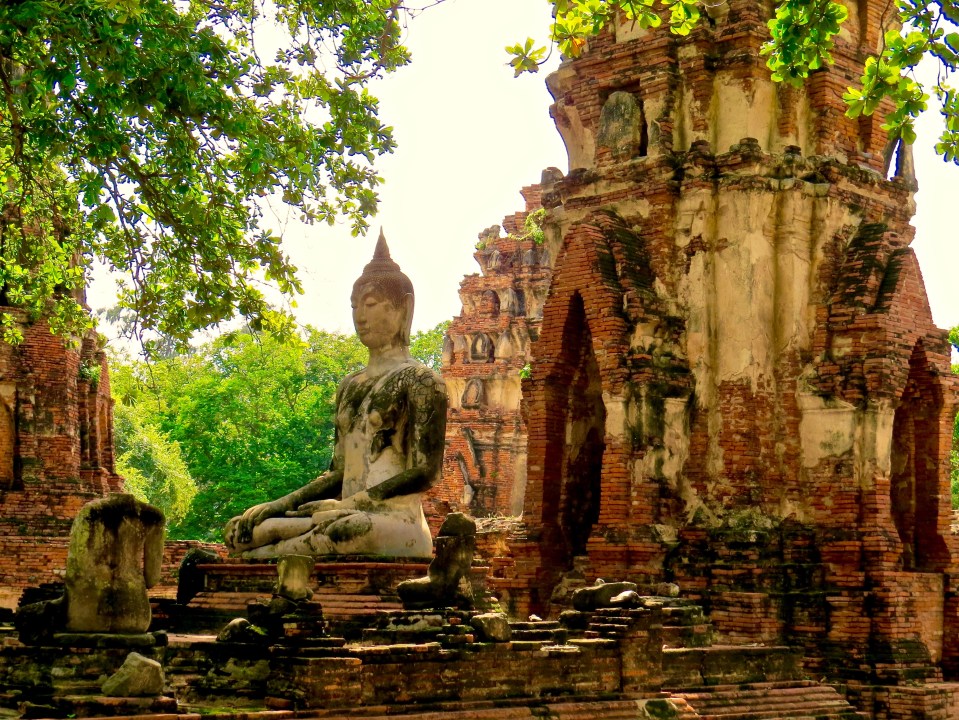
Buddha among the ruins at Wat Mahathat.

Temple ruins in Ayutthaya.

Buddha engulfed by tree roots.
At Wat Mahathat, one of the must-see curiosities is a Buddha head peering from surrounding tree roots. There are several theories but no clear explanation for how this came to be.
The Reclining Buddha. Also located in Ayutthaya, The Reclining Buddha at the ruins of temple Wat Lokayasutharam is an amazing piece of history. Like many of the temples, it is made of brick covered by plaster (stucco) and is 138 feet long.
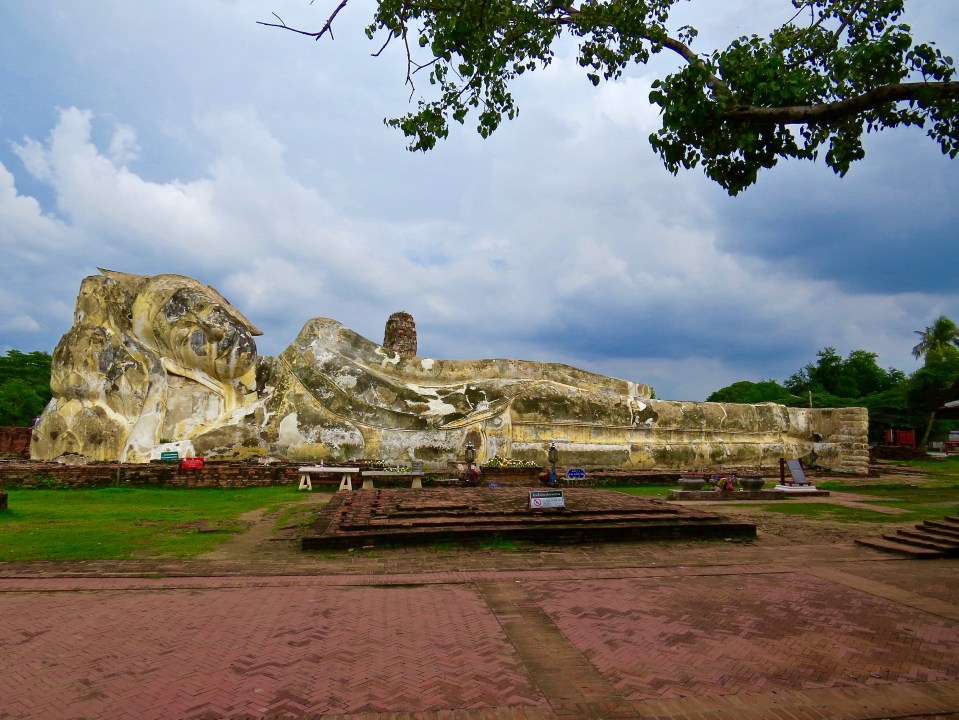
The Reclining Buddha.
Playbill After Dark. With everyone on 8 to 10 hour tours of Bangkok, the only event scheduled onboard was Broadway Buzz at 10:30 PM. Seth Rudetsky used the opportunity to tell Broadway stories and gossip– initiated by prompts from the audience.
Today was completely overwhelming and exhausting. I’m so glad that tomorrow is a day at sea. Bangkok is an impressive city that really requires at least three or four days to adequately explore. I’m just glad we were able to see as much as we did. I’d certainly like to go back but there’s still so much of the world we want to see.
Baltic Cruise Day Five: Peterhof Palace & Saint Petersburg Cathedrals
Another big day, we’d scheduled two excursions, “Peter the Great’s Grand Palace- Peterhof” and “Saint Petersburg Cathedrals“. By this point on our trip, we’d realized we were only averaging about four hours sleep a night and were happily exhausted. I have to say, I became quite good at taking cat naps on the buses to and from our destinations.

The Peterhof Grand Palace.
In the morning, we headed to Peterhof Palace for what was to be one of the highlights of our trip. Peterhof is a not-to-be-missed destination. If you are visiting Saint Petersburg, Russia and are short on time, I’d definitely choose Peterhof over Catherine Palace. Both are beautiful and opulent but in addition to the Grand Palace, Peterhof has the exquisite Grand Cascade and gardens that are a sight to behold.

The Grand Cascade from the palace, before the fountains were turned on.
We arrived early at Peterhof, which was important for two reasons: 1) We were one of the first groups to tour the Grand Palace before it opened to the public, and; 2) We were present when the fountains were turned on, on the Grand Cascade.
Like Catherine Palace, Peterhof was built in the early 1700’s and sustained substantial damage from the German invasion during World War II. It has been fully restored, though renovations are ongoing.
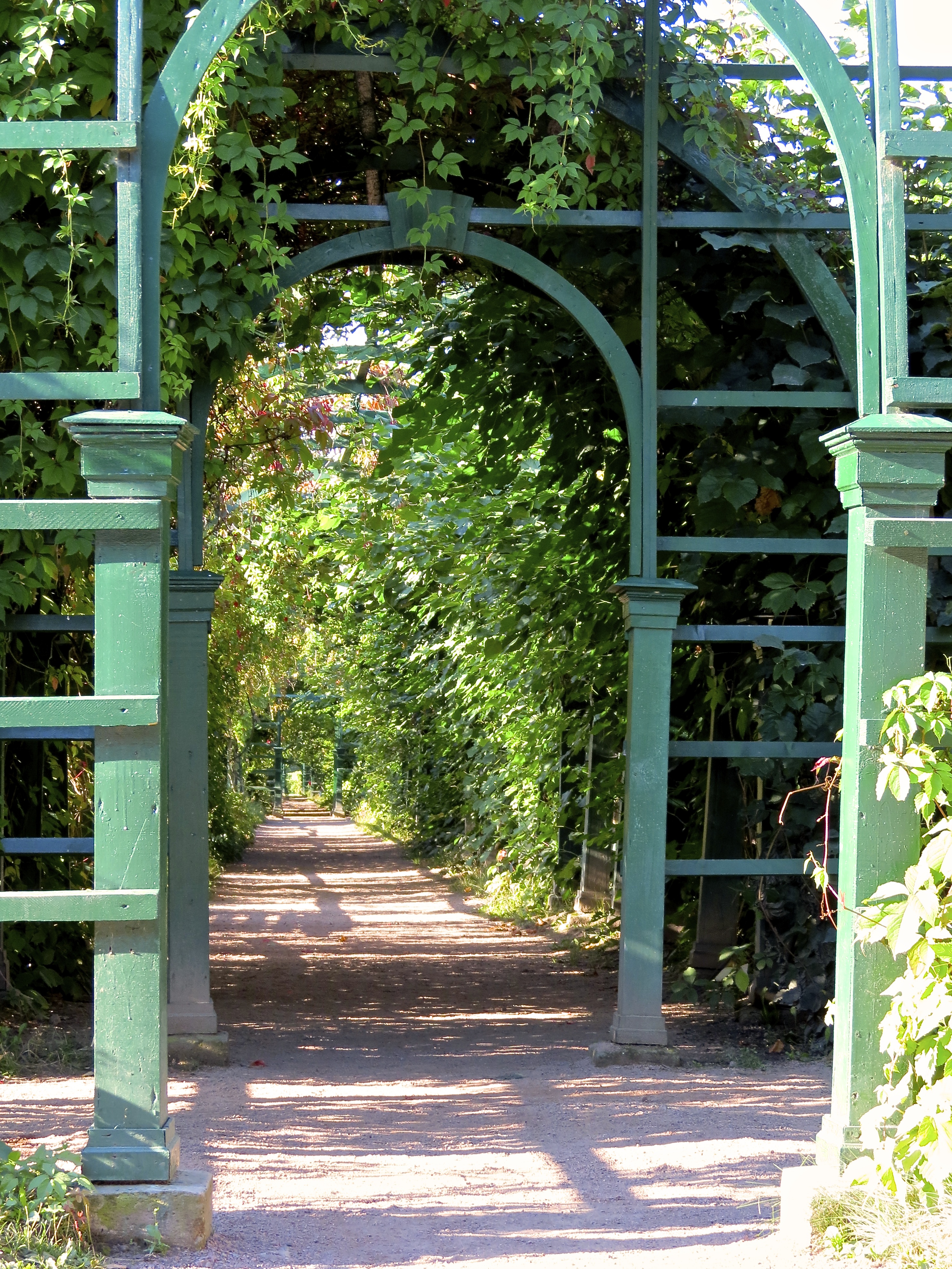
Exploring the gardens at Peterhof.
The interiors and gardens were both heavily influenced by French style. There is an overabundance of silk wall coverings, ornamental plaster designs and gold leaf detail in every room. Unfortunately, photography was not allowed inside the Grand Palace.
It took about an hour to walk through the palace and then we had about an hour to explore the gardens before meeting back at the Grand Cascade to see the main fountains activated.
It was a sunny day and about 70 degrees. Perfect for a beautiful, relaxing walk.
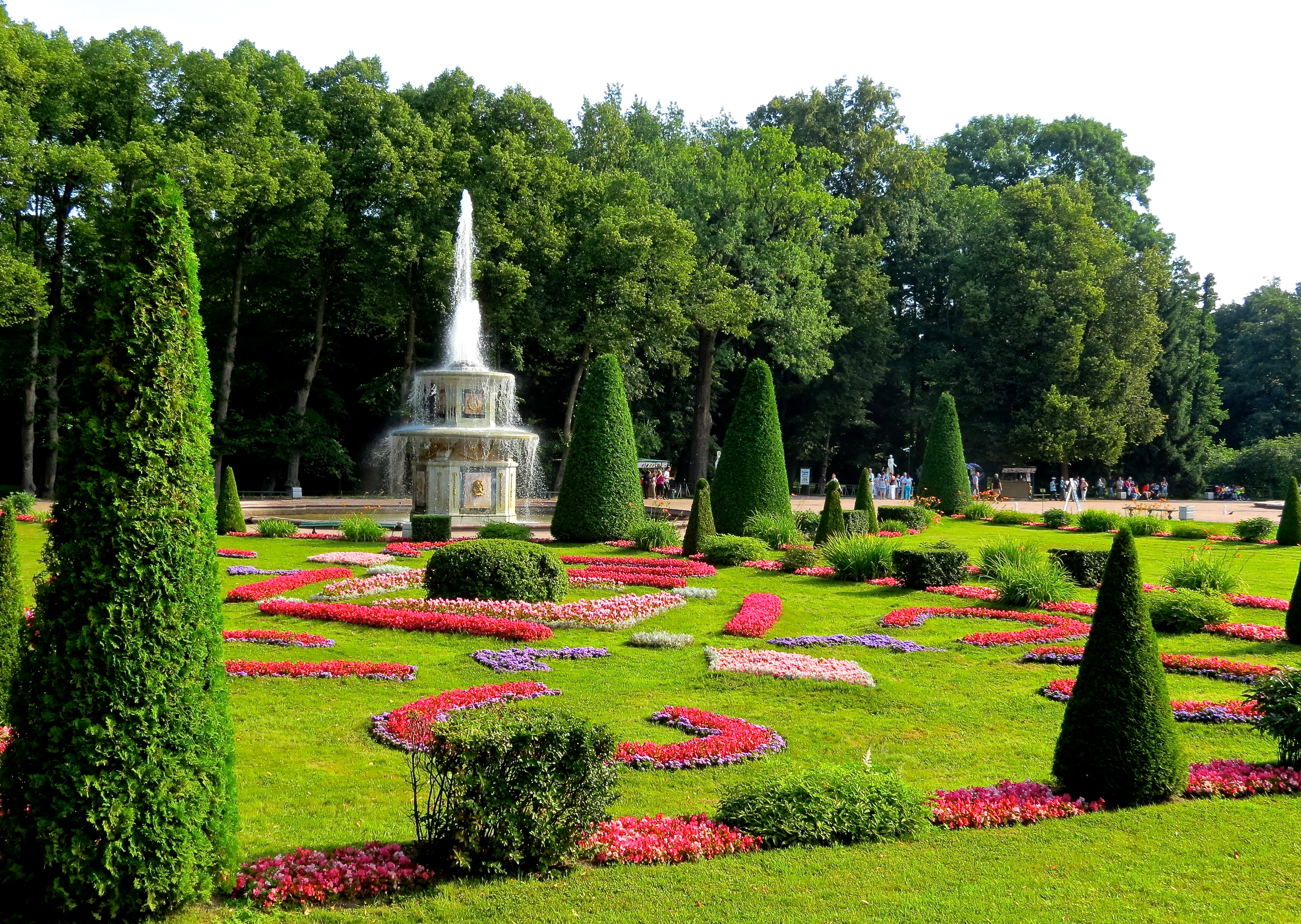
The formal, french-style gardens at Peterhof.
Back at the Grand Cascade, we chose to watch the fountains from a lower corner where there were less tourists crowding the area. Aside from the beauty, the big attraction to the fountains is that they are all gravity-fed. No pumps are used to power the many fountains. It’s not only an amazing feat of ingenuity, it’s visually stunning.

Peterhof Grand Palace and Grand Cascade as the fountains are being activated.
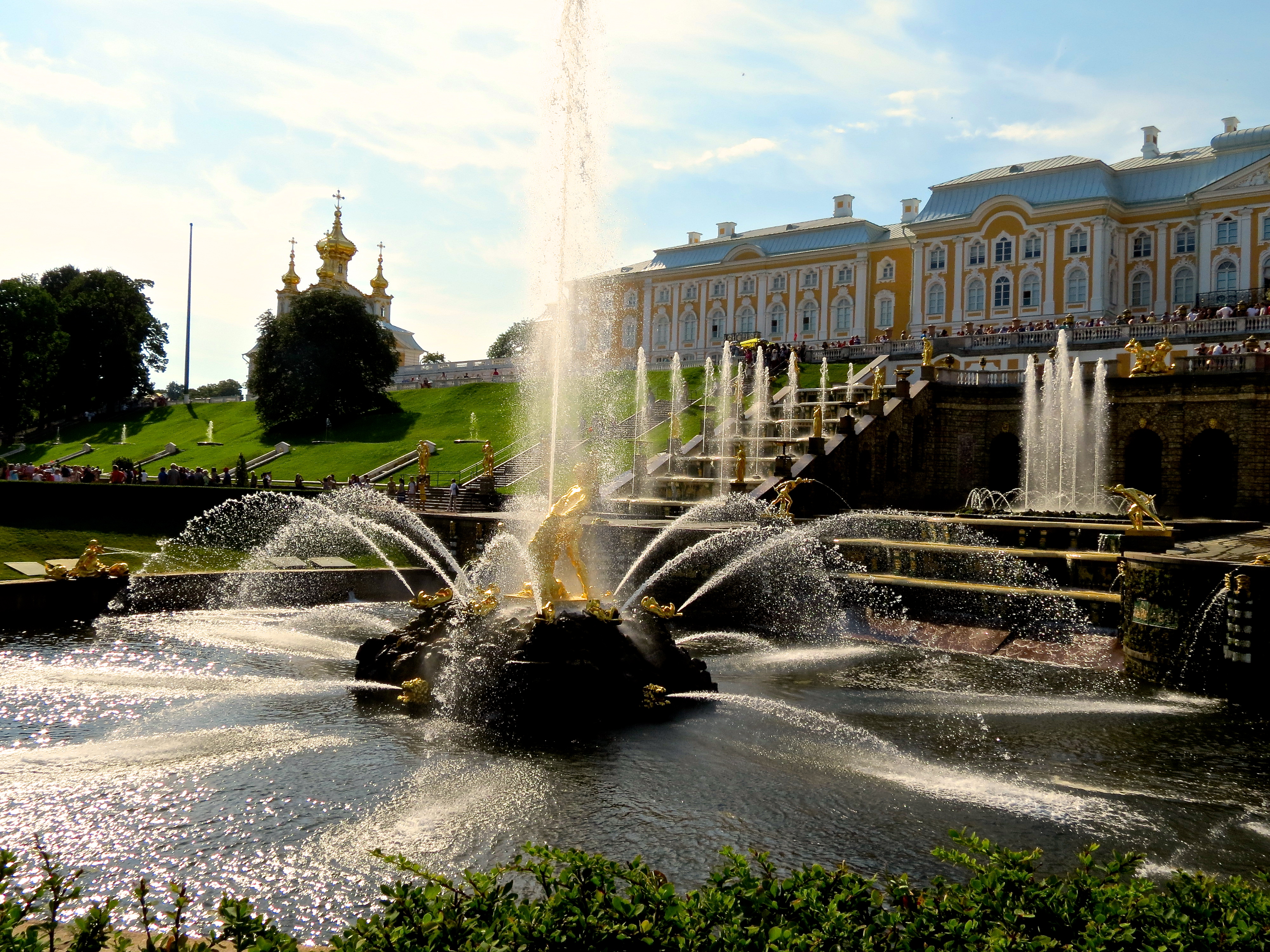
The fountains of the Grand Cascade.

The statues on the Grand Cascade at Peterhof.
As if the sights of Peterhof weren’t enough stimulation for one day, we had enough time to return to the ship for a quick lunch before meeting our group for a tour of some of the world’s most beautiful cathedrals. I’m just going to focus on two: Saint Issac’s Cathedral and Church of the Spilled Blood.

Saint Issac’s Cathedral, currently under renovation.
Saint Issac’s Cathedral is the largest Russian Orthodox cathedral in Saint Petersburg. It took 40 years to construct, opening in 1858. I found it interesting to know that the Gold dome was painted over in gray during World War II to deter detection. There are still pock marks from enemy fire, visible on the the large exterior columns.
The interior is amazing. The color and detail are glorious.

The ceilings of Saint Issac’s Cathedral.

Facing the altar in Saint Issac’s Cathedral.
Most commonly referred to as Church of the Spilled Blood, the Cathedral of the Resurrection of Christ is also known as The Church of the Savior on Spilled Blood.
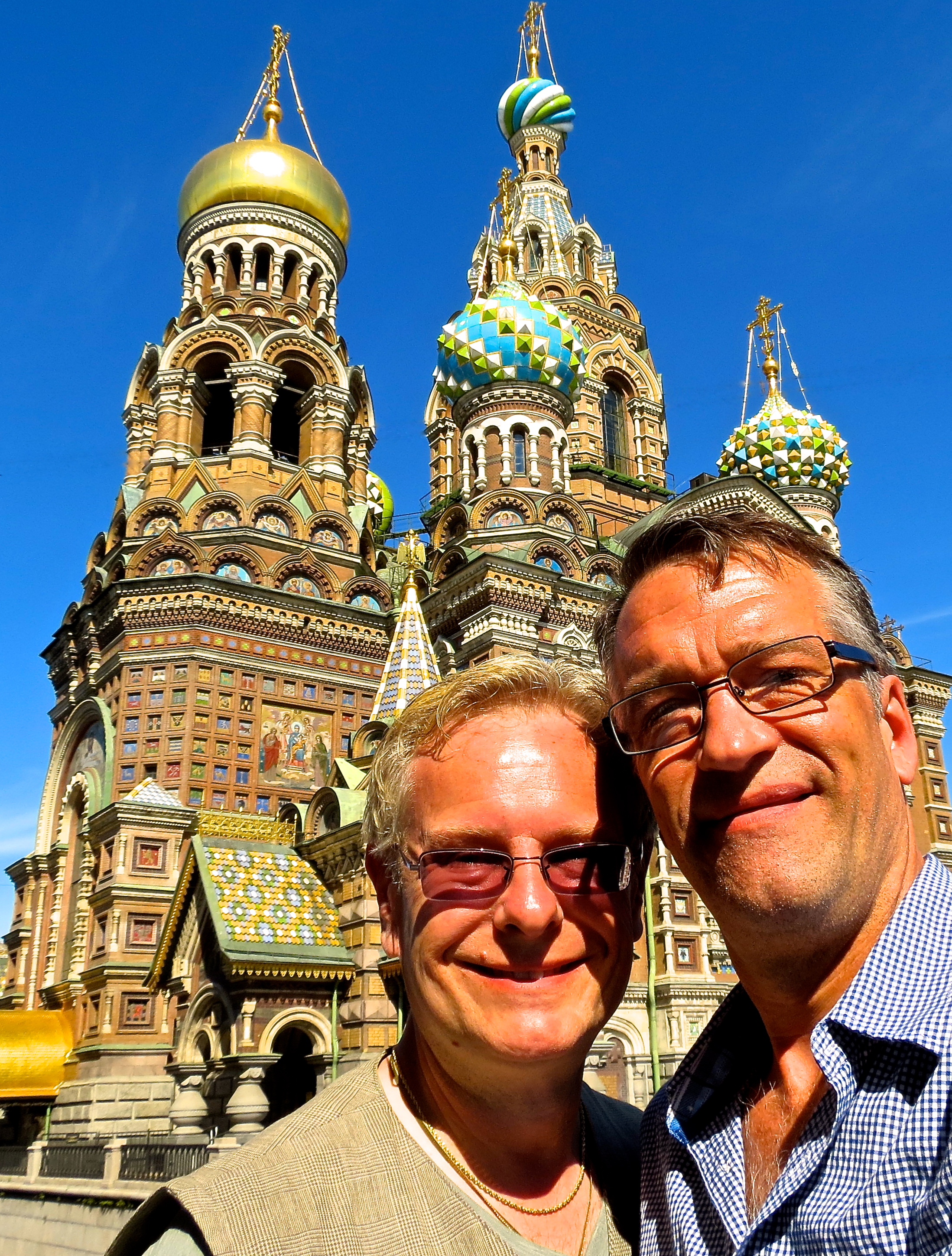
Michael and I at the Church of the Spilled Blood.
This was one of my two must-have picture spots of Michael and I on our vacation. (The other was the Berlin Wall.) When we visited and toured the interior, it was turning overcast, so I was grateful we had stopped here briefly the day before and I was able to take some exterior pictures.
The Church of the Spilled Blood is visually recognizable by its ornate, colorful onion domes. I can’t say why I find them so appealing, I just find myself drawn to them.
I wasn’t prepared to be so overwhelmed by the interior. The entire wall surfaces are covered in tiny mosaic tiles. It’s so difficult to comprehend the amount of work, time and planning that went in to the magnificent design. I’m at a loss for words to describe its beauty.
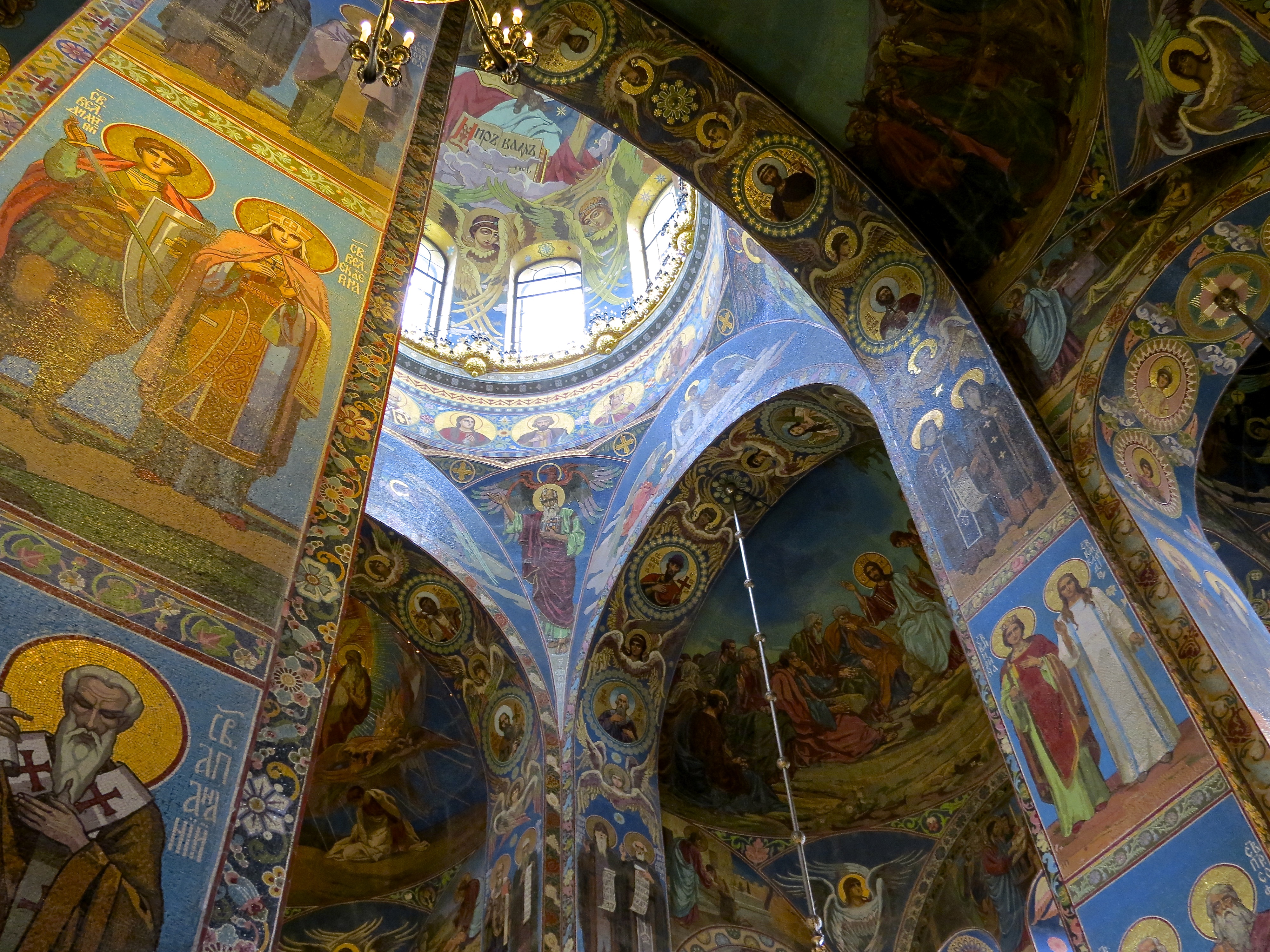
Looking up in the Church of the Spilled Blood.
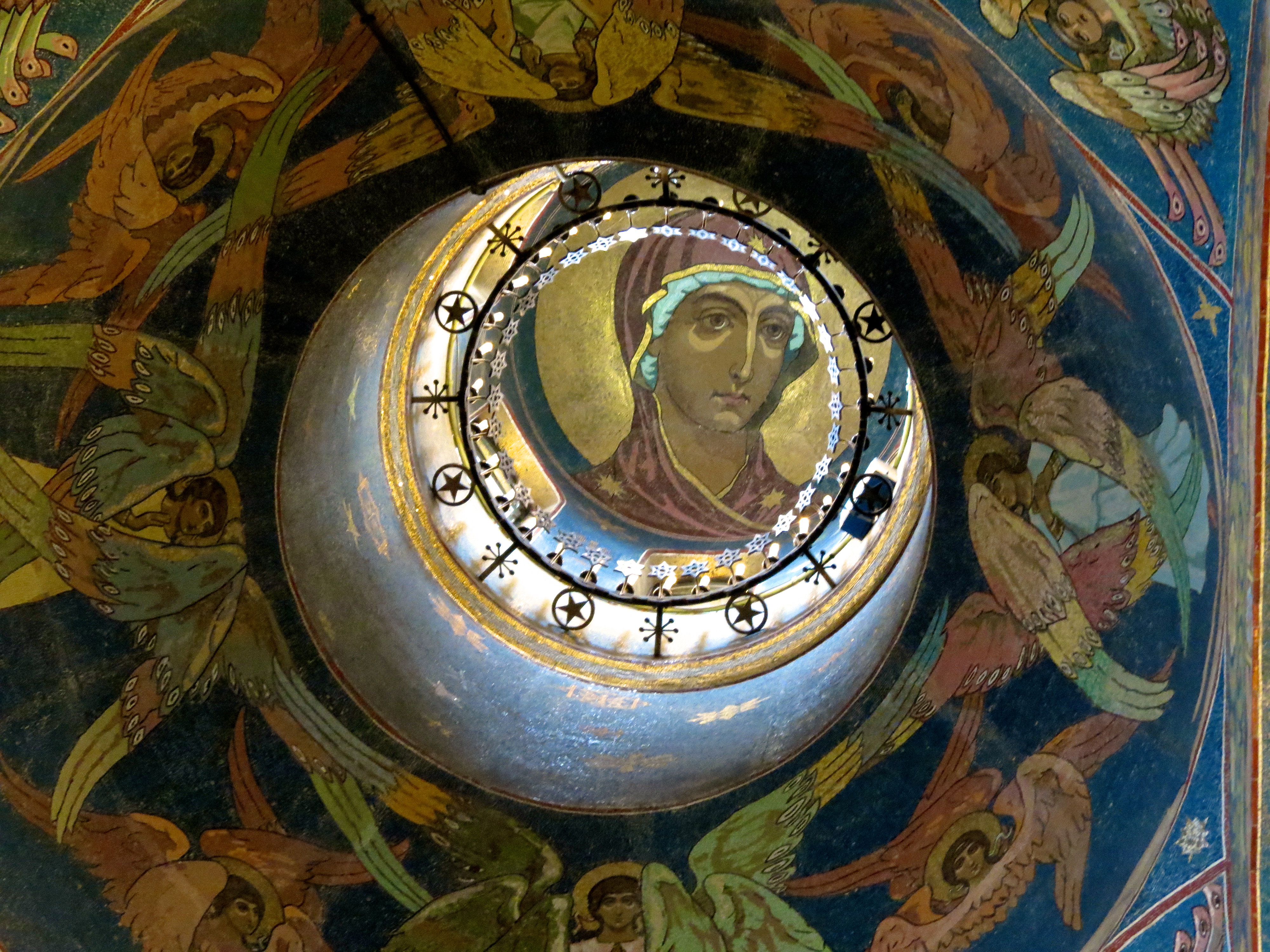
A figure is depicted inside each of the domes.

Church of the Spilled Blood.
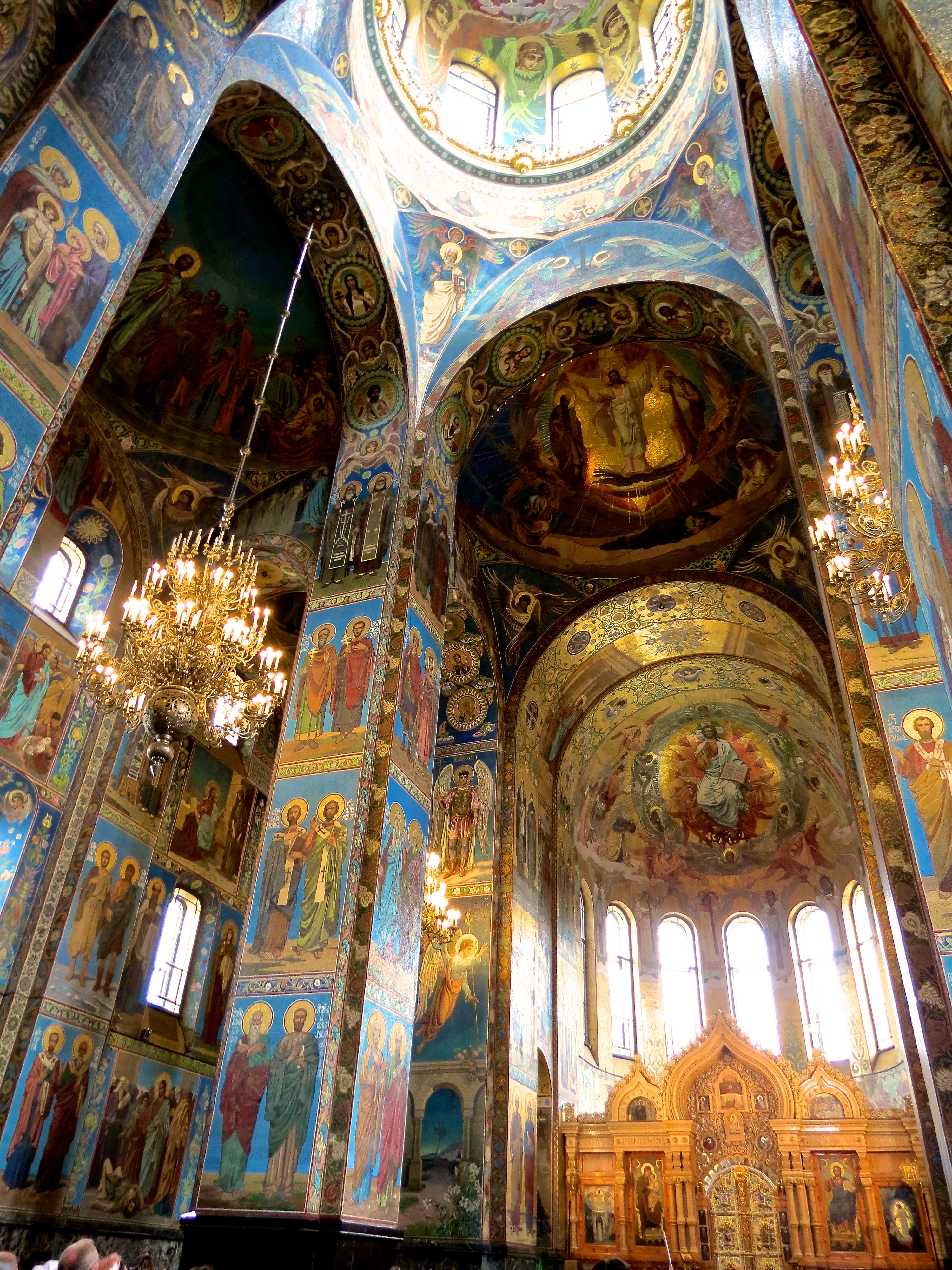
The Church of the Spilled Blood is one of the most magnificent places I’ve ever visited.

The onion domes of the Church of the Spilled Blood.
What an amazing day! I’m all out of adjectives to describe it all. I just feel so lucky and blessed to be able to have witnessed all this beauty first hand. It certainly brings new meaning to ‘trip of a lifetime’. And, we still had one more day in Saint Petersburg.
 How Do You Measure 525600 Minutes?