Home » 2013 (Page 2)
Yearly Archives: 2013
Decking The Halls For The Holidays: Part One- Getting Ready
I thought I’d share a series of posts on one of my favorite pastimes: Decorating for the Holidays. From trees to garlands to centerpieces– for some, decorating can be a daunting task. Whether you’re a novice or a pro, and whether you love or dread decorating, I hope you’ll find a few of my suggestions helpful as you begin adding a little magic to your home.
 Here we are, one week before Thanksgiving and if you haven’t already, its time to start thinking about decking the halls. I want to start with a few tips that might help spark some creativity before you either haul out the old decorations stored in the attic or hit the stores in search of the perfect holiday items.
Most important: Let your creative juices flow! Don’t be afraid to think outside the box. Express Yourself!
Best Tip of the Day: Use Ribbon and Picks & Stems* to hide imperfections and add the finishing touches to your holiday decor.
Five Things to Consider Before You Start:
1. Cost– It might be a good idea to have a budget of how much you want, or can afford to invest in your decorating. It’s very easy to spend more than you intend if you don’t nail down an amount as you start your planning.
Do a little research before you buy anything. What may seem like a simple idea could end up costing you a lot more than you anticipated. Ten ornaments are not going to decorate your whole tree and three strings of lights aren’t going to be bright enough. Be prepared to purchase more than you originally thought you’d need or have a backup plan if you run out.
You can save a lot of money on future decorating by shopping the after Christmas sales where you can usually save 70-90% off retail. In recent years, a lot of retailers are marking down decorations by 50% a week or two before the holidays just to clear the shelves.
Some stores have sales running now. If you wait until after Thanksgiving weekend, you are probably going to pay premium prices. AND– the longer you wait, the smaller the selection.
 For the Christmas Fanatic— Keep your eyes open year round for items that might be used seasonally. I’ve found lots of end-of-season clearance bargains where I can find large quantities of items for pennies on the dollar. I have a Victorian house so it’s easy for me to incorporate spring, wedding, and other specific floral bunches and floral picks & stems* into my holiday decorating. I also have at least one Christmas tree that I decorate with a natural or woodsy theme, making many fall clearance items a perfect addition.
2. Storage– Be realistic about how much space you have for storage. Many holiday decorations are fragile and require careful packaging and storage which takes up even more space. Christmas trees take up a lot of space. I know a lot of city apartment dwellers still prefer buying live over investing in an artificial tree because of limited storage space.
3. Time & Space– Decorating can be time consuming. It can also be very relaxing way to spend your free time if you aren’t in a rush. If this is your first year decorating or you are trying something new– allow for more time. I suggest taking the time to get organized and sort out what you have before you actually start decorating. I always find I’m missing a box or have less of something than I remembered. There’s nothing worse than getting deep into a project and discovering you don’t have enough to finish. When computing your time equation, don’t forget the time you’ll need to take it all down after the holidays are over and store it away.
You can do wonderful things in a smaller space if you put some thought into it. A small tabletop tree in a loft can be as equally effective as a 10 foot tree in a larger home. A few small additions to your space can do wonders to create that holiday atmosphere.
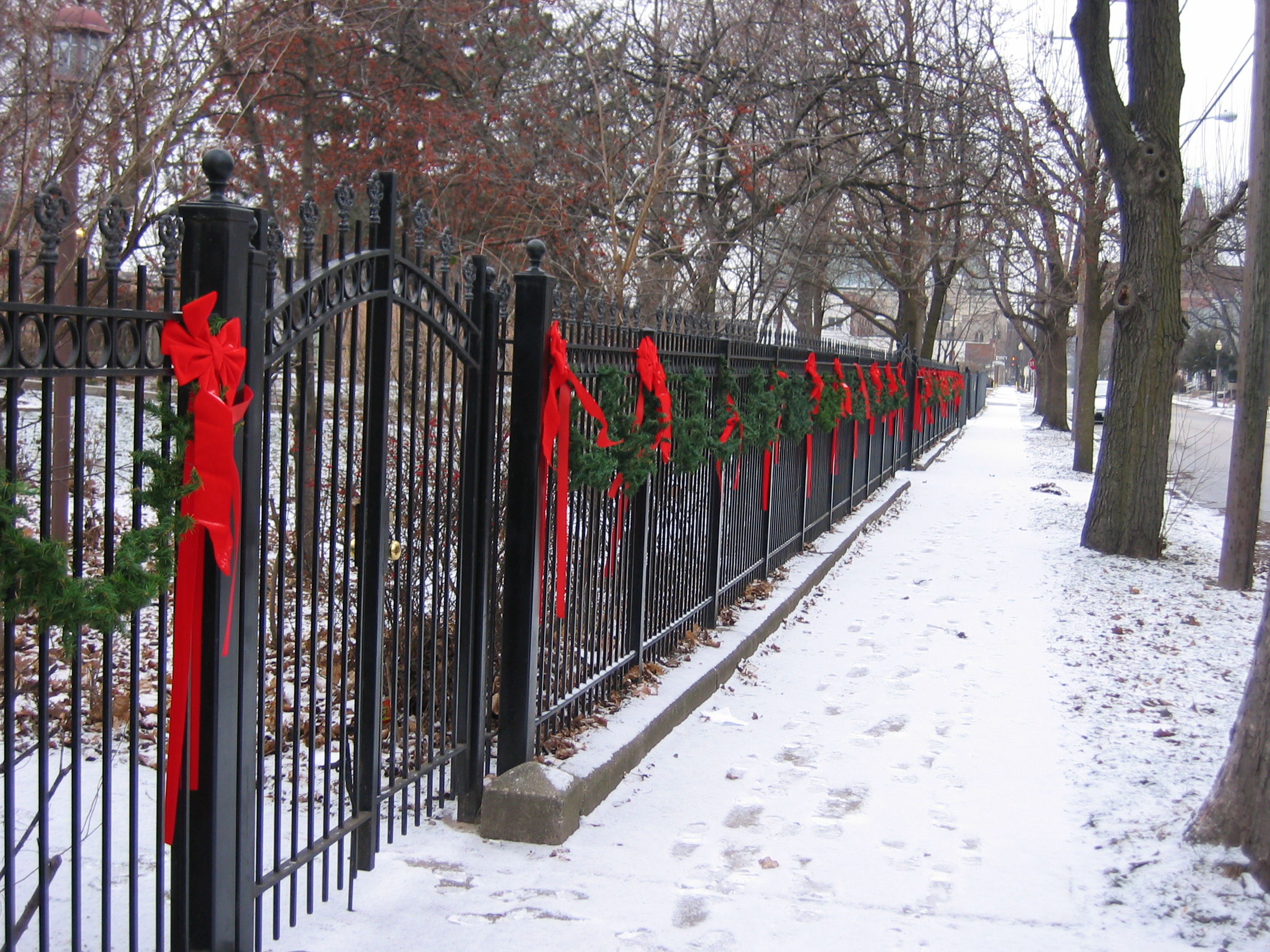 4. Theme– Are you going to have an individual room theme or overall theme to your decorating? A color theme, perhaps? Themes are great but can be limiting, especially if you are on a tight budget. Keep in mind that trendy styles and colors might not satisfy you in future years. Consider what will work best with your year-round decor and lifestyle first.
When considering color, remember green ornaments don’t stand out on a green tree. Also, colored lights can be a challenge. I found years when simple red or green Christmas lights were impossible to find! Make sure you have enough before you start!
5. Purpose or Repurpose– As much as I love new decorations, I find it’s more fun to find new uses for old ones. There are elements of my decorating that stay the same from year to year and others that I always change, at least make alterations. I often use items in my holiday design that aren’t specifically intended for Christmas decorating.
Try to incorporate items you already have into your holiday look. The everyday items on your mantle or table don’t necessarily have to disappear until January. Unless you want something completely different, try adding a little garland, artificial poinsettias, a few ornaments… and you can achieve the same festive look.
Holiday decorations that may start to look tired and worn and don’t stand up well on their own, may still work perfectly as part of a larger grouping or display.
Keep in mind that effective Holiday Decorating does not necessarily mean you need to completely transform your space into something different. Try simple accessories and you may be able to achieve the same results. No matter how elaborate your decorating plan becomes, don’t let it become so overwhelming that you aren’t able to take the time to relax and enjoy the beautiful atmosphere you’ve worked so hard to create.
*Picks & Stems– Artificial flowers, berries, fruit and baubles used to accent floral arrangement.
Next Up: Selecting and Prepping Your Christmas Tree
Workplace Survival: 12 Rules To Protect Yourself
I finally broke down this morning and filed for unemployment. It’s been three months since I was notified that my contract would not be renewed and I had hoped I would have secured a new job by now. I have some good prospects but for now, the search goes on.
I promised in an earlier blog to talk a little bit about what led up to my release. I’ve waited until now because I didn’t want my words to be fueled by hurt or anger. I finally decided I would rather do it in a positive way and give some advice that might help others who find themselves in similar situations.
Here are my 12 suggestions that might help you survive in the workplace:
Rule #1 Don’t be too good at your job or know too much.
Rule #2 When a superior says, “Don’t Worry” — watch out.
Rule #3 Climbers don’t look down. They don’t have time for you.
Rule #4 Open Door policies can get one slammed in your face.
Rule #5 Keep records and be able to account for everything.
Rule #6 Never feel that your job is secure.
Rule #7 Change isn’t always good but don’t fight it.
Rule #8 Learn to deal with incompetence.
Rule #9 Don’t expect to be treated fairly. Even good people behave badly.
Rule #10 Right doesn’t always win.
Rule #11 Don’t expect rewards for loyalty.
Rule #12 Rules (and policies) are made to be broken (and will be).
Bonus– Rule #13 Work to live, don’t live to work.
Holding a job and being successful at it, isn’t about showing up on time and doing what is expected of you. It’s not about your education or knowledge and expertise. It’s not about your dedication or going the extra mile. Those are all givens. To be successful, you have to be constantly aware of two things: company politics and money. You have to keep your eyes open and your ears to the ground if you want stay aware of what’s really going on behind the scenes.
You, as an employee, are expendable. Simple as that. What makes you important is how you fit into the political and social climate of the workplace and what impact you have on the bottom line.
— I’ll address and explain this set of rules, my experiences and their importance in future blog posts.
Today I do want to explore my Bonus Rule– and I know you’ve heard it before:
RULE #13 WORK TO LIVE, DON’T LIVE TO WORK
It sounds simple enough and yet it is probably the hardest rule to follow. I have always struggled with this, even with jobs that weren’t necessarily in my main field of interest. It is too easy for many of us, to become so vested in our jobs that it’s hard to let it go when we punch out at the end of the day. Unless you own your own business– and even then, you have prioritize what is really important– living a good life and hopefully, sharing it with other people.
Why do we work? To pay bills, provide for families, plan for the future… to live.
Remember that the business doesn’t care about you. Unfortunately, in many cases, neither do employers. You may think they do– but if you step back and look at it clearly, you’ll realize you are there to perform a specific function. You are only one small ingredient in the recipe of success. Being responsible and taking ownership in your job is a wonderful thing. You have to learn to set limits. This is especially difficult when you are doing something you love. When work becomes the only thing, it’s probably time to move on.
I personally have lost years of friendships, family gathering and missed opportunities to experience and enjoy life– either from the necessities of the jobs I’ve held, or by my own drive. You can’t buy back that time.
You may find it necessary to put work first— but at what cost?
That is the most important question.
I Am the Captain of My Soul
 I was having a conversation with my parents today that bounced from life to travel and politics to education. We don’t talk on the phone often but when we do, we’re usually all over the map as we catch up and try to solve all the world’s problems. After I hung up (Do we still say that with cell phones?), this phrase popped in my head:
I am the master of my fate,
I am the captain of my soul.
My fourth grade teacher, Mr. Hill made my class learn the whole poem and recite it, day after day, in class until we all had it memorized and could repeat it by memory on our own. It was the first thing I can recall being asked to memorize and I spent hours at home reciting it from the tattered mimeographed page we’d been given.
Before I looked it up, besides the above phrase, all I could remember was something about a gate and the line, ‘black as the pit from pole to pole’. I’m not even sure I ever knew the title of the poem until now. I just remember Mr. Hill telling us we should live our lives by this. That, we were in charge of our lives and responsible for how we lived.
Mr. Hill was a big, strong African American man teaching elementary school in Florida in the 1970s. I’m sure that, in itself, had its challenges. His larger-than-life presence was enough to scare us at that age and he was the only male teacher I had until middle school. He was both nurturing and warm but he had the ability to scare the bejesus out of you with his intensity. He was also one of the best teachers I had in all my years of public schooling.
I remember he loved math. He taught us well — not to memorize numbers and equations but to understand how and why the equations worked. He made us all feel, no matter how much we struggled, that we could all learn. We were all individuals and our feelings and our experiences mattered. He never treated us like a bunch of bothersome kids he was stuck with for an entire year.
Mr. Hill taught us our subjects and he also related them to life. Which bring me back to the poem.
The poem is William Ernest Hensley’s Invictus. As it turns out, it is not only considered to be one of the best poems ever written by many, it is also considered highly controversial in some circles.
Invictus
Out of the night that covers me,
Black as the Pit from pole to pole,
I thank whatever gods may be
For my unconquerable soul.In the fell clutch of circumstance
I have not winced nor cried aloud.
Under the bludgeonings of chance
My head is bloody, but unbowed.Beyond this place of wrath and tears
Looms but the Horror of the shade,
And yet the menace of the years
Finds, and shall find, me unafraid.It matters not how strait the gate,
How charged with punishments the scroll.
I am the master of my fate:
I am the captain of my soul.— William Ernest Hensley
Choosing that poem for fourth graders, is pretty extraordinary by today’s standards. Even though I didn’t understand the whole poem then as I am able to do today, I did understand that last phrase. It has popped into my thoughts repeatedly throughout my life.
Today, we undervalue the importance of true learning in the classroom. Students aren’t taught how to think. We undervalue great teachers that go beyond the rigid curriculum to teach students morals and responsibility. Most of them are gone now.
Today we simply medicate unruly kids that need focus and guidance. We discourage the question why — or any original thought. Individuality is frowned upon. Just do it has replaced how and why we do it. We aren’t relating studies to real life. We definitely aren’t nurturing life-long learners.
That’s not education.
I guess I was lucky.
September 11, 2013 : Twelve Years Later
I didn’t wave any flags this year or post any inspiring patriotic posts on Facebook or Twitter. In fact, for the most part, I tried to avoid social and new media coverage. It’s twelve years after the 9/11 attacks that claimed the lives of nearly 3,000 innocent people and the images of that day — the feelings of loss and mourning — are still fresh in my mind.
Instead of letting others tell me how I should feel, remember or memorialize those events, I chose to grieve privately. I chose to focus on the memories of the lives that were lost, the families that were broken apart and the heroes that will not live to see another day.
I chose to remember the husbands, wives and children whose lives have been forever altered by that single moment in time– loved ones suddenly stolen from them. Their lives will never be the same — our world will never be the same.
In the days leading up to this anniversary, I heard people suggest that maybe it was time to move on. Tell that to families. Yes, it’s true that life goes on, must go on… but to suggest that we can, or should, put that day behind us, is not only insensitive but also ignorant and disrespectful.
History repeats itself when we choose to forget.
Last January, I was privileged to accompany a group of students to New York City and that visit included a visit to the 9/11 Memorial. A handful of those students had been in my play, September’s Heroes, a docu-drama surrounding the events of 9/11 in the fall of 2011. Even though we spent two months working, researching and then performing the play– I think it was still somewhat distant to them.
Visiting the 9/11 Memorial brought that all together.
Standing on that hallowed ground, realizing that the two massive pools were the footprints of where those two towers once stood and reading the names etched around those pools made it real for them. It was emotional. It was extremely emotional for me, seeing that link come together. It brought history to life for them– a moment in time that they were almost too young to remember.
There are now school-aged children who weren’t even born when those towers fell. They need to know what happened.
They need to know why we are talking about our rights to privacy, why there’s an ongoing war on terror and why they have to remove their shoes at airports. They need to know.
We are the memory of those that were lost. We are the link to that moment in history that has led to significant changes in all our lives.
We are the storytellers.
Broadway On The High Seas 3: Starry Nights
Patti, Howard, Norm and Seth… and for an unexpected added bonus– Willie. First-names only. That’s what this cruise was all about, right?

(Photo courtesy of Judy Perl Worldwide Travel.)
As if traveling in style and experiencing exotic locations wasn’t enough, we got to rub elbows with– and be entertained by– some of Broadway’s very best talent: Patti LuPone, Howard McGillin, Norm Lewis. and arguably, the hardest working man in show biz, Seth Rudetsky. What a surprise to have Willie Aames as our wonderful cruise director! I certainly don’t want to leave out the brilliant composer and musical director, Joseph Thalken, who was the iciing on the cake. What a line up!
Playbill, under the guidance of President & Publisher, Phil Birsh and Editor in Chief, Blake Ross; with the invaluable assistance of Judy Perl Worldwide Travel created a non-stop, thrill-a-minute dream vacation that we’ll talk about for years. Broadway On The High Seas 3 was a hit!
On top of our daily excursions, we had all the special Playbill entertainment keeping us busy, which is one of the reasons Michael and I barely got four hours sleep a night. But who could sleep!?! We were too busy having fun!
Shortly after we sailed on the first day, Playbill sponsored a Meet and Greet in the Constellation Theater. Of course, everyone was looking around to see if they could spot the Broadway folks. We immediately made some new friends and were busy chatting as they were about to start the welcome and introductions. In walks Patti and her husband, Matt… and they sat right in front of us.
Now, I’m as starstruck as the next person. But, I also believe that ‘stars’ are regular people and deserve respect and privacy just like the rest of us. So even though I’d daydreamed for months about sitting and chatting with Patti for hours in the ship’s lounge (which sadly, didn’t happen)… and even though I could reach out and touch her… I didn’t approach her then. We did run in to her on the deck a few nights later and exchanged greetings and I was satisfied with that. If we were going to talk, I wanted it to happen organically. Besides, I probably would have made a fool out of myself anyway because I would have gushed… and gushed… and well, you get the picture. For me, Patti LuPone is one of Broadway’s greatest treasures and a true artist that completely embodies her craft. I know it’s cliche but it was an honor just to be in the same room with her.
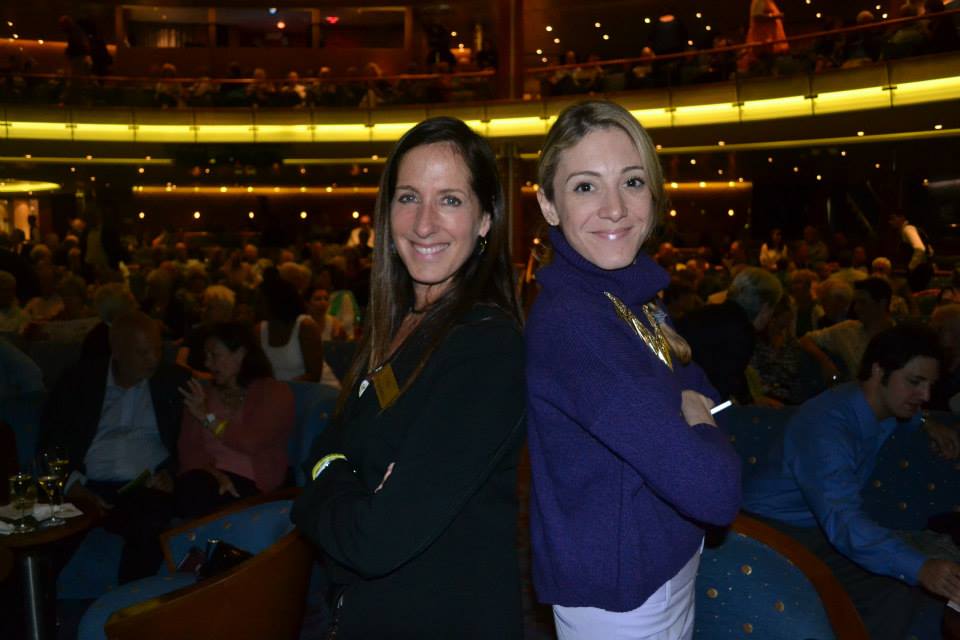
Judy Perl and Blake Ross made this all happen. (Photo courtesy of Judy Perl Worldwide Travel.)
After introductions of the staff and entertainers, everyone went back to socializing and I took the opportunity to introduce myself to Blake (the editor at Playbill), and thank her for allowing high schools to use the Playbill cover for their show programs. (We used it for Joseph this past April.) This got us talking and she introduced us to Phil ( the president of Playbill) and we chatted about the exciting things Playbill is doing to expand its reach. It was really nice making those connections– and I have to say, Blake totally reminds me of Carrie Bradshaw in SITC. She’s adorable.
We also met our travel agent, Judy Perl and her husband and had the chance to thank her in person for setting everything up for us. If you haven’t been following the blog, Judy set up a private tour of Stutthof for us– and then her family joined us on the tour which was really nice. I’m looking forward to working with her great company when we travel in the future.
The second night was Patti LuPone’s big concert. It doesn’t matter how many times I’ve seen her perform, I always marvel at her technique and artistry. She gave us her Coulda, Woulda, Shoulda show — and according to Phil afterwards, the longest concert of any performer on the BOTHS cruises so far. Patti gave us an amazing set of songs from parts she “Coulda, Woulda, Shoulda” played, with a mix of songs from parts she did play, including Meadowlark and Don’t Cry For Me Argentina. She also sang, I Get A Kick Out of You, seeking out her Anything Goes co-star Howard McGillin and serenading him in the audience. The concert only ended after a standing ovation and three encores. I was so invigorated, I barely slept that night.
 Tuesday night, Seth Rudetsky entertained us with his amusing and insightful, Deconstructing Broadway. Seth is an amazingly talented performer, writer and musical director among other things. I’m not sure there’s anything he can’t do. Best of all, he’s an energetic, funny guy that loves all things Broadway.
Among other things, he entertained us with his hilarious comparison of Patti and Madonna’s Eva Perons in Evita. Guess who won?

Seth Rudetsky
After two days off, with night excursions in Saint Petersburg, Seth was back Friday night, interviewing Broadway’s longest running Phantom, Howard McGillin, for his informal, Chatterbox. There were lots of great stories (including passing on Into the Woods) and Howard sang, A Man Could Go Quite Mad from his role in the original cast of The Mystery of Edwin Drood.
Saturday night’s entertainment was supposed to start out with Seth’s Chatterbox, interviewing Norm Lewis, only Norm had to leave the ship a couple days in to the cruise, fly to LA for a shoot on the TV series, Scandal, then fly back to rejoin the cruise– only he missed a connecting flight. So we had the bonus treat of two interviews with Patti. She’s certainly had a roller coaster-ride of a career and has many great stories to share.
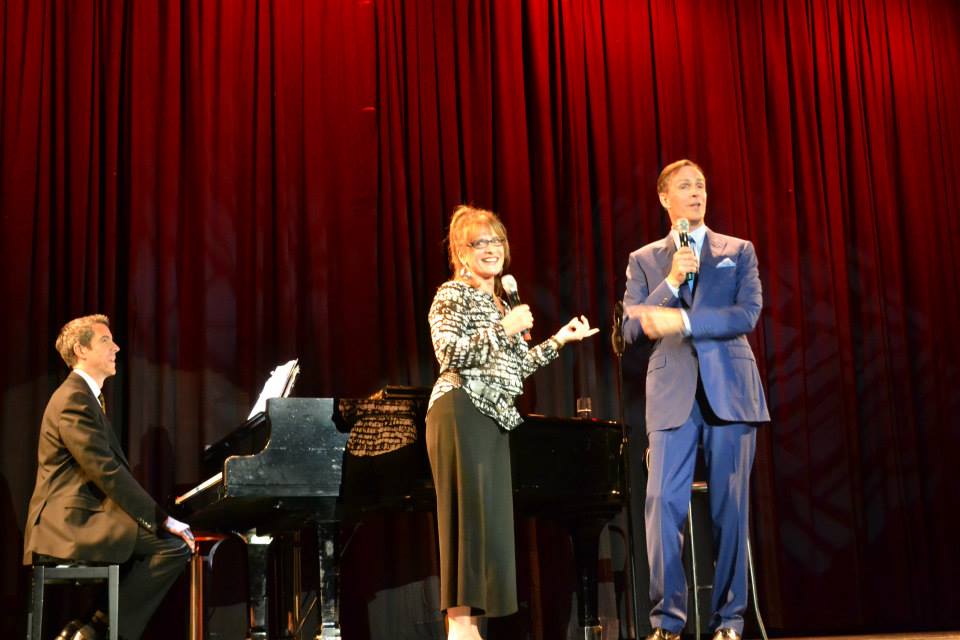
Patti LuPone & Howard McGillin reprise their roles, singing, You’re the Top, with musical director Joseph Thalken. (Photo courtesy of Judy Perl Worldwide Travel.)
After dinner, we were treated to Howard McGillin’s big concert. I really love his voice and could listen to him for hours. One of the highlights of his show was bringing Patti onstage to recreate their number, You’re the Top from Anything Goes. I’d been fortunate enough to see them do it originally on Broadway (twice), so that made it extra special for me. This was the first time they’ve had the opportunity to perform together since. It was a really great concert.

Patti LuPone and Howard McGillin, after Howard’s concert. Patti’s husband Matt is on the right. (Photo courtesy of Judy Perl Worldwide Travel.)
Sunday, Norm made it back on the ship in the afternoon, shortly before we left Lithuania. With all the travel and jet lag, they scheduled him for a massage and I happened to be in the spa at the same time and got to chat with him. He’s a super nice guy. Late that night, Playbill had scheduled Broadway After Dark, which, after a misguided game of Broadway bingo (I shouted BINGO first Seth!), it luckily became a Chatterbox with Norm. It turns out he grew up about 20 miles from me and is only a couple months younger than I am. He ended the interview by singing, Rain from Once On This Island, which was absolutely incredible!
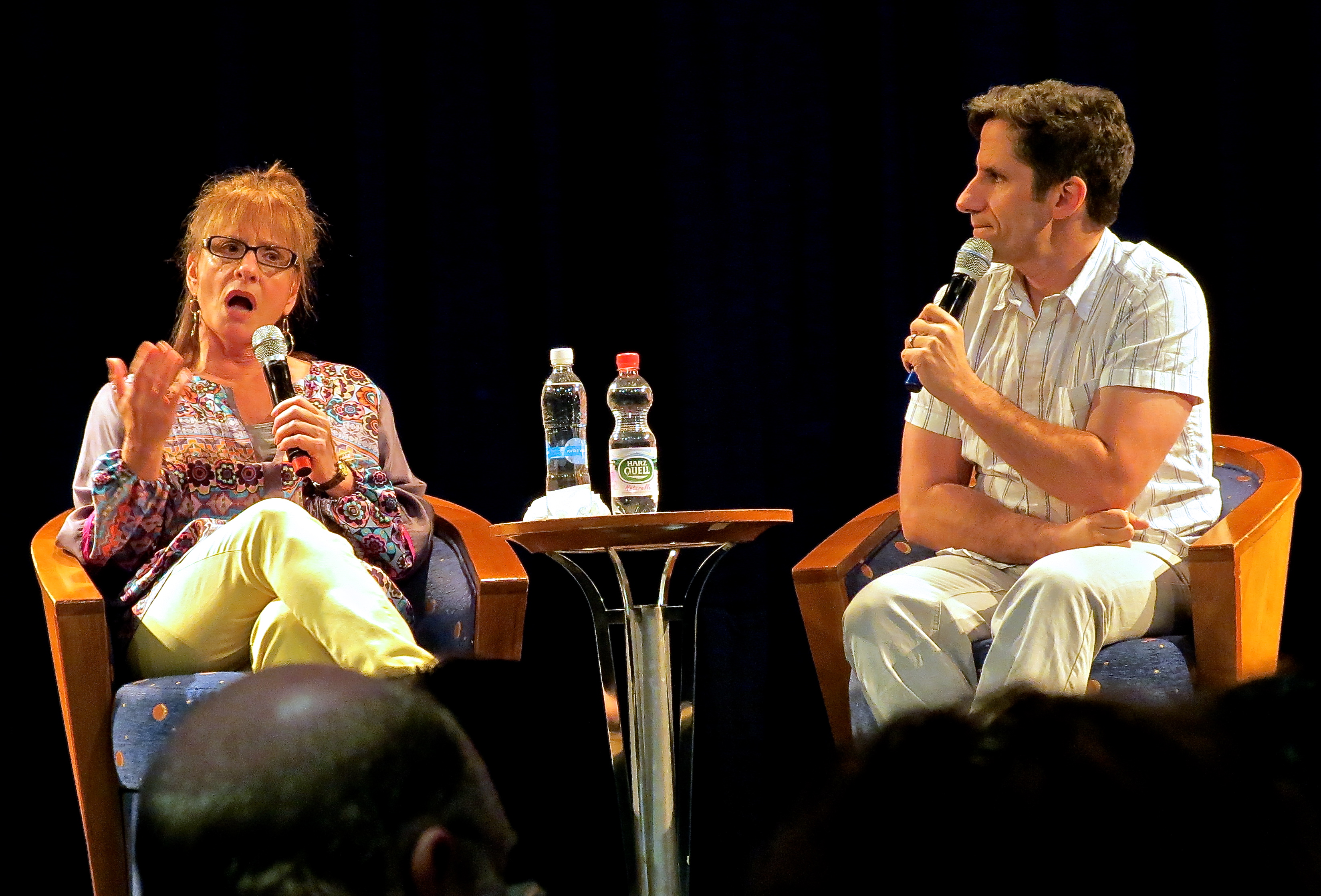
Seth’s Chatterbox with Patti LuPone.
Monday, Seth continued his interview with Patti and we were treated to two more songs. It wasn’t until then that I realized I’d never heard her sing, I Dreamed A Dream, live. She won the Oliver Award in 1985, for her performances in both Les Miserables and The Cradle Will Rock. Patti brings such depth to the song. She also wowed us with Buenos Aires from Evita.

Patti LuPone singing Buenos Aires.

With Norm Lewis.
After dinner, everyone was blown away by Norm Lewis in concert. What a voice and a great showman! It was the perfect way to end the Playbill portion of the cruise. We’d just seen Norm on Broadway recently in Porgy and Bess and he’s simply phenomenal.
Toward the end of his concert, our cruise director, Willie Aames, joined Norm on stage for a duet and the crowd went wild.
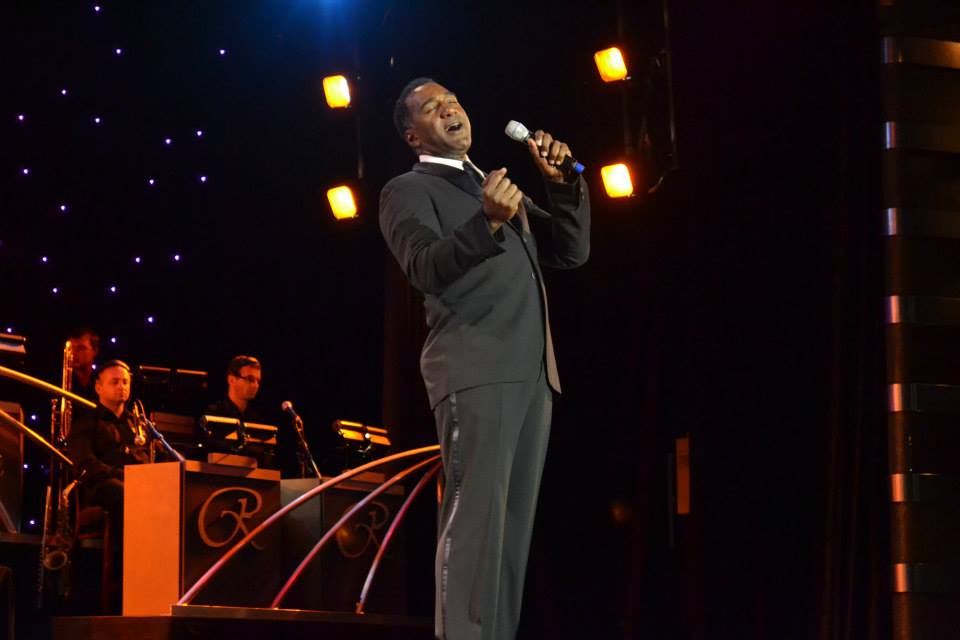
Norm Lewis in concert. (Photo courtesy of Judy Perl Worldwide Travel.)

Michael and Willie Aames.
After Norm’s concert, we celebrated the end of the cruise with one last toast. Michael and I got to chat with Willie briefly and thank him for making our stay of the Regent Seven Seas Voyager so memorable.
We actually still had one full day in Germany ahead but because our luggage had to be packed and outside our room that final night; the Playbill events ended a night earlier. This way, everyone got to dress up and there was no rush after the evenings festivities to get packed.
I forgot to mention that when we first got to our rooms, we had swag waiting for us. We received canvas Playbill bags that among other things, included a special edition print, especially for BOTHS3 that we were able to have signed by all the performers. I thought it was really a nice touch.
Playbill did an excellent job planning out this adventure. They kept us going non-stop for ten days, yet we were never rushed and still managed to have a little free time. Patti, Norm, Howard and Seth were frequently out and about, went on some of the tours and were often accessible.
I also really appreciated that we got daily updates of the Broadway events delivered to our room so we wouldn’t miss anything.

Michael getting our limited edition prints signed.
Unfortunately, Michael and I won’t be able to go on the BOTHS4 (Tahiti) but 5 and 6 are already in the works and we’re making plans.
Broadway On the High Seas is the perfect way to see the world and get a more intimate Broadway experience all rolled into one vacation.
WARNING: It’s habit-forming.
.
Baltic Cruise Day Ten: Berlin, Germany

The road to adventure.
Willkommen!
From the time I first thought about wanting to travel abroad, I wanted to go to Berlin. Of course my problem has always been that because of Christopher Isherwood’s The Berlin Stories, I wanted to visit 1920-30’s Berlin. Obviously, time travel isn’t possible– but Isherwood’s vivid portrait of the decadent cabaret and underground scene have always spoken to me.
I was more than content to have this opportunity to get a glimpse of this captivating city– with, or without the dark undertones that have marked its history. Even, if it meant six more hours of bus travel to do it.
 We started our day by getting on a bus at the port in Warnemunde, Germany for our three hour ride to Berlin. The trip was marked by the beautiful countryside and farmland, a brief bathroom stop and hundreds of wind turbines producing green energy. I think I managed to get in a short nap and I was all set for our tour, Echoes of the Past: Jewish Heritage.
Of the three different tours of Berlin, we thought this one would be the most interesting, considering it would also compliment our visit to Stutthof the previous day. I was also hoping to gain a clearer picture of the current German perspective of World War II.

A close up of the Reichstag Building.
When we reached Berlin, we stopped to meet our tour guide and he took us to the Reichstag Building first. The Reichstag is the home of the German Parliament. A monstrous building built in the late 1800s, it mysteriously caught fire in 1933 , the same year power was given over to the Nazi party there. Damaged, it was mostly used for military purposes during the war and was a central target of the Red Army during the Battle of Berlin in 1945 for symbolic reasons.
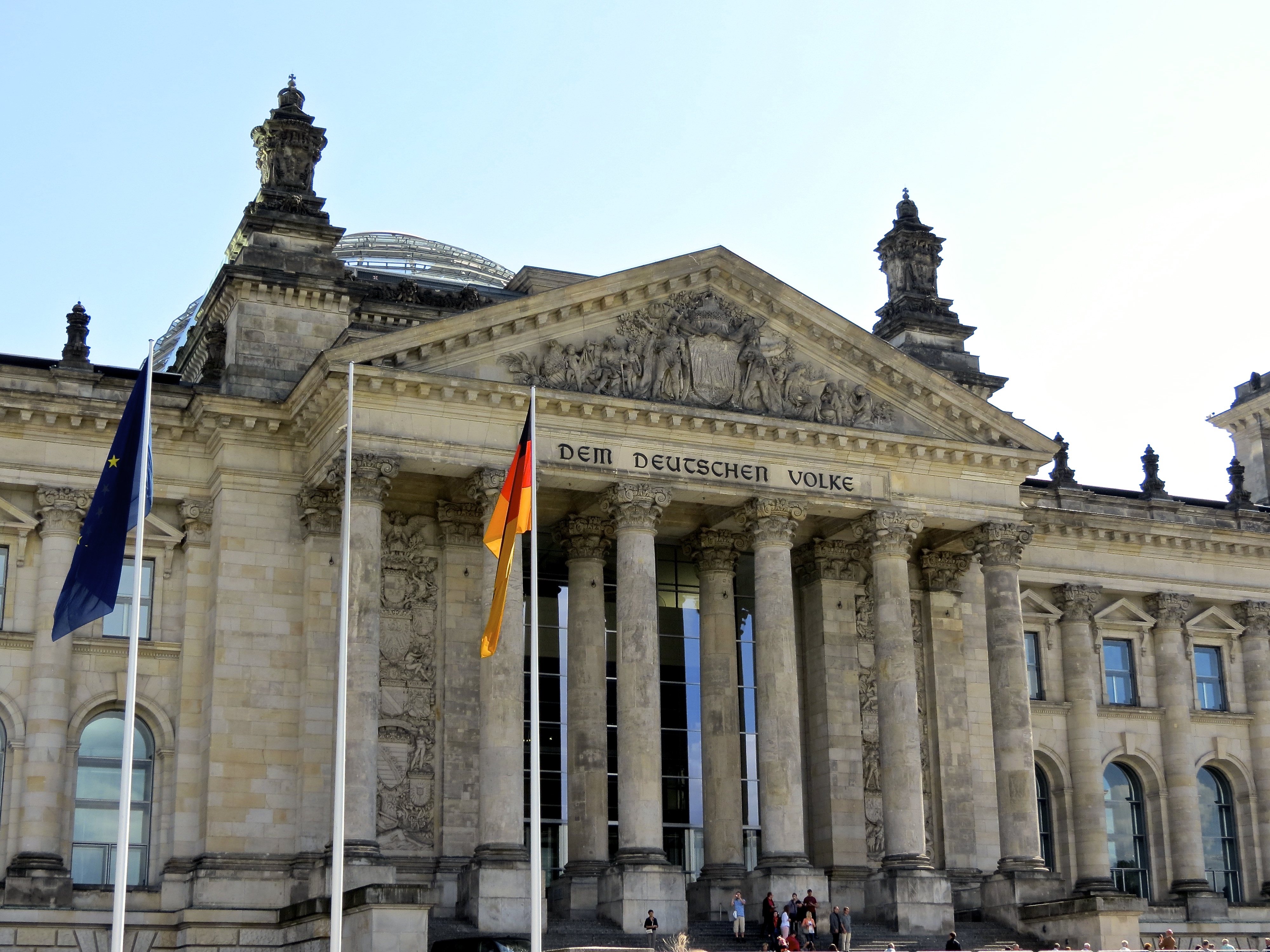
The historic Reichstag Building, home of German Parliament.
It sat for years in disrepair, was almost torn down and served a variety of uses before being fully renovated in the late 1990s when the parliament returned to its former home.

The top of the Brandenburg Gate.
Then we proceeded to the Brandenburg Gate. One of the most known landmarks in Germany, it was constructed in the 18th century and is considered an important symbol of Germany. It stands at the west center of Berlin.
While the Berlin Wall stood, the gate was isolated and inaccessible. So when the wall fell in 1989, there was much celebration and focus surrounding the site.

The Brandenburg Gate.

The old Berlin Museum.
The rest of our morning was spent at the Jewish Museum, Berlin. The museum is housed in two buildings and is only accessible by an underground passage from the old Berlin Museum. Designed by architect, Daniel Libeskind, the museum zig-zags though spaces, including vast voids, housing permanent and special exhibitions of German-Jewish history. There are three particularly large spaces, representing the Holocaust, that are meant to be experienced.

The Jewish Museum, Berlin, designed by architect Daniel Libeskind.

The Garden of Exile.
The first space we visited was the Garden of Exile which attempts “to completely disorient the visitor. It represents a shipwreck of history.” (Daniel Libeskind, 1999) When you first look at it up close, and as you start to walk through it, it appears to be very straight and vertical– but you soon find yourself stumbling, almost dizzy and disoriented through the maze. From the outside of the museum, as we were leaving, we could see the extreme angle and tilt of the garden in comparison to the level ground that created this feeling.

Walking through the Garden of Exile in the Jewish Museum, Berlin.

Inside the Holocaust Tower. Notice the ‘ladder to nowhere’.
Then we went in the dark, chilling Holocaust Tower. It is a 79 foot high, bare concrete tower with only a small shaft of light entering through the roof.
There is a metal ladder on one wall, far above your head. Unreachable. It appears to go to the top– a possible escape… but it doesn’t quite reach the blackness of the ceiling.
The feeling of the space is cold, dark isolation, with no way out.

Looking up inside the Holocaust Tower.

10,000 faces in the Shalekhet- Fallen Leaves exhibit.
The third space was the only area of the Libeskind ‘void’ that could be entered. Shalekhet- Fallen Leaves designed by artist, Menashe Kadishman, consists of 10,000 faces punched out of steel. They are scatter on the floor of the “Memory Void” and visitors are encouraged to walk on them.
The artist intended them to not only represent the victims of the Holocaust (Shoah) but dedicated them to all victims of war and violence.

Inside Libeskind’s, “Memory Void”. The exhibit, Shalekhet- Fallen Leaves.

On exhibition, the Star of David, all Jews were forced to wear as identification by the Nazis.
Through the main museum, you had to go to the top to enter the exhibition rooms. Then like a maze, you walked through Jewish history, with only one way out as you made your way to the bottom of the museum.
Michael and I explored most of the museum on our own, leaving the group behind so we could go at our own pace.
We had lunch in the courtyard of the museum and a short break to wander down the street before the tour continued.

This rather ornate building next to the museum is now an apartment building.
Next, we visited the Holocaust Memorial named, The Memorial to the Murdered Jews of Europe. It was designed by Peter Eisenman who described its design as to produce feeling of uneasy confusion and represents an “ordered system that has lost touch with human reason”. It consists of 2,711 concrete slabs of varying heights, on a grid pattern of unlevel ground.
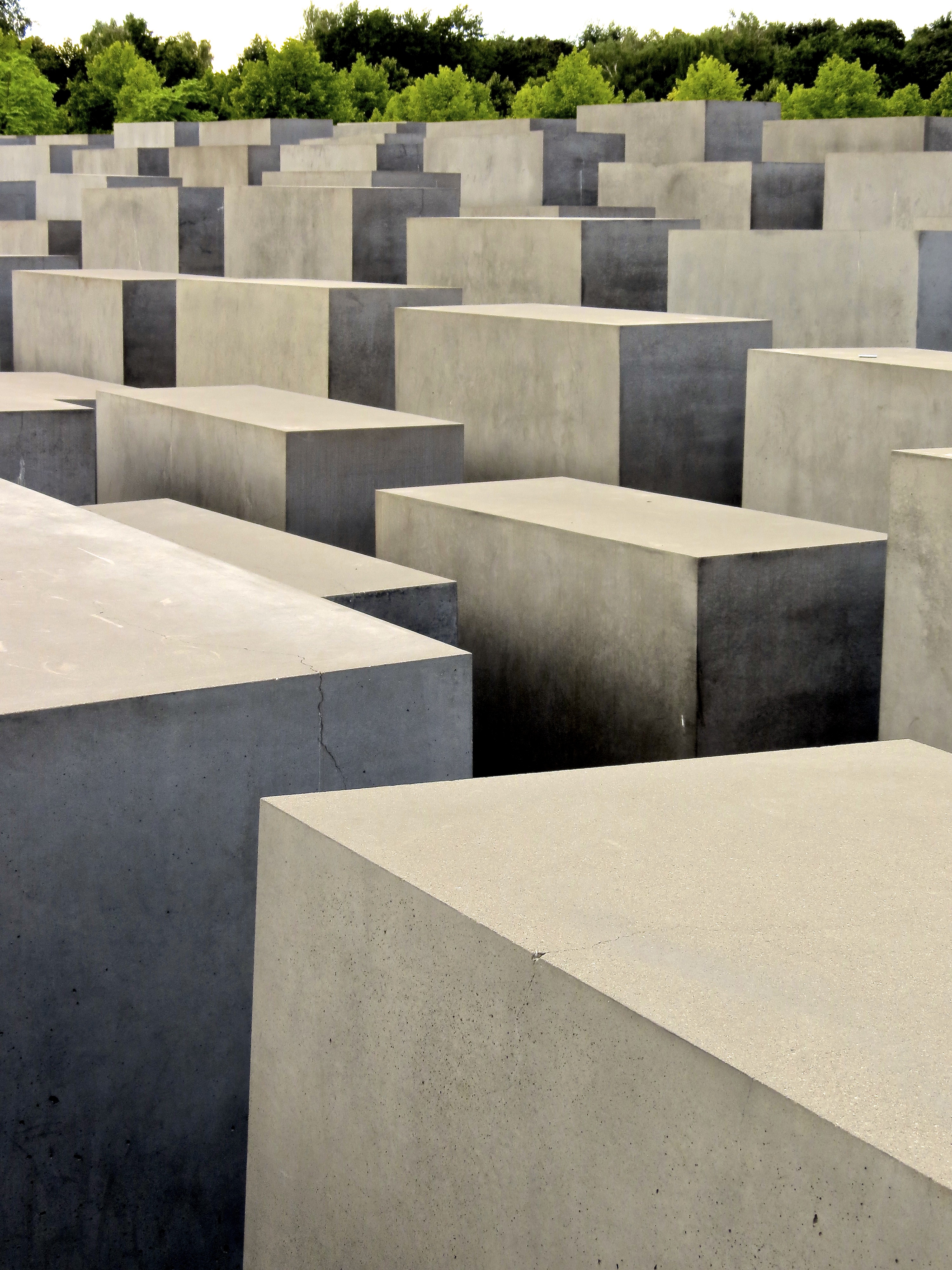
The Memorial to the Murdered Jews of Europe in the center of Berlin.
The English pamphlet, though, states that there is no intended symbolism.
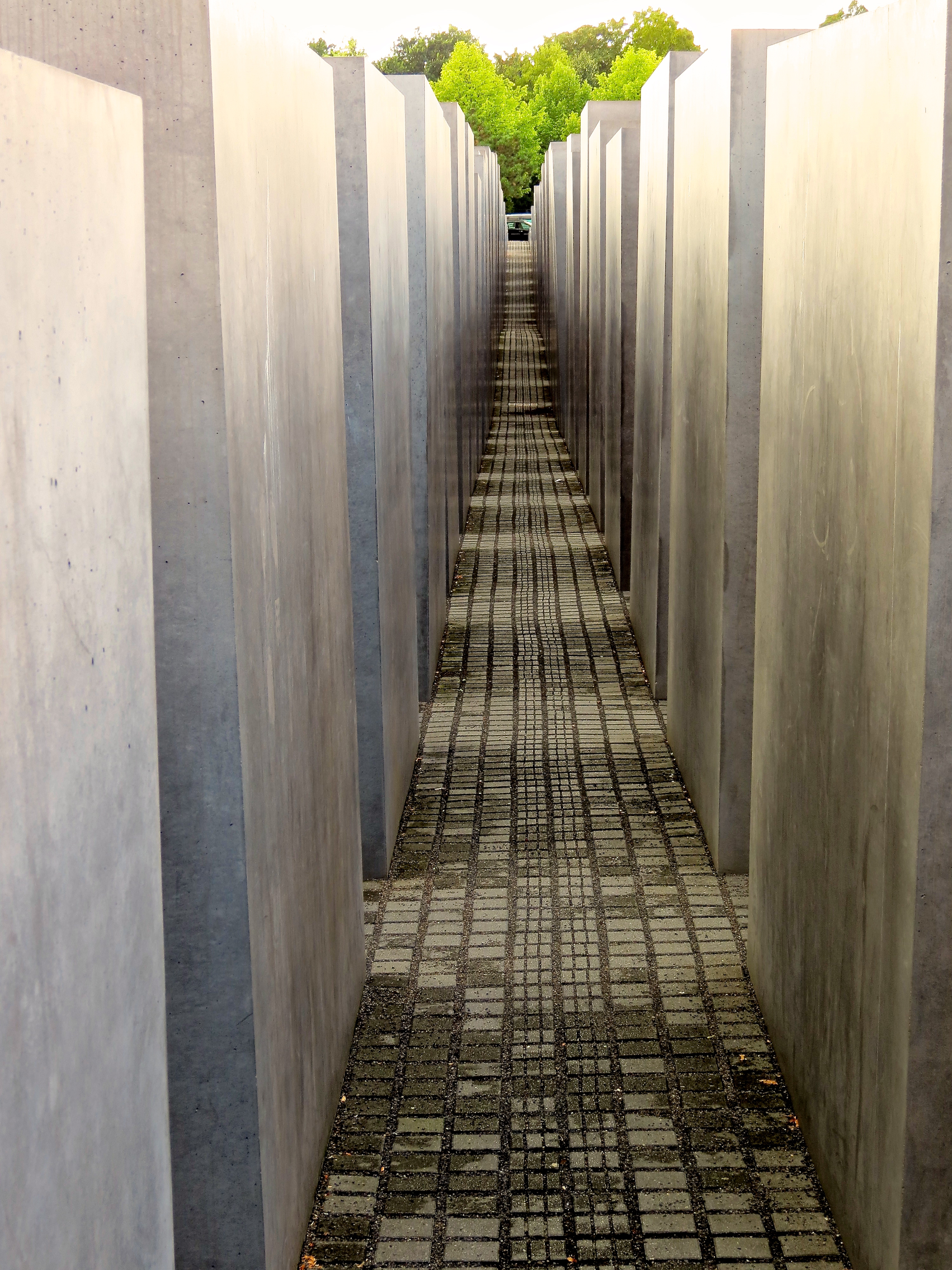
Inside the grid of the Holocaust Memorial.
Our tour guide said that he believed the intention behind the design was to allow visitors to envision their own meaning based on what experiences, or desired meanings they intended to gather from visiting the memorial. Below the memorial, underground, is a vault with all the known names of the Jewish Holocaust victims.
The first thing I saw when we approached, was a large cemetery. The outer stelae (slabs) are lower to the ground and as you walk through the memorial, you become engulfed, with the stelae towering over you in height. I couldn’t help but notice its similarity to the Garden of Exile at the Jewish Museum.
A big controversy arose over the memorial because it only recognized the Jewish victims, leading to memorials for other war victims being erected throughout Berlin.
On the bus, we went past Checkpoint Charlie but didn’t stop– which upset me because it was listed in the tour description. Our tour guide said he doesn’t stop there because it is “100% made in China.” The ‘checkpoint’ is not the original, it is a fabrication, standing on the original site. He considers it nothing more than an overcrowded tourist-trap. (It is surrounded by dozens of souvenir stands.)
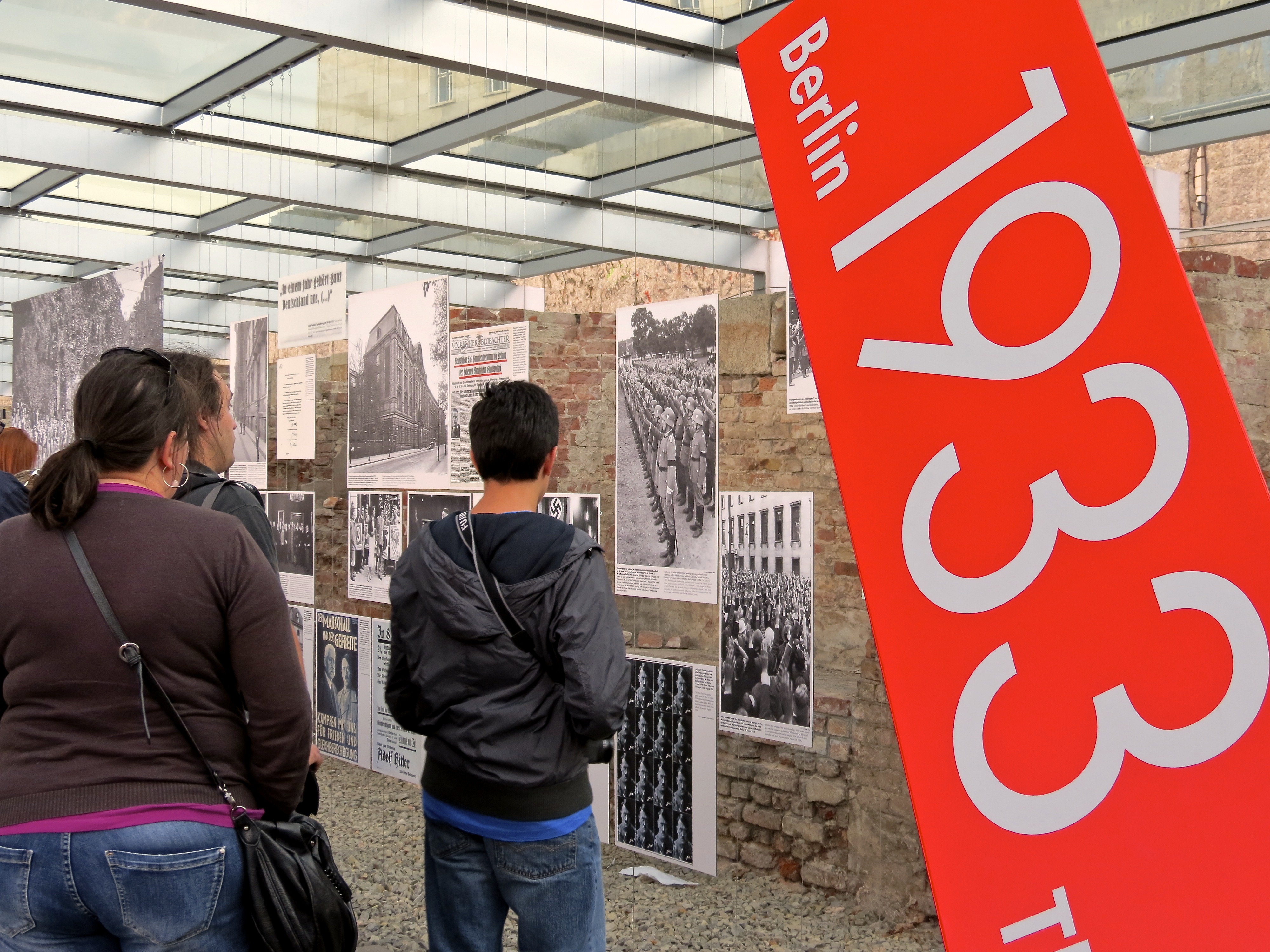
Topographie des Terrors.
Our next to last stop in Berlin, held two important exhibits. One of the few standing sections of the Berlin Wall and below and beside it, an indoor/outdoor exhibit, Topography of Terror.
Topographie des Terrors stands on the site where three buildings used as headquarters by the SS and Gestapo once stood. The buildings were largely destroyed in 1945 by allied bombing and the rest demolished after the war. Only part of the foundations remain. Against those foundations, stands the outdoor exhibit which focuses on the events of the year 1933 when the Nazi regime came into full power.
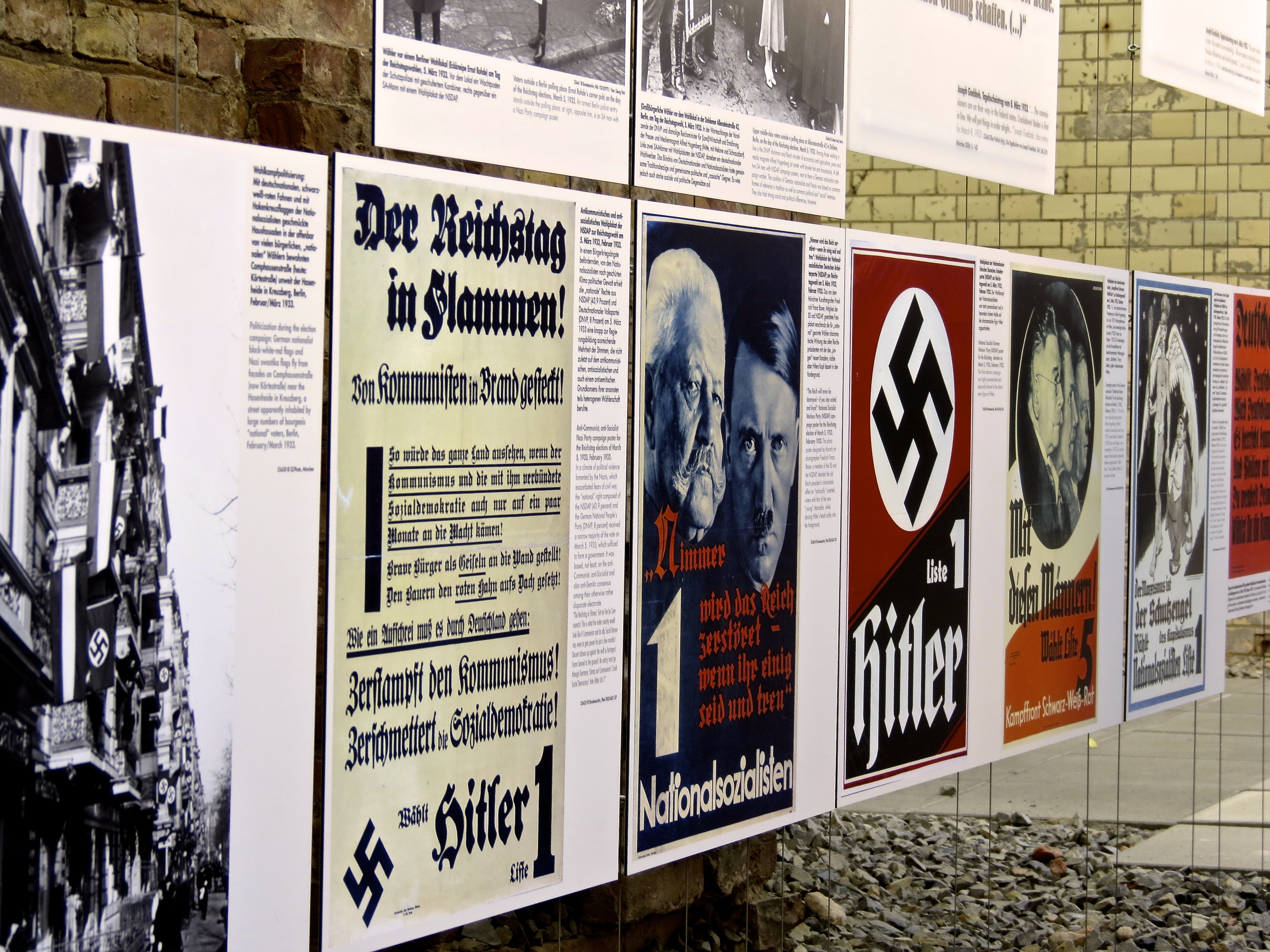
Topographie des Terrors and behind it, the remaining walls of SS and Gestapo headquarters.
It’s a great exhibit and I’m really glad I got to see it. I found it really powerful and moving, especially having been to the concentration camp the day before. It was like taking a step backwards and seeing where (and how) it all began.

The Berlin Wall.
The Berlin Wall. As an average person, of my age, witnessing the changing world history– The the fall of communism, the tearing down of the wall, the reunification of East and West Berlin– it was an important moment in my life. The images from the original media coverage are engrained in my mind.
I remember talking to a friend, shortly there after, who was in Germany with a touring show at the time, who was lucky enough to be there as it happened. I remember how jealous I was that they were present at that important moment in history.

“WHY” at the Berlin Wall.
The wall itself, is not that threatening. It’s a very thin concrete wall. It is the symbolism of what it represented and how it affected so many lives that’s important.
Our tour guide recounted his experience when the wall came down: Friends were calling him in the middle of the night but he didn’t believe them. Finally he heard the reactions of people in the street and realized it must be true. An aunt of his that lived on the other side (I don’t remember who he said lived in East and West Berlin), showed up at his door the next morning, suitcases in hand. She brought with her, all her important belongings because she was afraid the freedom to cross the line wouldn’t last and she would be separated from them again. They had been separated for years.

Looking down the length of the remaining piece of the Berlin Wall.
So I was finally here. I was staring at this insignificantly simple structure that represented so much heartache and political control of people for so long. I was finally able to link my own personal recollections– my history– in this very spot, which was a very important moment in time for me.
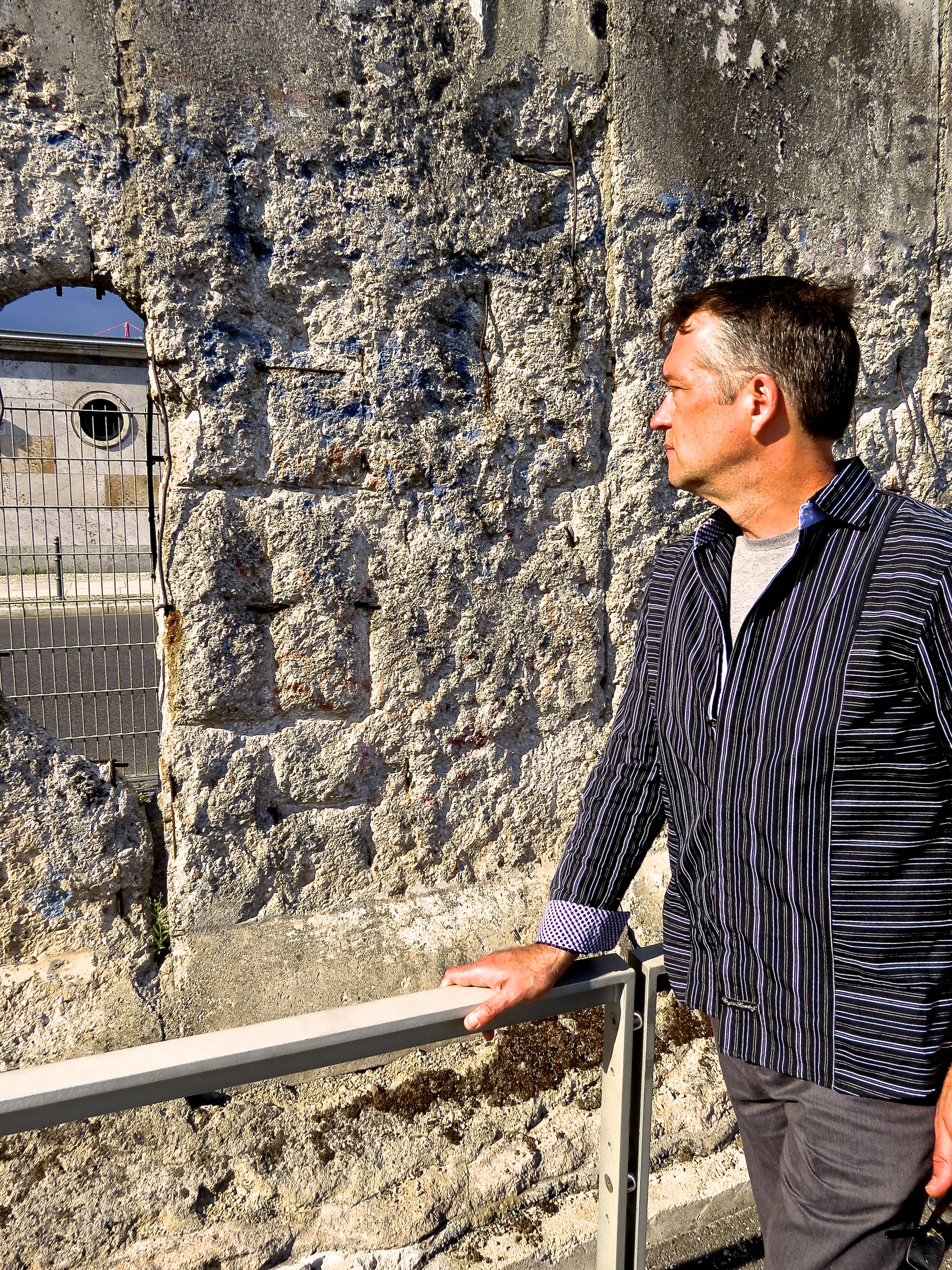
My moment at the Berlin Wall.
I could go on a tangent here about the evils of war, political control and the horrific events that have ruined so many lives of average people (Look at what’s happening in Egypt and Syria today.) But I won’t.
I was content. No, exhilarated to be here and see this first hand.
It started to pour just as it was time to get back on the bus. We had to run through the rain to keep from getting totally drenched. I suddenly realized, though we’d seen a lot, I was a little disappointed with our visit to Berlin.
We still had one more stop before heading back to the ship– and then I looked out the window and we were suddenly driving through the shopping district. There’s no other way to put it, it was simply amazing! Blocks and blocks of tree lined streets shading nearly every designer shop you could possible think of– it was a shopping mecca. Beautiful!
It made me want to go back before we’d even left.

Ornate gates at the Schloss Chalottenburg.
Our last stop in Berlin was the Schloss Charlottenburg (Palace). We didn’t have much time here except to walk around the front courtyard and statue of Friedrich Wilhelm I. It was built at the end of the 17th century and later expanded. I wish we’d had time to tour the inside and the incredible gardens on the other side of this massive palace.

The stunning Schloss Charlottenburg in Berlin.
I guess I’ll have to put that on my list for things to see the next time I’m in Berlin.
I’ll be back.
Baltic Cruise Day Nine (Part Two): Gdansk (Danzig), Poland

A ship sailing near the Polish port of Gdynia.
In all the excitement and anticipation of going to Stutthof in the morning, I’d totally forgotten we were going to Gdansk for a quick tour in the afternoon.
Our actual port city on this stop was Gdynia. We didn’t really see much of it though, except passing through on the bus. What I did see of it, appeared to be a fairly modernized city, even though its history dates back to the 1770s.
Gdansk, also known as Danzig, is a beautiful European city. Full of historical charm, I found it to be much of what I expected from an older. European city– and more.
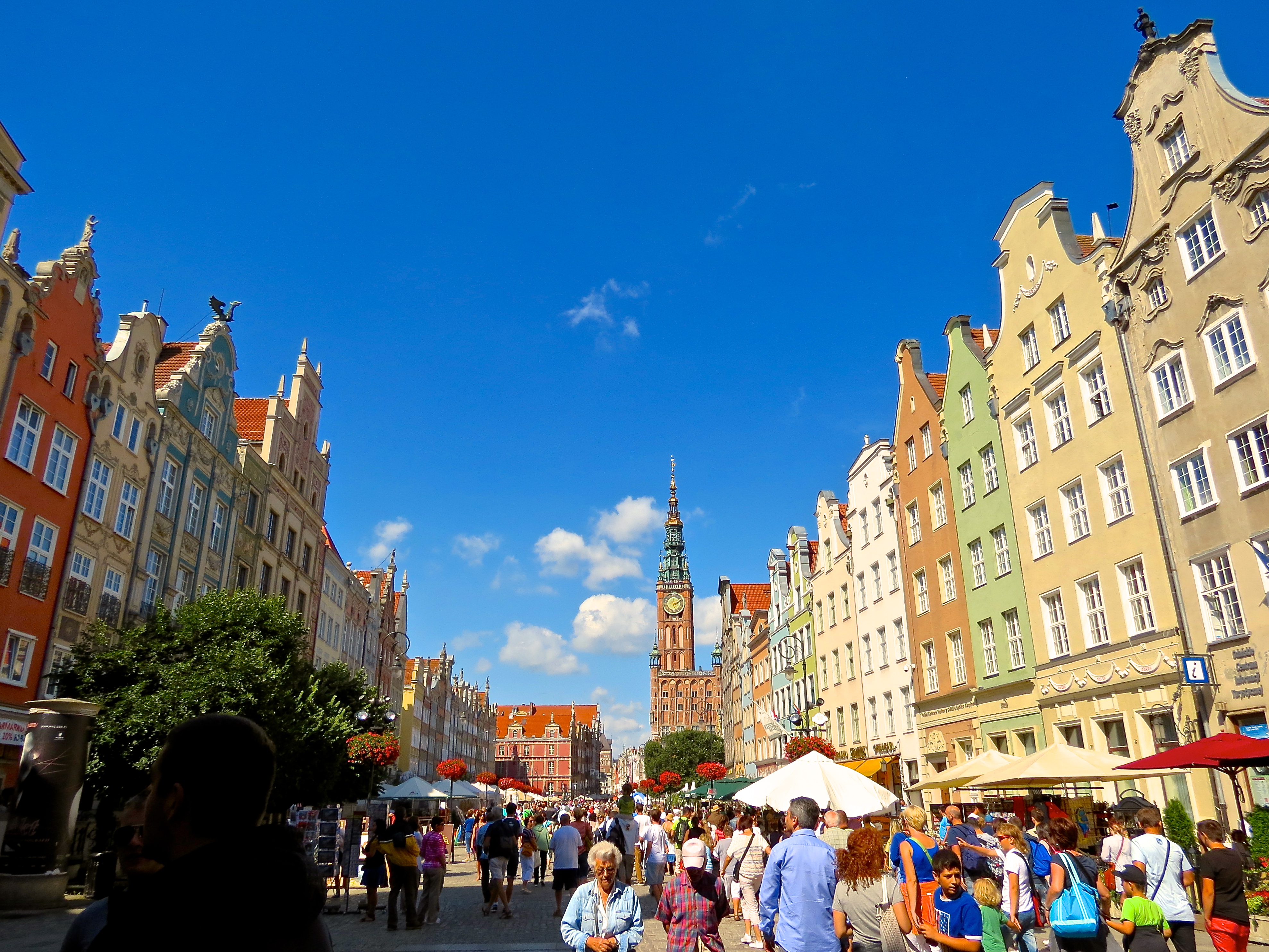
The Royal Route in Gdansk.

I love the color and lines of the buildings in Gdansk.
The city dates back to the 10th century, having been both a part of Poland and part of Germany over its complex history. It is also known as the birthplace of the Solidarity movement, which led the fight to end Communism in Central Europe. Gdansk, combined with the cities of Gdynia and Sopot have become a metropolitan area known as Tricity.
We had an advantage here. Since this was a private tour, our guide got us oriented as to where we were and pointed out interesting landmarks and then let us go out on our own to explore.

Neptune Statue
On Long (Market) Street, we saw the rather famous Neptune Statue, created in 1617 by architect Abraham van den Blocke. Then we visited St. Mary’s Church, which is the largest brick church in the world.

The clock of St. Mary’s Church.
This time of year, the streets of Gdansk become a festive open air market with hundreds, if not thousands of vendors selling everything from clothing and art to wine and sausages.

The seasonal open air market in the streets of Gdansk.
I could have spent a whole day just wandering through the streets, sampling all the magnificent food offerings and shopping the unlimited variety of merchandise for sale. Many of the streets were crowded but there was no rush. It was a very relaxing atmosphere.

Gdansk City Hall
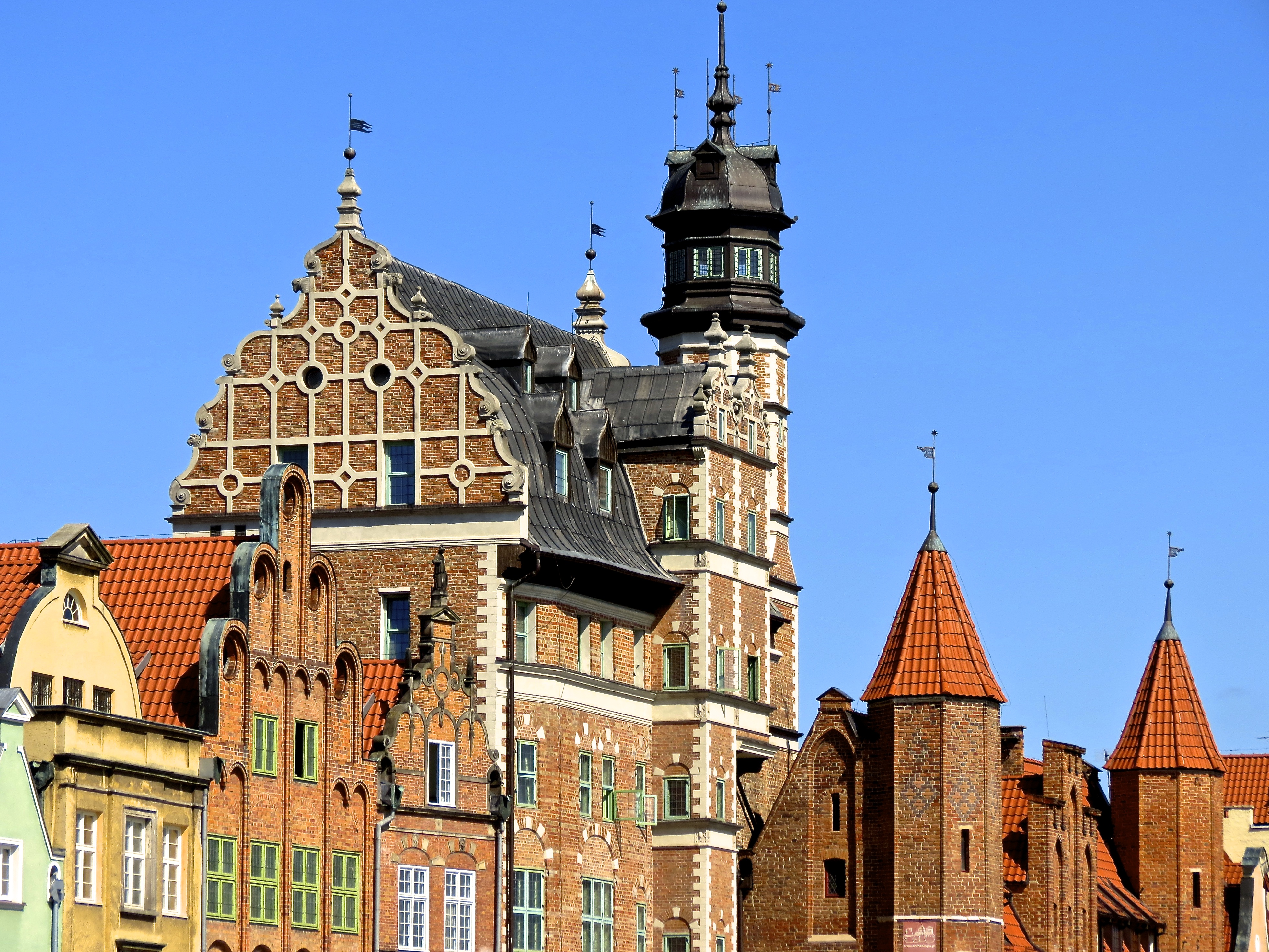
Stunning historic architecture around every corner.
We walked to City Hall, saw the Town Hall Tower as well as many other points of interest before returning to the bridge at the Motlawa river where we rejoined our small group.
Such a beautiful, clean city. I could easily spend several days here relaxing and exploring.
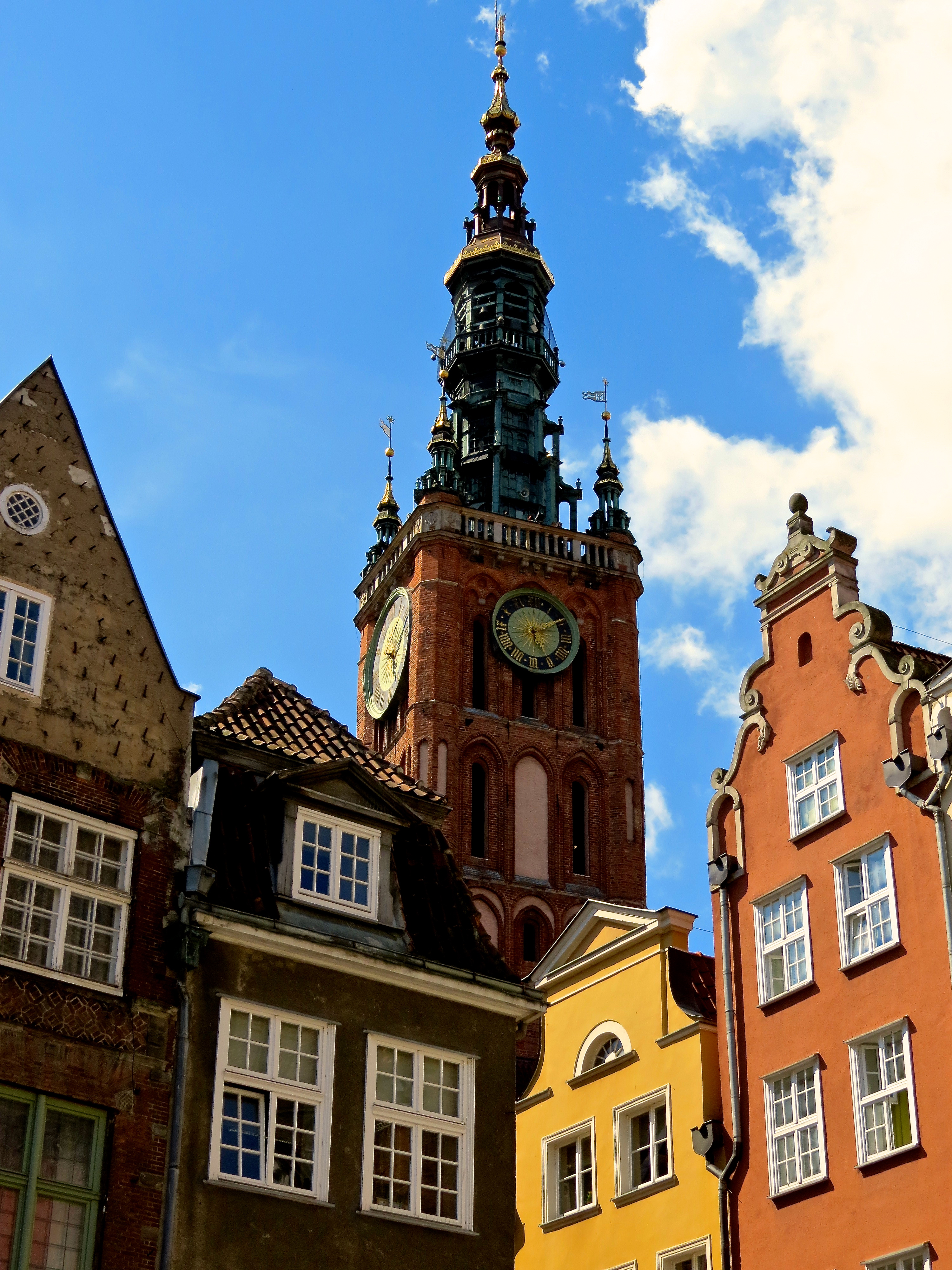
The Town Hall Tower rising about the city of Gdansk.

The Motlawa River. In the distance (right) you can see the medieval Gdansk Crane.
I’d like to extend a very special thanks to Judy Perl of Judy Perl Worldwide Travel (NYC) for making this incredible day possible.
Baltic Cruise Day Nine (Part One): Stutthof Concentration Camp
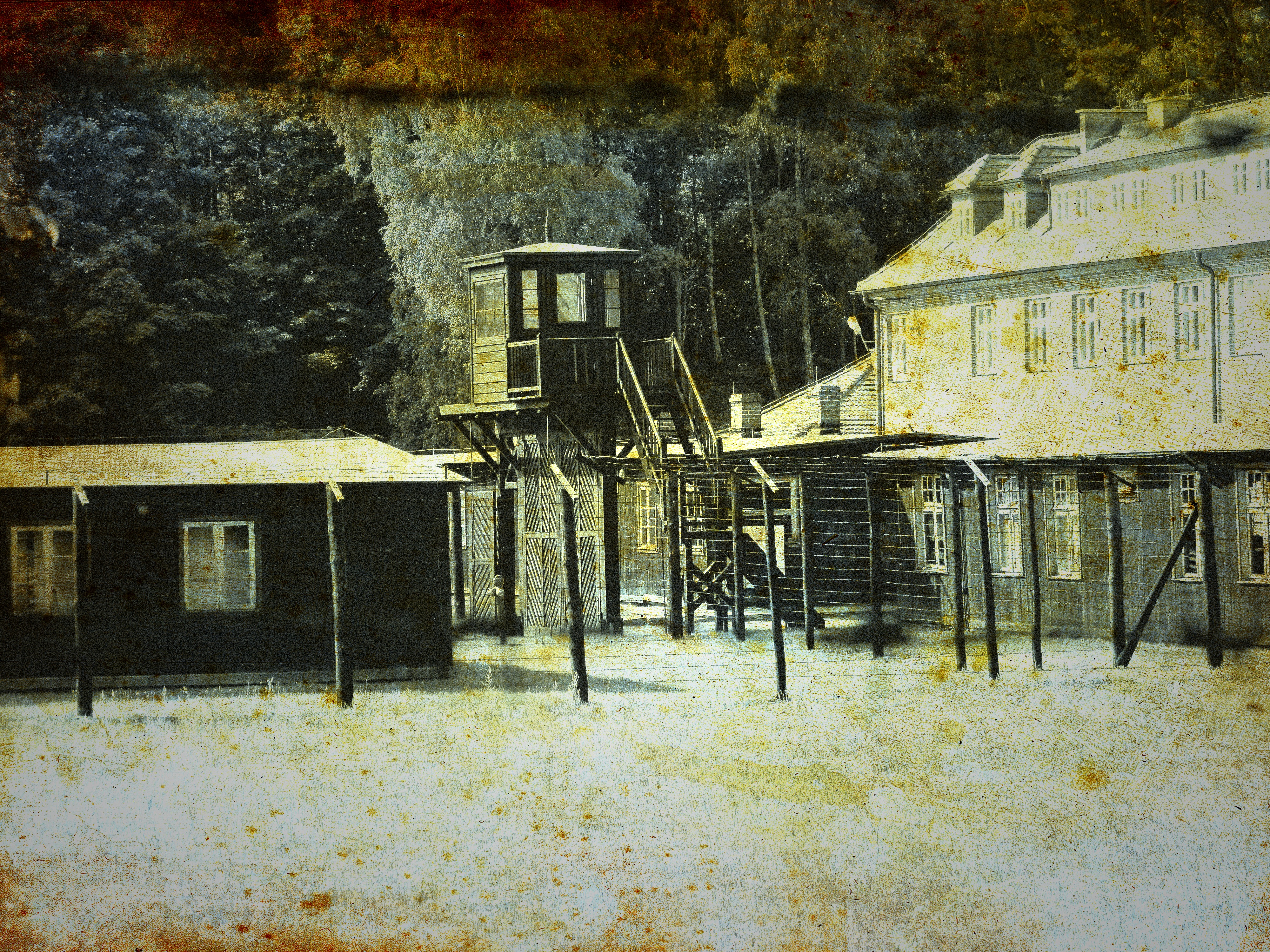
Stutthof Concentration Camp.
It’s hard to know where to even start this post. I have so much I want to say– that to include it all in one post would be impossible. I’m going to try to keep this post focused on our visit to Stutthof, itself; and I’ll follow up later with a more personal post about my feelings on the subject of the Holocaust and my commitment to the importance of retelling the horrific story that can not and should not be forgotten.
I must say here that my involvement in education about the Holocaust began nearly twenty years ago with a play adaptation I wrote, that in subsequent years, has been performed for more than 25,000 students.
I had to visit here.
I had to witness it with my own eyes.
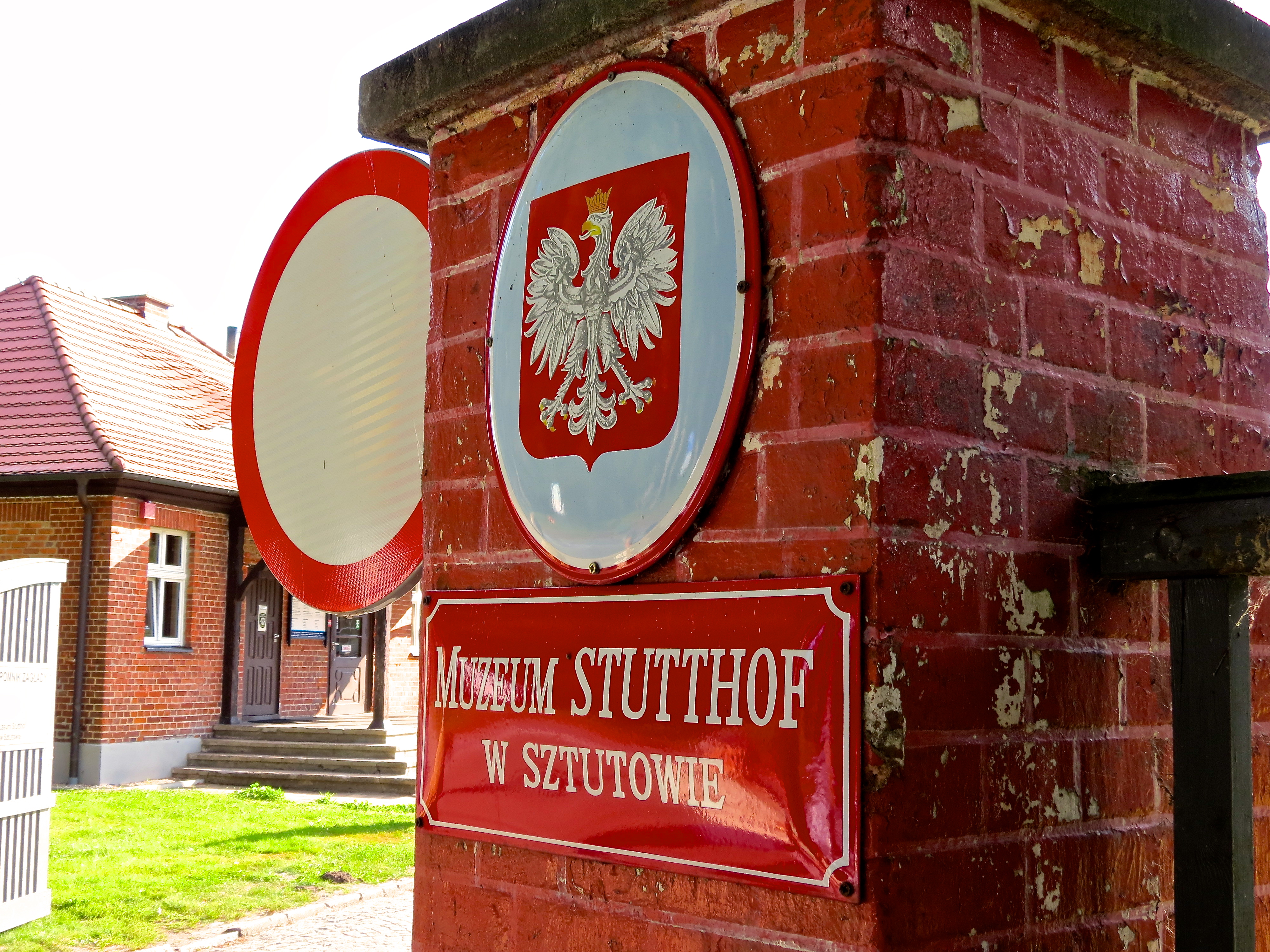
Entrance to the Stutthof Museum.
Michael was able to arrange a private tour to the Stutthof Museum through our travel agent way in advance of our trip. On past Regent cruises, it had been offered as an excursion but it was not on the itinerary for our cruise. Our travel agent, Judy Perl, whose family was also on the cruise, thought the prospect of going would be a good experience and asked if we minded if her family joined us. We readily accepted. So that morning, our party of seven, boarded a mini bus for Stutthof.
(A side note: The tour to Stutthof was later offered to our fellow cruisers as a late add-on and they ended up with five full buses!)

Outside the Stutthof Concentration Camp.
In 1939, the Stutthof Concentration Camp was built in the former Free City of Danzig territory, 34 km (21 miles) from Danzig (now, Gdansk). It is now known as the Stutthof Museum or Muzeum Stutthof w Sztutowie.
Stutthof was the first camp built outside of German borders and was the last camp to be liberated in May 1945.
It was originally intended to house Polish undesirables as an internment camp but in 1941 became a labor camp. In early 1942 it became a concentration camp. It is believed that approximately 110,000 Poles and Jews from all over Europe were sent here. The crematory and gas chamber were built in 1943, used primarily to execute patriotic Poles. In June 1944, they were used for Jewish executions as part of Hitler’s Final Solution.

The building where new arrivals were processed.
The original, old camp had only eight barracks but was then expanded with many more barracks as part of the new camp. Surviving documents show people from at least 28 countries were imprisoned here. Outside of the Stutthof facility, there were 39 sub-camps scattered throughout Poland.
Men, women and children lost their lives here. It is estimated that more than 85,000 people were either shot, hung, gassed or died of malnutrition and disease here. In 1945, of the 50,000 remaining prisoners in the Stutthof camp system, half of them died. 5,000 died on a death march to the Baltic Sea, where they were forced into the water and machine-gunned.

Known as the Death Gate, this is the prisoners entrance to the camp.
When we arrived at Stutthof, we stood for a long time inside the main gate near the SS headquarters just outside the camp itself which was completely surrounded by barbed wire. Quite frankly, I tuned out most of what our tour guide was saying, lost in my own thoughts. Most of the information she was relaying to us, I had heard before– this was a deeply, personal experience for me.
The camp and the museum exhibits are quite sterile. By that, I mean there is nothing displayed in an effort to encourage emotion. Still, I couldn’t help but shudder when I walked through the Death Gate, past the barbed wire and into the camp.
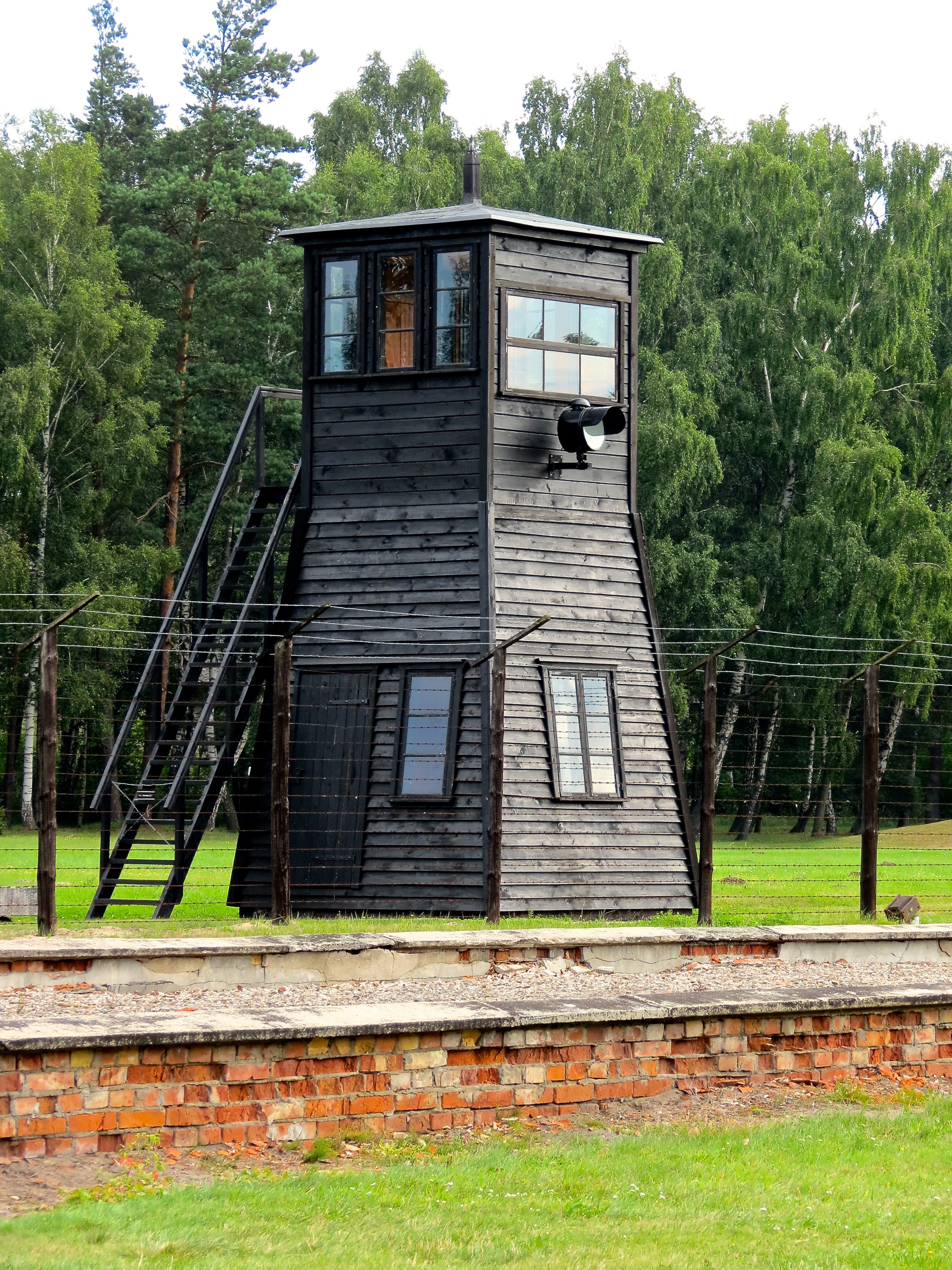
One of the guard towers standing watch over the camp.
My head was full of the atrocities that took place here. The horrifying conditions, the torture… they even experimented with making human soap from the victims’ remains.
Some of the barracks still stand. Guard Towers surround the camp, assuring that no prisoners could have escaped. In the center of the large fenced yard are the crumbling foundations of the workhouses. Of course, much of the camp was destroyed as the Allied troops approached, in an effort to eliminate any evidence of what occurred here.
At the far end of the camp stands the gas chamber and crematory. I couldn’t believe how incredibly small the gas chamber was… the interior, possible 12 feet by 20 feet at the most.
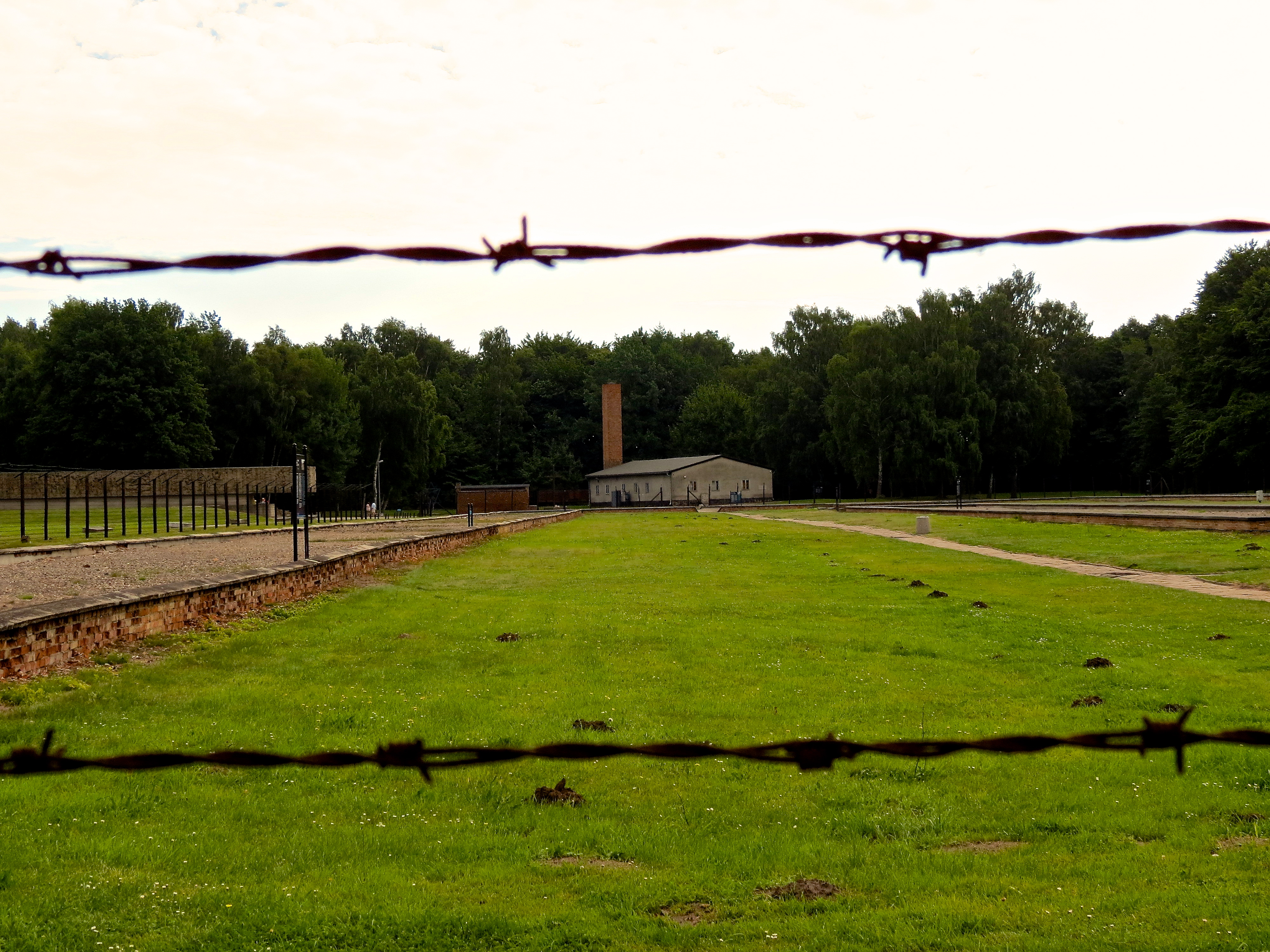
In the distance stands the gas chamber and crematory.
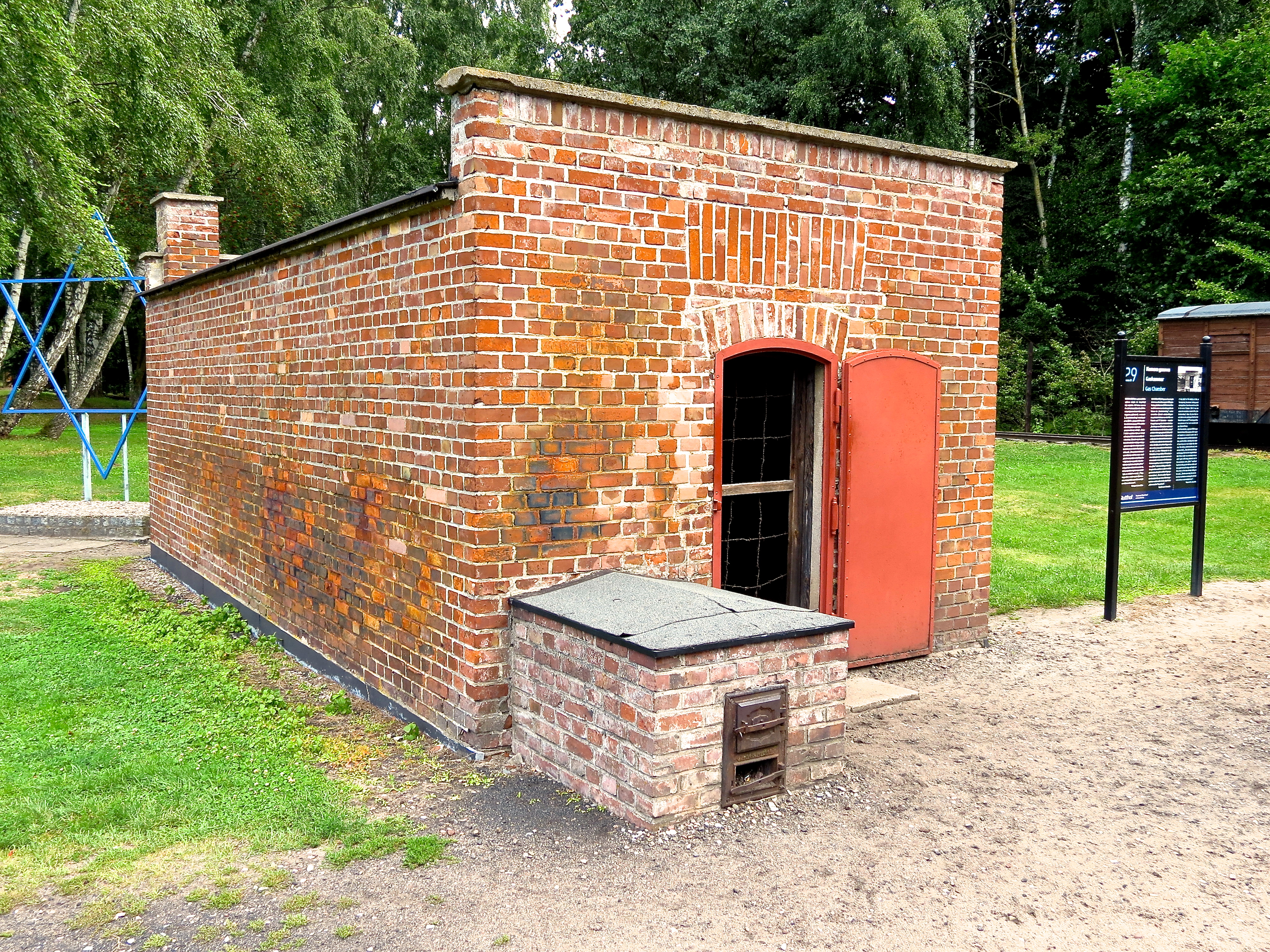
The gas chamber at Stutthof.
In the corner, a marker and replicated gallows stand where hangings took place. It stands very near an old wooden gate crossing train tracks that brought in cattle cars full of prisoners.

The location of the new camp at Stutthof.

Barrack markers for the new camp.
Outside the old camp, the location of the new camp barracks is memorialized with large white stone markers.
The majority of the camp is a wide open field, scattered with what remains from this defining moment in history.
I’ll let the rest of the pictures speak for themselves.
I will never forget this day.

A prisoner’s uniform on display.

Rows of bunks crammed into the barracks. Many prisoners were forced to sleep on top of each other on the floor.

A toilet inside one of the barracks.
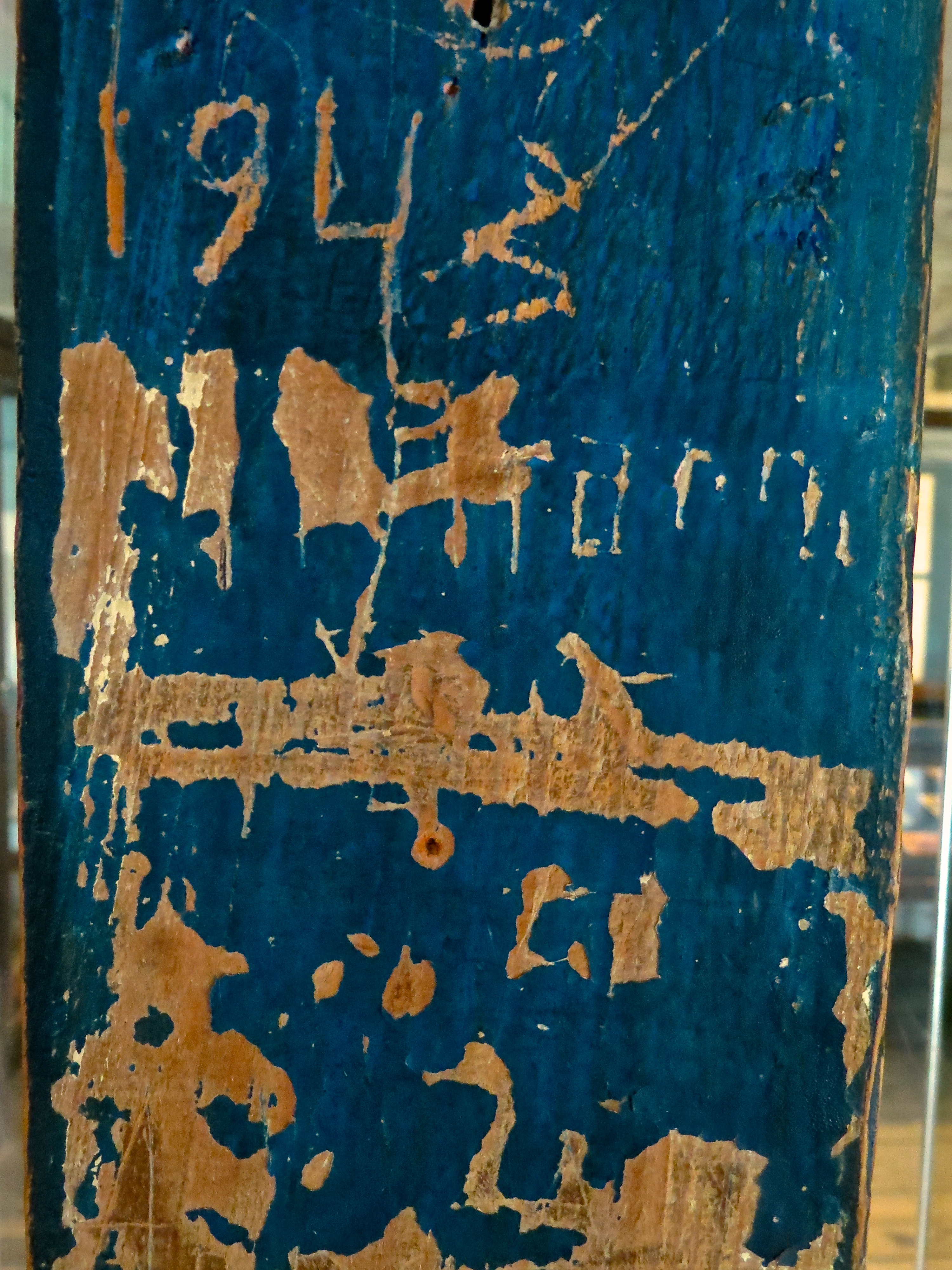
Scratchings by prisoners on one of the posts inside the barracks.
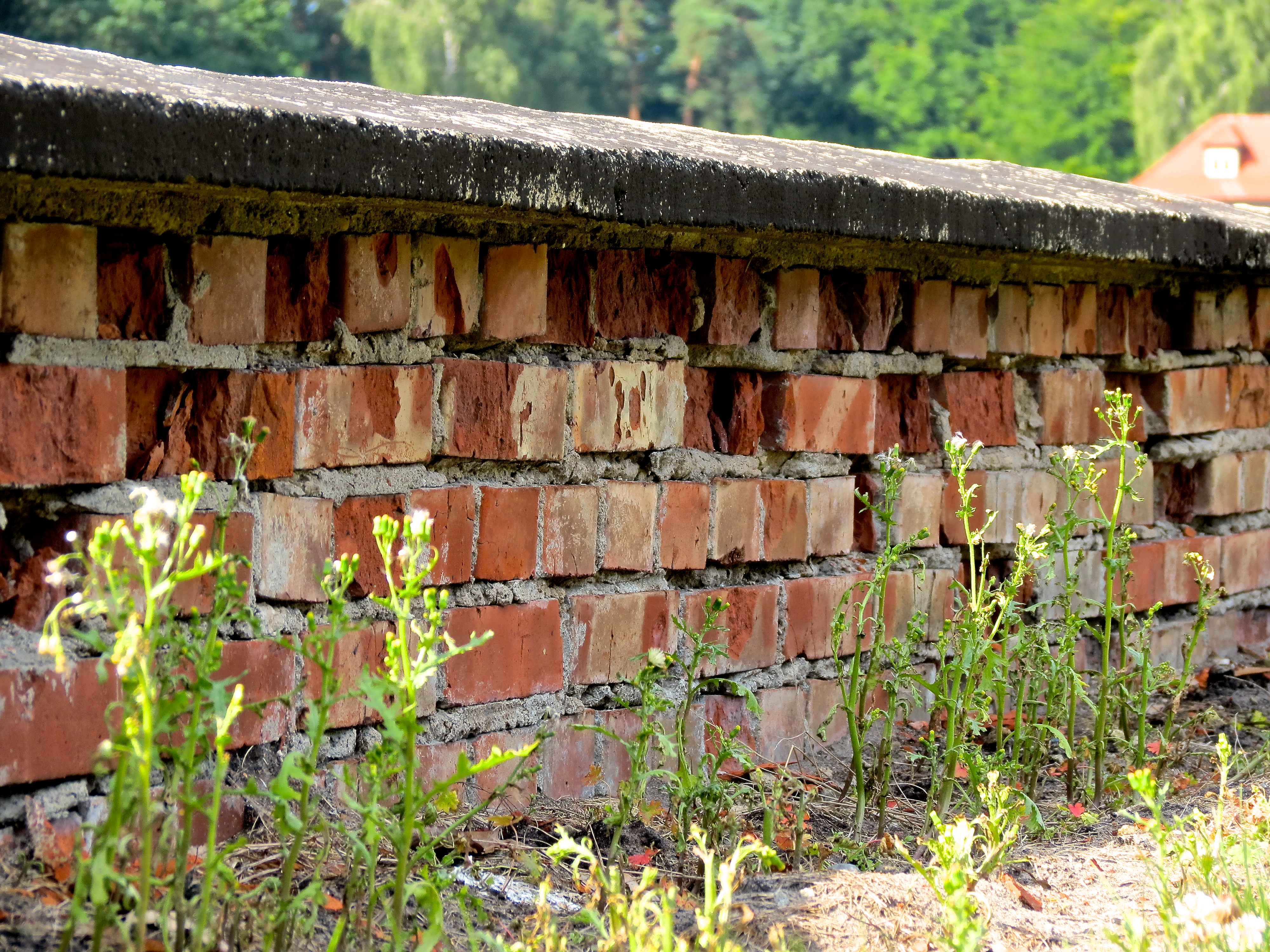
The crumbling foundation of one of the workhouses.

Cattle cars were used to transport prisoners into the camp.

Looking inside the gas chamber.

Looking up at a guard tower.

Outside the old camp, looking in from the new camp.

Standing outside the Death Gate at Stutthof Concentration Camp.
Baltic Cruise Day Eight: Klaipeda, Lithuania
Klaipeda is an important port city because it is almost always ice-free. Before 1945, it was known as Memel.
Our tour choices were rather limited, so we chose “Fairy Tales & Legends of the Witches Hill and Amber Bay”. Sounds interesting, right? Well, if you were looking for excitement– the title was about as exciting as it got.

The Baltic Sea in Lithuania from the top of a sand dune.
We stopped on the way to Witches Hill at a secluded public beach for a view of the Baltic Sea. Wait!? Haven’t we been cruising the Baltic Sea for eight days now? In spite of my sarcasm, it was a beautiful spot and I wouldn’t have minded just laying in the sun all day. To get to the sea, we had to climb slippery and steep stairs to the top of a dune to see the beach. I just thought it was odd that we stopped there and then climbed all those steps to take a quick look and then leave abruptly. (This got the complainers in the group going, right off the bat.)
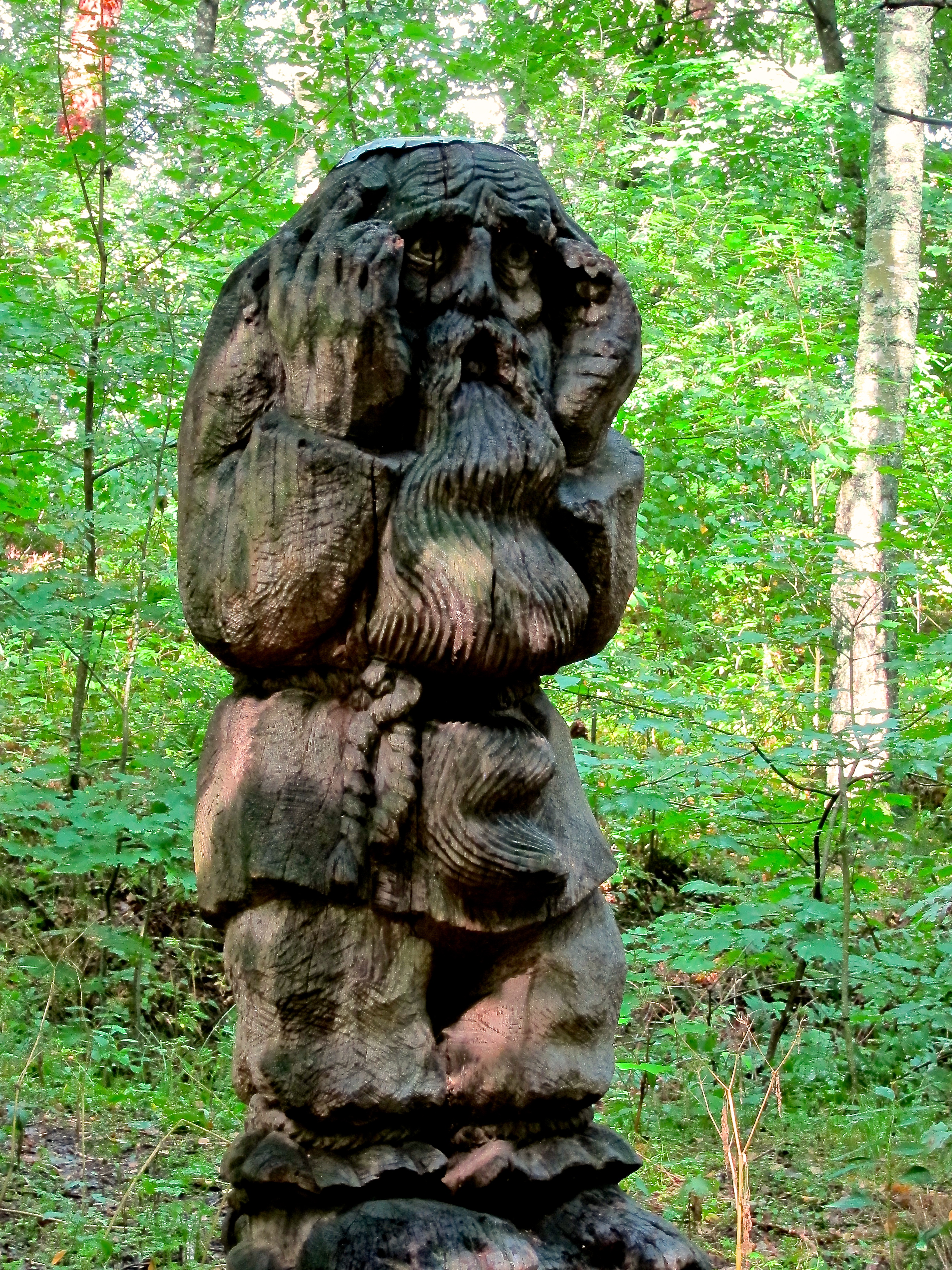
One of the hand-carved statues on Witches Hill.
We took the bus to our next stop and we went on a two mile walk through the forest of Witches Hill, that was absolutely beautiful. Most of the people in our group were complaining about all the walking and I think they missed the beautiful landscape in the process. There were huge hand-carved wooden statues of mythical creatures scattered throughout the paths but our tour guide didn’t do a very good job of telling any stories behind them.
I just really enjoyed the walk and the sweet, fresh air.
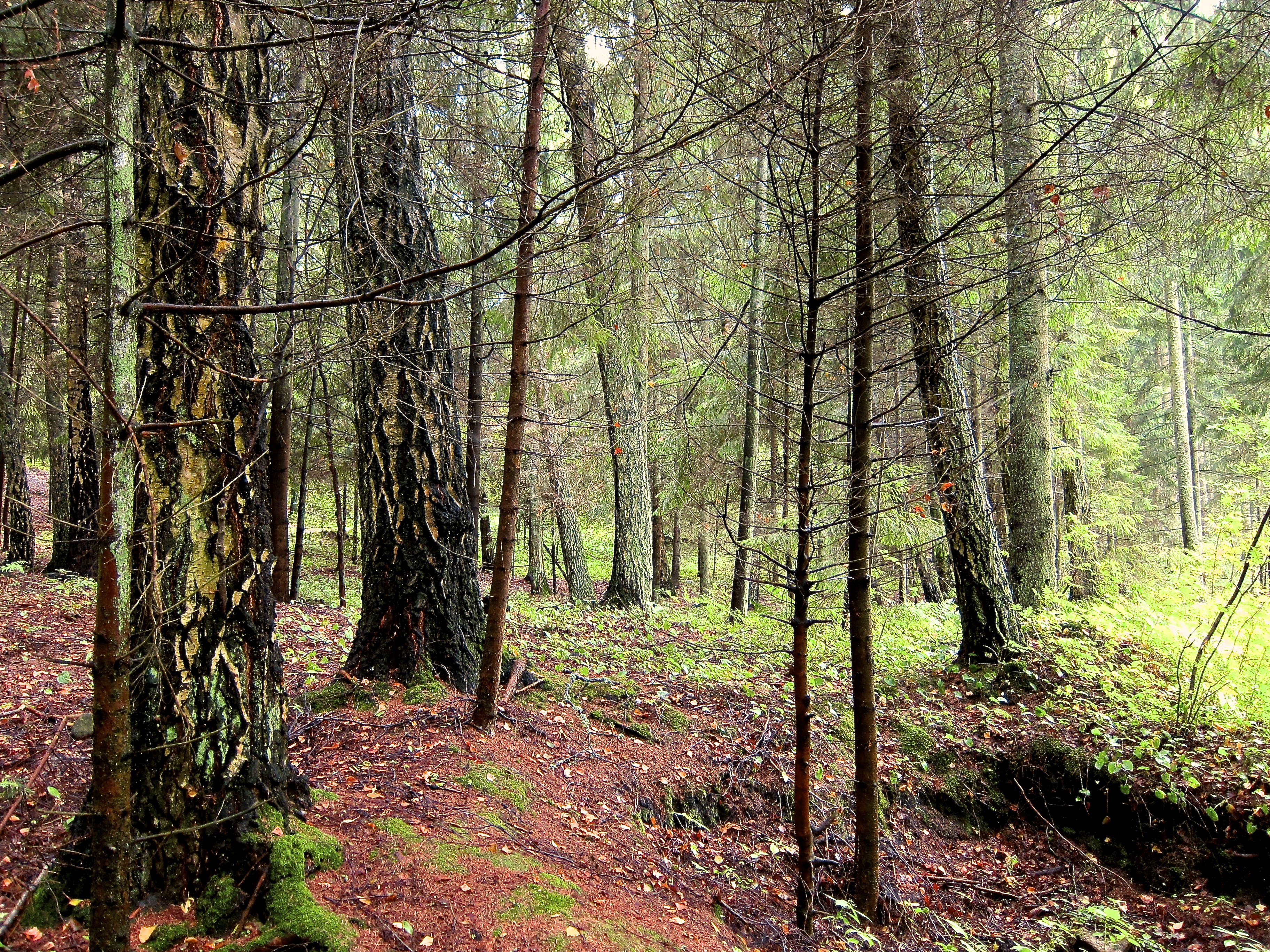
The forest of Witches Hill.

Row houses near Witches Hill.
After that, we had a short break and I snapped a picture of some simpl, modern dwellings by a small garden and shop. The raised apartments didn’t look very big or very safe.
After that, we headed to Amber Bay for a brief talk with a pastor of a small church about the local community. This really got people’s eyes rolling. The bottom line was that it was an opportunity for him to solicit donations for the church. A church that only has five parishioners. I think our group was just happy to be able to sit in the church pews after the long walk.
Then we visited a weathervane museum that looked like a store, only none of the weathervanes on display were for sale. They did have other things you could buy though. We were offered shot glasses of syrup-thick amber tea and then we walked about a quarter mile along the bay.

A cottage along Amber Bay.
It was a relaxing day but a rather disappointing visit to a country I doubt I will ever visit again. What I saw was beautiful. I just wish I would have seen more.
Baltic Cruise Day Seven: Tallinn, Estonia
The minute we pulled into port, I envisioned Tallinn as a fairy tale city. From our balcony, you could see the more modern city architecture to the left; and to the right, Old Town, looking as if it was lifted out of the pages of an old story book.
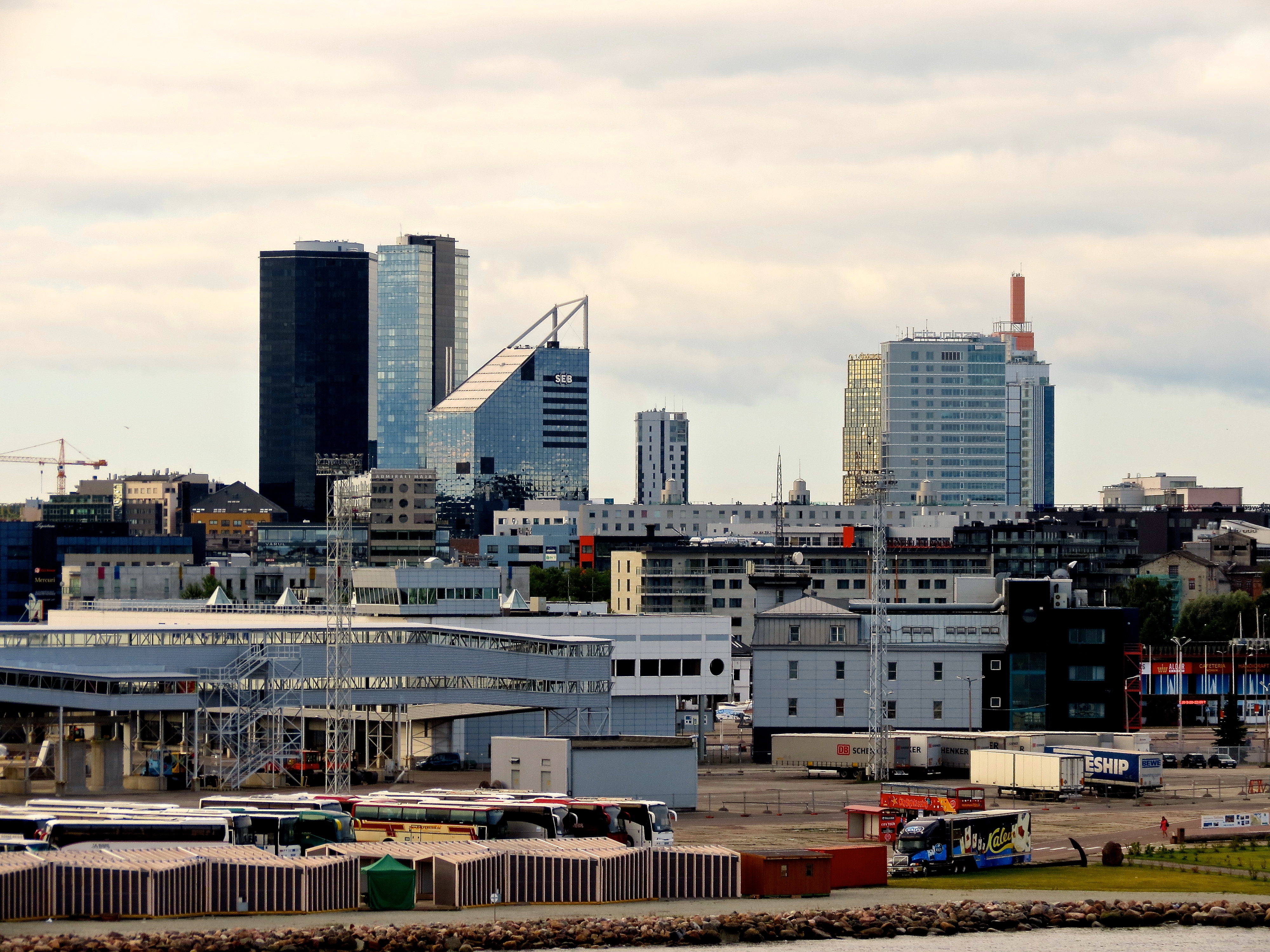
The skyline of modern Tallinn, viewed to the left, from our ship.

The skyline of Old Town Tallinn, viewed to the right, from our ship.
Tallinn is the capital city of Estonia and an important seaport. The established city has been dated back to 1154 AD with artifacts having been dated back to 3000 BC. Tallin was known as Reval, from the 1200s to 1917, before assuming its current name. It reverted back to Reval during the Nazi occupation and then the name Tallinn was again restored in 1944.

One of the onion domes of the Alexander Nevsky Cathedral against the blue sky in Tallinn.
Our tour of the day was “Upper Town and Rocca al Mare and Folk Show“. We started in Toompea (Upper Town), touring the Alexander Nevsky Cathedral and then continuing on foot through the quaint streets of Old Town Tallinn.
The Alexander Nevsky Cathedral was build at the end of the 1800s while under the Russian Empire, as an orthodox cathedral. The inspiration is immediately recognized by the prominent onion domes. It was almost demolished in the 1920s because the people of Estonia viewed it as a reminder of Soviet oppression. Luckily, it was saved and has been restored.
We wandered the narrow cobble stone streets until we reached the medieval Cathedral of Saint Mary the Virgin known as Dome Church.
It was established before 1233 AD and has been repeatedly rebuilt (restored) ever since. The Baroque tower was added in the late 1700s.

The Baroque tower of the Cathedral of Saint Mary the Virgin, also known as the Dome Church.

Inside the Dome Church.
Michael and I had some time to explore the streets while others on our tour visited some local shops and I really enjoyed just casually strolling through history.

The streets of Toompea (Upper Town), Tallinn, Estonia.
We had a beautiful view of the city and rooftops from Toompea, before making our way back to the bus for the second part of our tour. We didn’t spend time visiting Al-linn (Lower Town) but I would have liked to. I’d definitely consider returning to Tallinn for an extended stay and a chance to fully explore and experience all the history and ambience it has to offer.
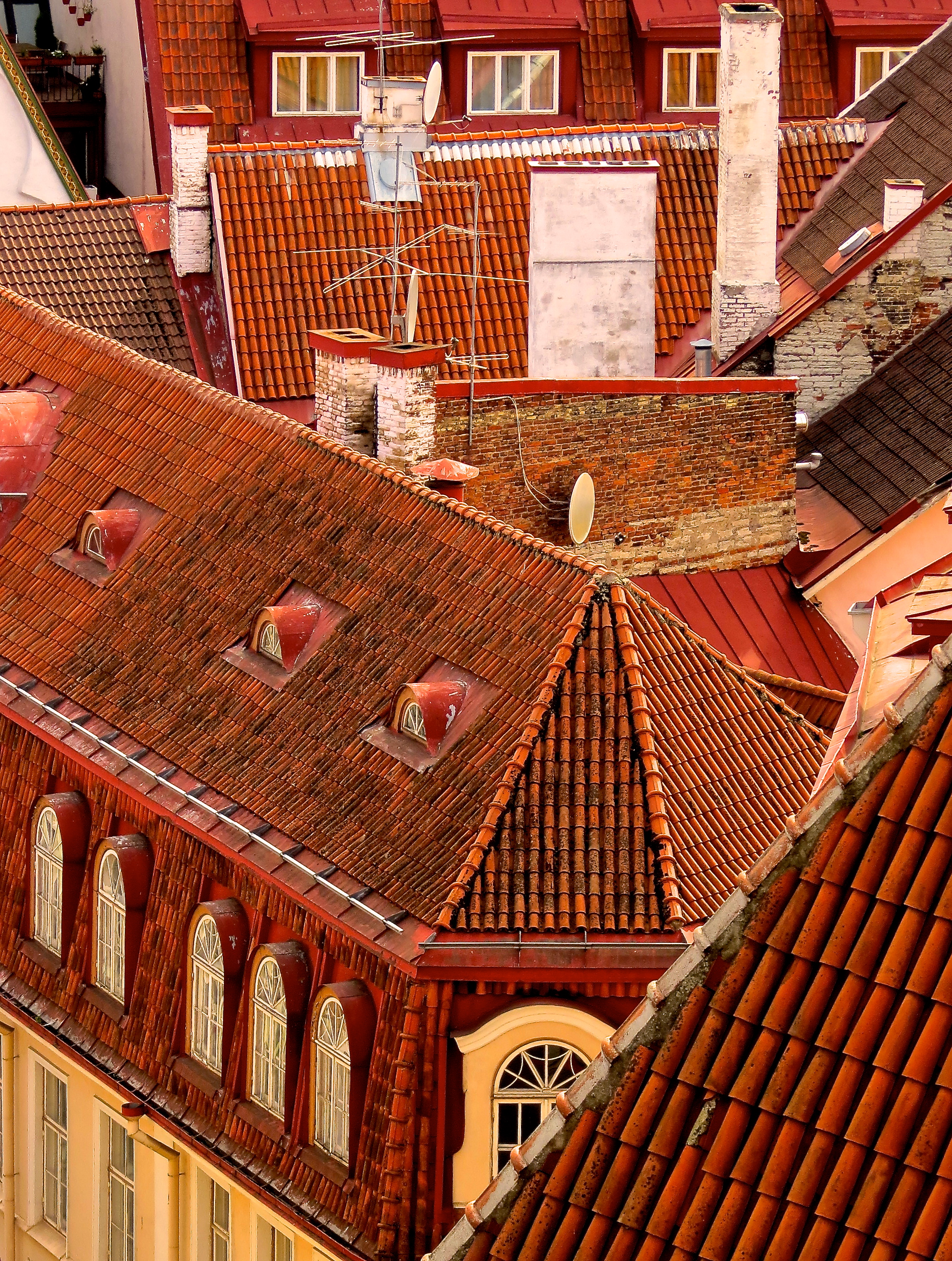
The rooftops of Toompea.
Next, we went to the Estonian Open Air Museum in the Rocca al Mare subdistrict of Tallinn. The park featured many examples of dwellings over the years and costumed performers that treated us to folk songs and dance while we snacked on meat pies and coffee. Michael was grabbed by one of the performers to participate in one of the dances. (Better him than me!)

Chickens at the Estonian Open Air Museum.
I’m not a huge fan of reenactment parks but I do think they are important historically. The park is beautiful and very well maintained. I found myself most interested in the low moss covered walls and animals (chickens and pigs) than the thatched roof dwellings themselves. I got left behind at point, talking to a pig and trying to get him to raise his head while I was taking pictures.

My new friend.
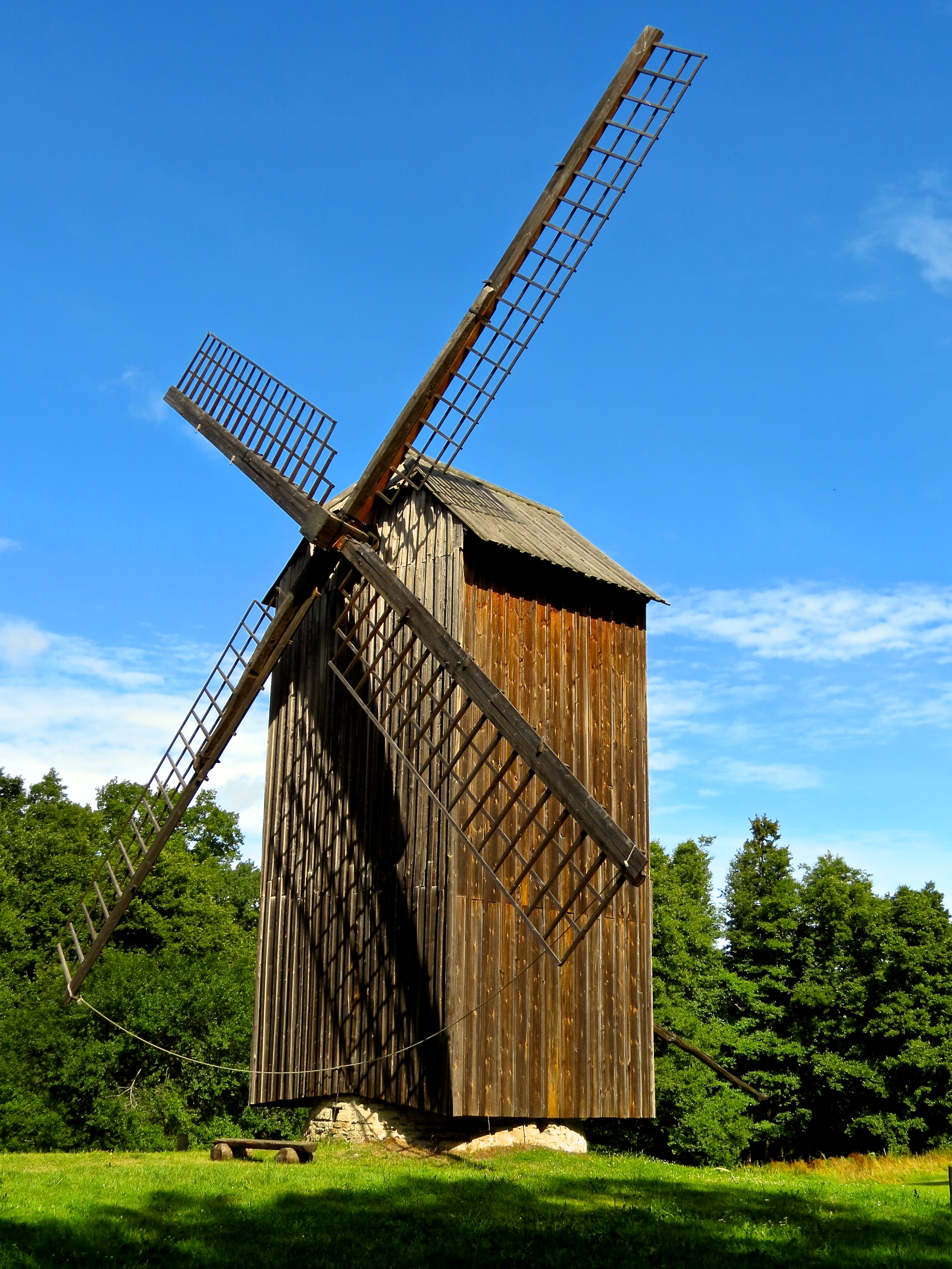
A windmill at the Estonian Open Air Museum.

Costumed children running down a path in Rocca al Mare.
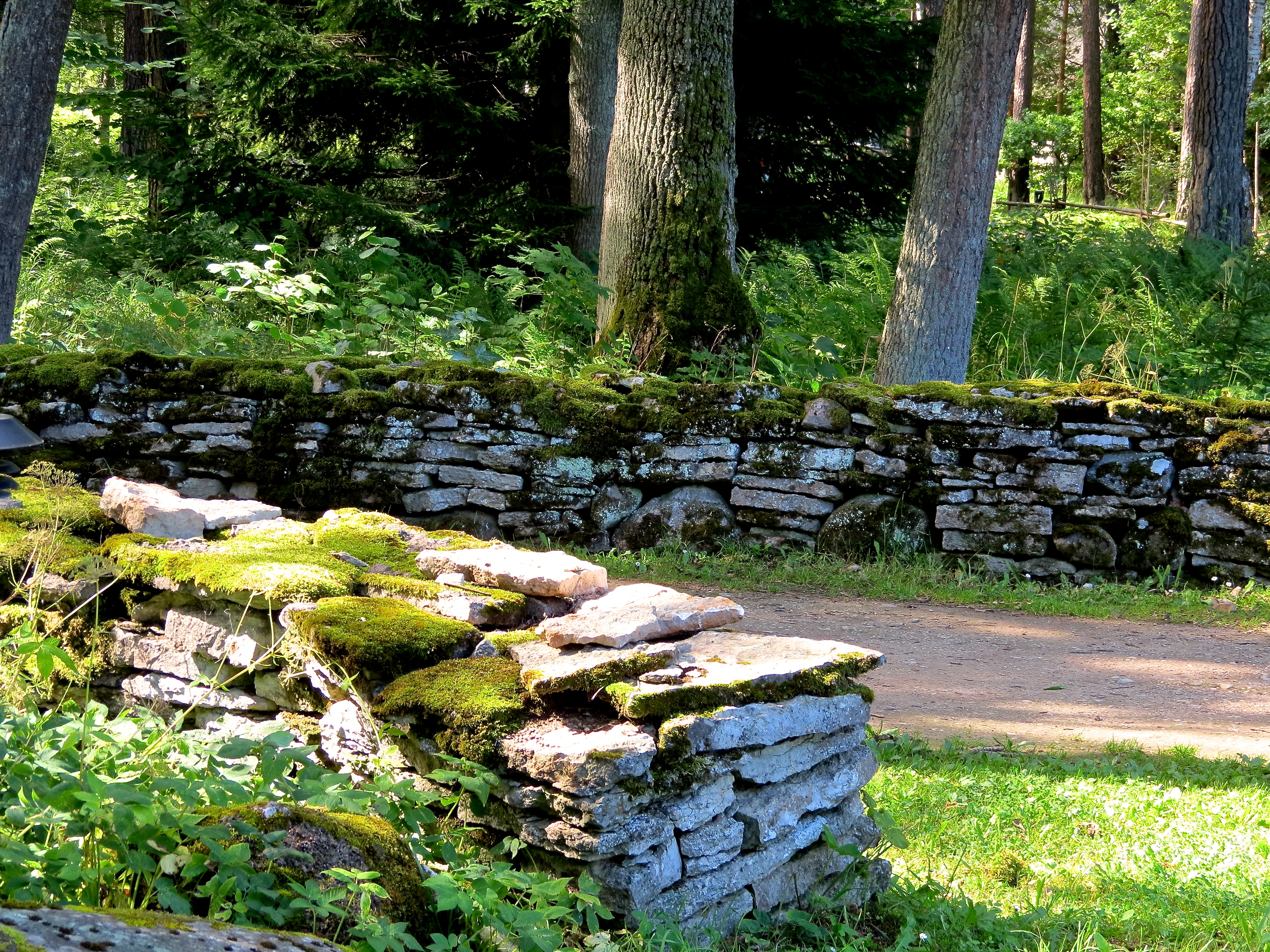
Beautiful moss-covered walls lining the paths at the Estonian Open Air Museum.
I loved that we were able to combine the old city with some of the more natural surroundings of Tallinn. It was sunny and warm– a beautiful way to end the day.
 How Do You Measure 525600 Minutes?