Home » 2014 (Page 7)
Yearly Archives: 2014
New York 2014: Broadway Here I Come!

Times Square, December 2012.
If you know me really well, then you know that New York is my city. We try to get there at least once a year and this will be Michael’s and my longest stay yet. Ten days in the Big Apple… tickets to 17 shows and lots of other exciting activities planned. We started booking our trip a couple months ago, looking for the best deals on rooms and show tickets.
This year, in addition to visiting friends that live in NYC, two of our friends from home will also be in New York– part of the time– and joining us on some of our excursions, adding a different dimension to our trip.
National September 11 Memorial & Museum My most anticipated event this trip is attending the National September 11 Museum on the official opening day, May 21st. 2014. I’ve been to the memorial twice before but anticipate that the museum will be a heightened emotional experience. I’ve already contributed a few images to the museum’s Artists Registry and hope to add more after this visit.
Broadway & Off Broadway Shows I know it sounds insane, 17 shows in 10 days…. but this is what we do. We always try to get a mix of plays and musicals, throwing in a few Off Broadway shows as well, if our schedule permits. This year’s line up includes: A Gentleman’s Guide To Love & Murder, Of Mice and Men, Rocky, The Bridges of Madison Country, Under My Skin, The Cradle Will Rock, All the Way, The Cripple of Inishmaan, Casa Valentina, Phantom of the Opera, Bullets Over Broadway, If/Then, Act One, Mothers and Sons, Hedwig and the Angry Inch, Violet, and Heathers the Musical.
Something Old, Something New Each time we come to New York, our main goal is to see lots of shows and I think a lot of our friends think that’s all we do. But, we always try to experience as much of this amazing city as possible– time and weather permitting. Of course, we have a few restaurants and neighborhood destinations (sights) we try to visit every year, like Central Park— but we always try to add at least one new destination each trip and mix new restaurants in with a few old favorites. This year, we’ll be visiting The High Line for the second time, and will be venturing to the far north reach of Manhattan to visit The Cloisters and its surrounding Fort Tryon Park.
We’re also hoping to make it to this year’s edition of the annual Stars in the Alley concert, several street festivals and a (new to us) historical sight or two.
I hope to be blogging daily about our NY adventures– that is, if we’re not too busy out doing.

Lower Manhattan. December 2012.
Stupid People And Social Media
 Watch out because today I’m going to rant! Sometimes I get so frustrated I can’t see straight. What in the world is wrong with people? How is it that some people are so gullible, ignorant, or so full of hate that they can possibly believe anything and everything they hear?
Before I offend anyone, if you honestly believe any of the examples I mention here… PLEASE. Don’t take my word for it. Do some research and make an informed decision on your own.
That brings me to my first point: Do you know that some people don’t know how to find answers to questions? Is there anyone out there brave enough to say they have never heard of Google, Yahoo, or even the library? Word of Mouth is great for conversation starters but a terrible way to get factual information.
Judge Judith Sheindlin (Judge Judy) says, “If it doesn’t make sense, then it’s not true.” So if something doesn’t make sense– LOOK IT UP! Don’t be afraid to question everything.
I’m not not going to tell you where to find your answers, for fear of being accused of pushing my own agenda. I will give you suggestions that might help you sort out the truth from fiction yourself. Always, always verify through research with multiple sources. If you can’t find enough information, then by all means, be skeptical.
My second point: I do hope everyone understands the difference between Social Media and what is factual news. I realize the lines are being increasingly blurred– which is just one more reason you shouldn’t believe everything you hear or see.
The purpose of Social Media is to engage or inform others through digital and web-based methods of social interaction. The definition continues to develop as technology evolves. Basically, it is a way to communicate up-to-the-minute activities, ideas and opinions and interact with others about those topics. It is sharing content between users.
Without interaction, social media does not exist. Sharing, commenting, responding, agreeing or disagreeing– are all important to the social media experience. It’s also a way for people to express themselves directly, without necessarily being an authority on a subject. Opinions are not facts. An interpretation is not a fact. Again, this is why I suggest researching anything important or questionable because there are many, many people sharing their opinions and interpretations out there– that doesn’t make them true.
Right-Wing, Left-Wing, Broken-Wing: They just don’t get it. If you get the majority of your “news” from Hannity or Rachael Maddow you are being ignorant. There. I said it. They are talk shows not news programs! There may be facts or current events discussed where there is some factual content; but for the most part, you are being fed opinions and speculations based on their biased agendas.
 #Bring Back Our Girls: one of the current idiotic discussions is criticizing Michelle Obama’s #Bring Back Our Girls tweet. It’s a perfect example of how people have no comprehension of what social media is and is not. Obama was voicing her support for the global campaign to draw attention to the 300 Nigerian girls that were kidnapped from their school and are being held hostage, with the promise to sell them into slavery. It is an awareness campaign intended to build support for action in this crisis. This type of action is being referred to as hashtag activism.
Critics are lambasting Obama, saying her tweet and Facebook post was outrageous, pointless, and embarrassing. One critic last night said that it was okay for celebrities to use hashtag activism because they are trying to get the government to act– but NOT okay for Michelle Obama, because she is the government. No one, including Obama, believes the kidnappers will see the posts and let the girls go free. That suggestion is ridiculous. The posts are part of a campaign to build support and awareness of the situation. Common sense should tell you that government action or intervention is best accepted when there is a majority of public support. In this case, the campaign is to engage, inform and build support for action, not an expectation that the campaign, itself, will put an end to the hostage situation.
To carry the idiotic behavior to new levels. Some critics have created their own disrespectful and offensive campaigns in response, such as: #Bring Back Our Country and #Bring Back Our Balls.
 Healthcare: Among the many stupid, ignorance comments I’ve heard regarding the Affordable Care Act, I think I’ve finally heard the most ridiculous of all. Some people actually believe that when you sign up for healthcare (insurance) through the ACA, you get an “Obamacare card”. They believe if you get an “Obamacare card” doctors, hospitals and pharmacies can refuse it because they don’t want to accept it.
How can anyone believe this? Is it because of misinformation or just pure hate for the ACA and the current administration? I’m not going to say that I agree that people should be forced to purchase healthcare insurance but I do believe insurance should be affordable and available to everyone that wants it.
All Chemicals are Bad: Have you heard people say, “I won’t eat anything that was treated with chemicals. I don’t care if they say it is safe, all chemicals are bad.”
All chemicals are bad? Really? All foods are chemical. Medicines– chemical. Water– chemical. Air– chemical. Our bodies are chemical compositions.
It’s important to remember that many chemicals that are vital to life are actually deadly in high doses. Many of the chemicals that are quoted in the media as being additives to the food supply– to scare you, are already found naturally in untreated, organic foods and natural resources as well.
Does that mean that all chemicals are good and that we shouldn’t question their use? Of course not. But be informed. Don’t just accept every quack doctor’s comments about what you should be afraid of, or avoid, when all they are really trying to do is push their latest book, product or agenda.
Diet soda makes you fat and the chemicals in it will kill you in the process: It must be true because it’s been said for years, right. Doctors say it and there are many articles that say it. So it’s true. No, not necessarily. If you really research the subject, you’ll see that there have been no studied direct links to chemicals such as aspartame, to serious illness or fatality. That doesn’t mean it’s harmless either.
“But I just read…” Read it again. Articles may say “studies show… ” or “a doctor at this or that school (or lab) says…” but then they don’t provide links so that you can read the study or research it yourself. (But make sure you buy their book!) One article I read recently claiming proof from a University study… did provide a link. It lends authenticity, right? Except, when you clicked on the link… it took you to Google Maps NOT a study. Most of us won’t even bother clicking on the link but would accept the statement because it appeared more information was provided.
When a doctor says, “Studies suggest…” you first questions should be: what kind of study, who and where was the study performed and who funded it? Was the study even scientific? Often, these results are quoted from unscientific polls or questionnaires. How someone feels, especially outside of a controlled environment, is not scientific proof of fact. What were the other factors that could have caused these feelings? You won’t know because it wasn’t a controlled, scientific study.
The fat issue really makes me boil. People that take their news from the headlines and don’t even bother to read below the by line are easily convinced: diet soda makes you fat. No, the actual comments doctors have made are that they fear and are concerned that diet drinks and foods give people a false sense that they can eat as much as they want… because it is a diet product; and that doing so will not affect their weight negatively.
(PAUSE)
 After I started writing this, I started to feel guilty for picking on people for their ignorance. Ignorance that I don’t fully understand but that I want to compassionately change. The phrase, You can’t believe everything you hear, takes on a heightened importance in this age of the internet and technology where anyone, anywhere can publish their thoughts. Human nature makes us want to believe what we read and that everyone else is honest and above board, even though we know deep down it’s not true. Everyone has an agenda or spin.
You can’t trust news reporting anymore because they don’t thoroughly research like they used to– before releasing their findings. Anything that might boost ratings or garner an audience is considered news worthy. Whenever you see an expert trotted out on display, like at a dog and pony show– and the first question asked is, “What do you think…..” Beware. Any response from an “expert” that starts with, “I believe….”, “This suggests….” I think that…” WARNING! They are only giving an opinion. These are not factual statements, don’t accept them as truth.
Do I think people are intentionally stupid? No, I don’t. I do believe that there are many people that are so biased, for or against topics, that they willing believe anything they hear that support their own position. What’s really troubling is that some people take sides due to some affiliation or belief that may not even be directly related.
I could go on and on with more examples but I think I’ll stop here.
If social media works— then hopefully the people engaged in this misinformation, will eventually get the right information. It only works if people actively seek the truth.
First, Last and Everything In Between
I took advantage of the weather early this past week and began the arduous task of prepping the flower beds and started mulching around the trees and shrubs. This is something I really love doing, even though it takes a lot of time and effort to do it all.
I couldn’t help but think of the Frances Hodgson Burnett children’s book, The Secret Garden, which is one of my all-time favorite stories. Particularly, when Mary discovers the hidden garden and begins clearing away the brush and leaves allowing the tiny buds of spring to catch their first glimpses of sunshine. In the story, the garden symbolizes healing and rebirth. Often, when I’m doing this, I’ll find the song, A Bit of Earth (from the musical version of the book) playing over and over in my head.
I’d had cleared a good-sized area, pulled out hundreds of maple tree seedlings and was spreading mulch as Cash came sauntering over to me, sniffing around the damp soil and butting into my space. He got right in my face, grabbing my attention and looking in my eyes, he snorted and started licking my face. When he was done, I gave him a couple quick pats and rubbed his coat. Then he was off, settling nearby in a warm spot, enjoying the sun.
It was a moment.
 This wasn’t the first time this has happened. In fact, I can’t begin to count the number of times Cash or Roxie had done this over the years. No matter how often it happened, it has never ceased to touch my heart and make me smile. For that brief moment, it brings me back to reality from my daydreaming and we connect. Then off they’d go to explore.
Having lost Roxie a few months ago, these precious little moments are especially dear. I couldn’t help wondering as Cash wandered off the other day, would that be the last time? Sad? Yes. Morbid? Maybe. The point is that it was just one of those seemingly common occurrences that we don’t always appreciate or think about until they’re gone.
This started me thinking… of all the important events in our lives, we naturally tend to remember the firsts and lasts the most. First meeting, first kiss, first concert… graduating, closing night of a play or saying goodbye to someone special— What we really risk missing are all those special moments in between.
We are always in such a rush to get from Point A to Point B that we miss, or fail to appreciate, everything in between.
The in between is the journey. We experience so much in our travels and often learn so much—there can be many successes and failures along the way– it would be a shame to forget what got us to our destination.
We meet new people and sometimes instantly click. In other instances, friendships build over time. In either case, the in between becomes the history that can bind us together or eventually drive us apart.
I spent many years working with students in high school theatre, the goal, of course, is to put on a good production. Many students would prefer to skip right from audition to performance but it’s the rehearsal process that hopefully teaches them skills and develops their abilities to portray their characters convincingly. During rehearsals– the in between— Friendships and trust often develop along the way. The in between colors, not only the resulting performance but potentially the rest of their lives.
I’ve worked so much on the the technical end of productions, my in between was consumed with many hours building and painting scenery and sometimes unexpectedly, building some important friendships. You learn a lot about a person working with them side by side. There’s often a lot of laughter, stories and maybe a few tears mixed in with all those hours of hard work. In the long run, the by product of the experience can be more valuable than the impact of the performance itself. There are in between moments I remember now, quite vividly, for productions that are all but gone from my memory.
I’ve found, especially when I’m feeling stressed, how important a quiet moment of reflection can be. Stopping what you’re doing, taking a breath and taking a look around can be very cathartic. It is surprising how different everything can look in a simple, quiet moment. It’s often brought me a calming peace and sometimes a pure moment of clarity.
An unimportant, simple moment— in between— can suddenly seem like the most important moment of all.

I moved my computer out to the table on the front porch while I was writing this. Cash just came up on the porch after barking at a passing dog and his owner and has now settled down. He is laying with his head resting on his paws, eyes closed, on the welcome mat.
He’s sleeping now.
There’s a light breeze and birds are chirping noisily in the background. A relatively unimportant moment— but a moment that feels so precious and alive.
Don’t miss those moments. Those moments in between.
Embrace them, cherish them… and don’t let the rush to Point B blind you to what is really important…
This moment.
Can You See Me Now? My Facebook Experiment
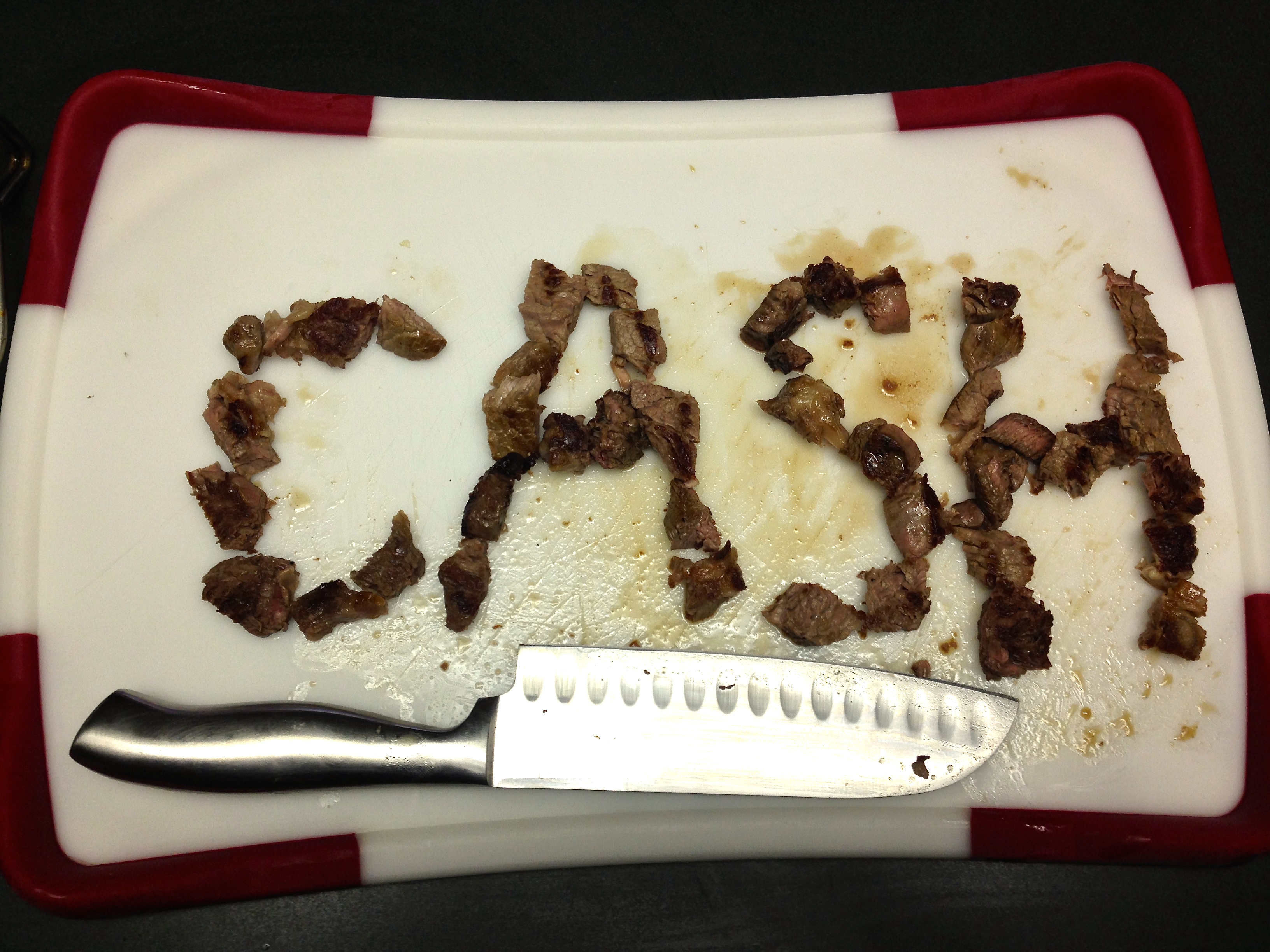
 Last Wednesday was Cash’s 11th birthday and instead of just posting a picture of him on Facebook to share and commemorate the occasion, I decided to try a little experiment.
I decided to mimic those never-ending pictures on Facebook of people holding signs asking for LIKES of help with something, that flooded Facebook for a while.
Background
A lot of my Facebook friends have been complaining about the newsfeed and not seeing current updates from their friends. Have you noticed? It can be confusing when you see posts popping up from the previous day, when you didn’t see them before, even though you checked. Yes, you can switch between top news and most recent. Still, some friends’ posts don’t show up in either one. So what’s going on?
Facebook is supposed to be a way for people to connect and friends to stay in touch. Many people have been sharing important news on Facebook, as their primary form of communication, instead of spending hours making phone calls or sending email. This is especially beneficial when time is an issue, or the news is something that you really don’t want to have to repeat over and over again. Sometimes though, and more frequently now, those posts aren’t showing up. I’ve known people to get hurt or angry because friends didn’t respond, LIKE or comment on their news. They trusted Facebook as a reliable forum to share their news, only to be let down by the current, unpredictable algorithm that is mysteriously sorting what we see.
So how are you supposed to stay in touch when you can’t see what your friends are posting? First, this isn’t entirely true. You can always go to your friends’ page and see everything they are sharing. The problem comes into play when users have many friends and pages they follow and rely on the newsfeed and notifications to keep them informed. That used to be pretty efficient. Now, the wizards at Facebook are controlling what you see and frequently pushing things your way you have no desire to see. Ads and recommended pages and products are here to stay.
Have you also noticed, if you access Facebook from different computers or your phone app, you get different results? The other day a post showed up on my phone from a friend that I hadn’t seen any posts from in awhile. (I had just figured he was busy and taking a break.) Then I saw it had actually been posted a few days before but was showing up now– presumably, because it received new comments. I checked my computer again and it definitely was not showing up in either my newsfeed or notifications. I went to his page and saw he had posted quite a bit, some important stuff– but somehow Facebook decided I shouldn’t see that information. My own family’s posts don’t show up half the time!
On the other hand, there are some people’s posts that never seem to stop. A few I haven’t messaged, LIKED, or commented on, in over a year. Yet, I see everything they do! It just makes no sense.
My personal message to Facebook is : Please, stop censoring what I see. I chose to be friends with these people (or follow a company, group or fan page)… Let me decide if I want to read their content! Just PLEASE stop blocking it and making that decision for me.
Results
Here are the results of my experiment. Realize this isn’t very scientific but it gives you an idea of what all the confusion is about. It might also give to a look into the reach of your audience. The LIKE and SHARED numbers included the measurable friends and friends of friends, viewable on Facebook.
The picture was posted with the PUBLIC setting at approximately 9 am, Wednesday April 23, 2014
My current number of Facebook friends: 873
Number of People that LIKED in the first 10 hours: 248
Number of People that LIKED in the first 24 hours: 465
Number of SHARES in the first 24 hours: 166
Number of LIKES to date (approximately three days): 811
Number of SHARES to date: 711
Number of LIKES from the SHARED List: 1182
Number of Friend SHARES: 16
Number of Friend of Friends SHARES: 215
Number of Friends that said they used Facebook on 4/23 but did not see my original post: 10
As I said, this wasn’t very scientific, so some of the numbers don’t match up. I suspect there could be overlaps and some may not show accurately based on people’s privacy settings.
Another thing I noticed was that it took more than 24 hours for the info to update and combine the totals on the picture. The total number of LIKES and SHARES changed by about 10, as I was writing this.
Favorite SHARED comments from friends of friends (and beyond):
- Awwww… if he won’t give you a steak, just bite him. You need a steak!
- At 77 yrs old who can deny you!
- At 11 you should have steak every night for dinner!
- Omg, I just fed my two doberman’s steak for dinner, and they are no where near 11…bless his heart visit me, I will feed you steak!!!!!!
- Le ne maradjon a steakről!!
- FERST FATWA OF DAYE! YOU SHARE, GET DOG STEAK! IS PERMIT!
- A steak for an 11 year old dog would probably kill his pancreas. (This is a terrible thought… but it made me laugh anyway.)
- If he put up with u for 11 yrs. lol! Buy him a steak any way!!
The last one was my favorite!
From what I can tell, quite a few of my friends never saw the original post. I’m also sure many scrolled right by it without LIKING or SHARING it. In either case, don’t depend that your friends are seeing your posts. I’ve started tagging people in the comment section, or sharing with them directly, if I want to be sure they see it.
And YES, Cash got his steak.
PEEPSHOW: A Photo Essay
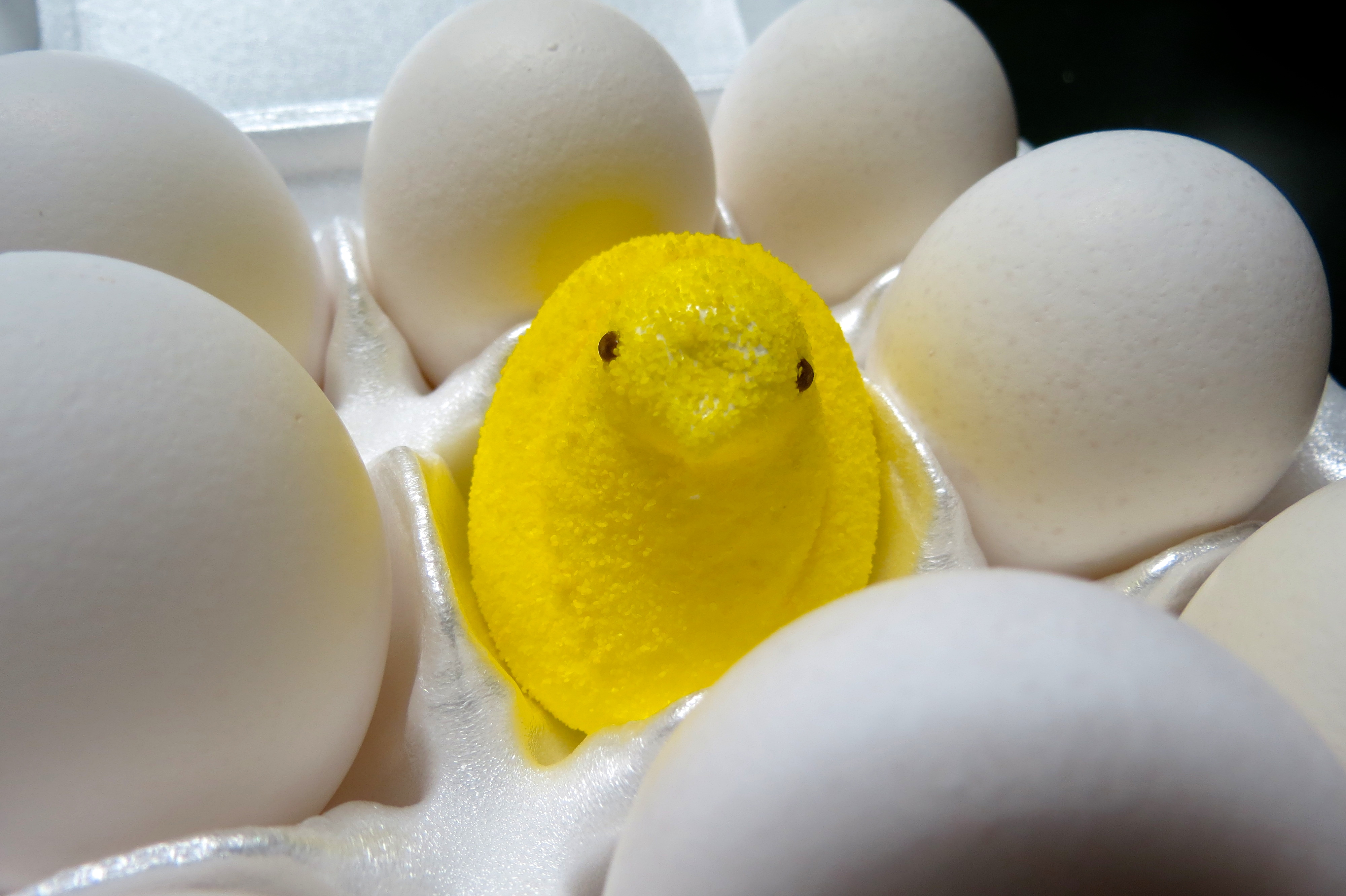 Like them or not, PEEPS are a pop culture icon.
Can you really think of Easter candy without them popping in your head?
PEEPS have been around since the 1920s when they were hand formed, later (1953) to be mass produced by machine as we still know them today. Here’s a little photo fun to enjoy this Easter holiday.
NOTE: No PEEPS were harmed or unethically treated during this photo shoot.
Although, they were eaten afterwards.

If I Only Had A Peep
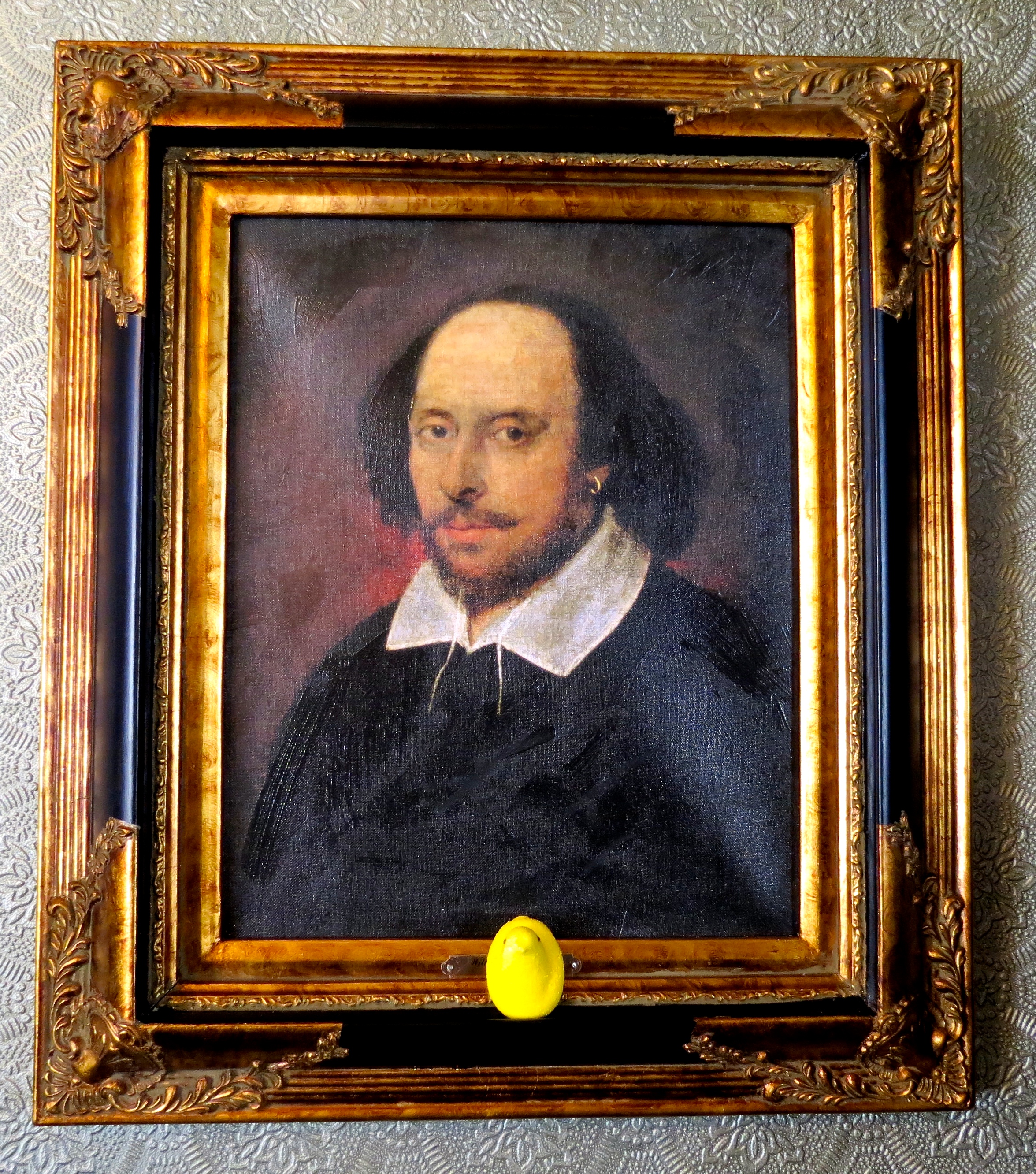
To Peep Or Not To Peep

Acoustical Peep

Enchanting Peeps
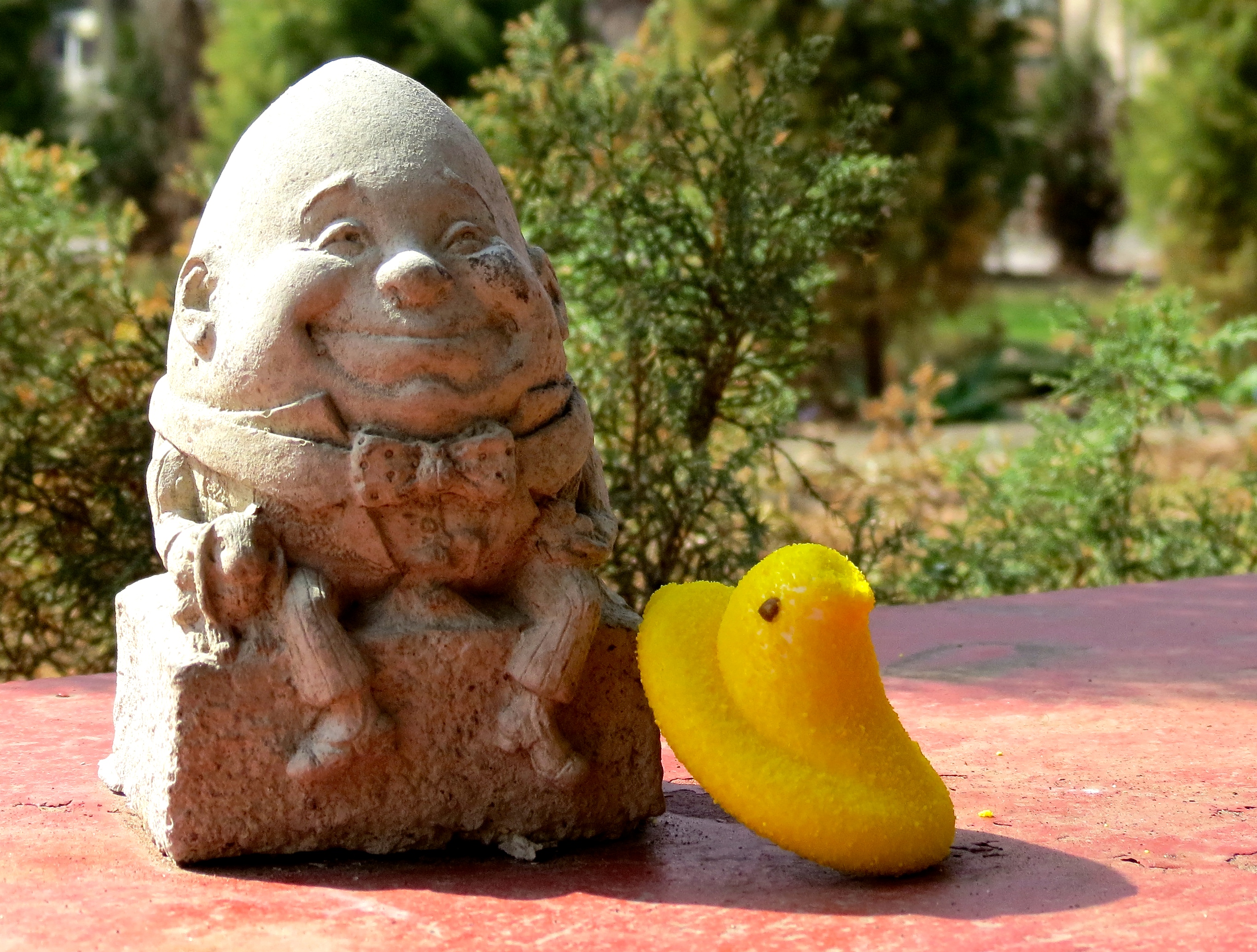
Me and My Shadow

Am I Supposed to Juggle These?

Are You My Mother?
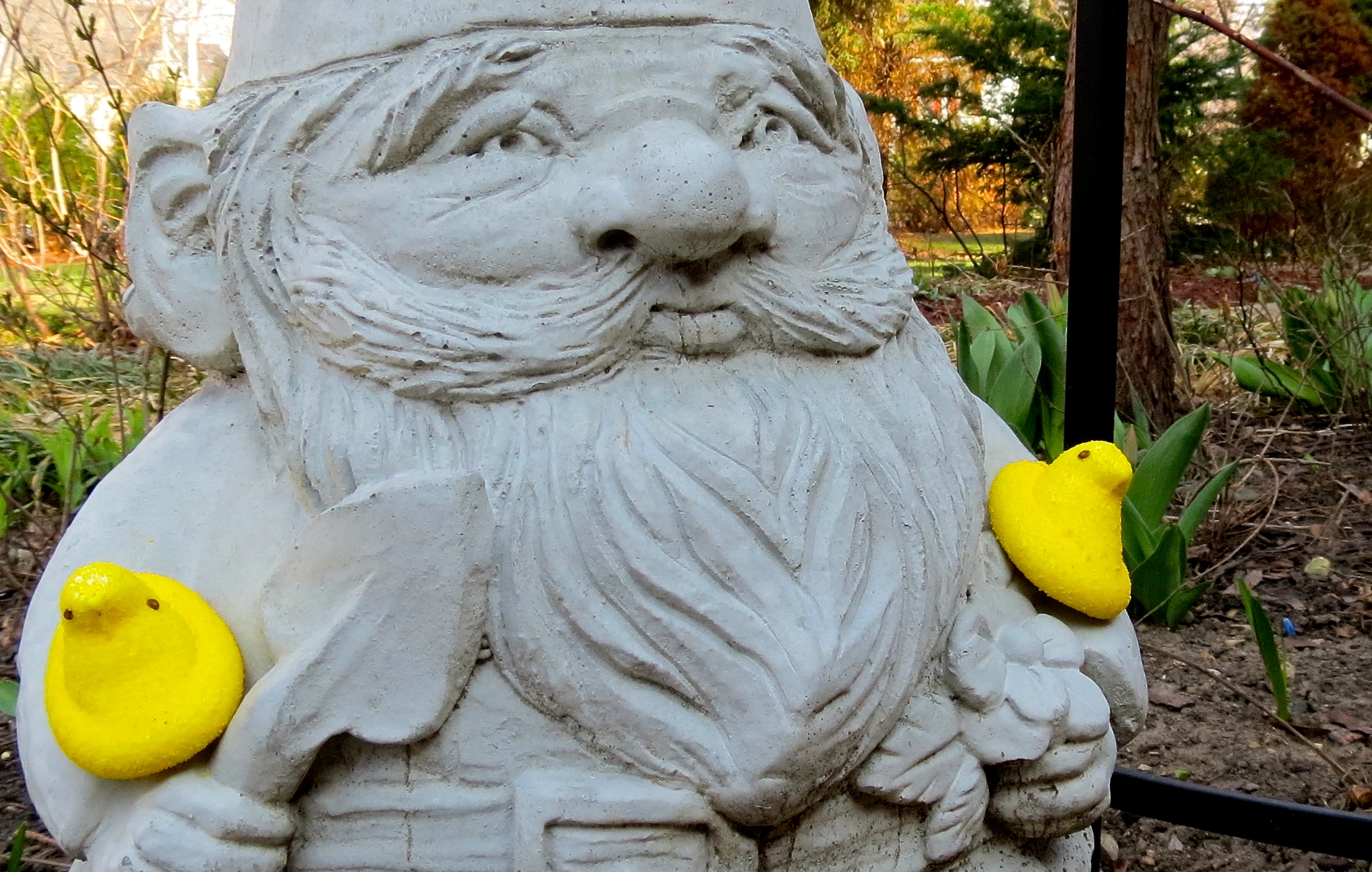
Twin Peeps
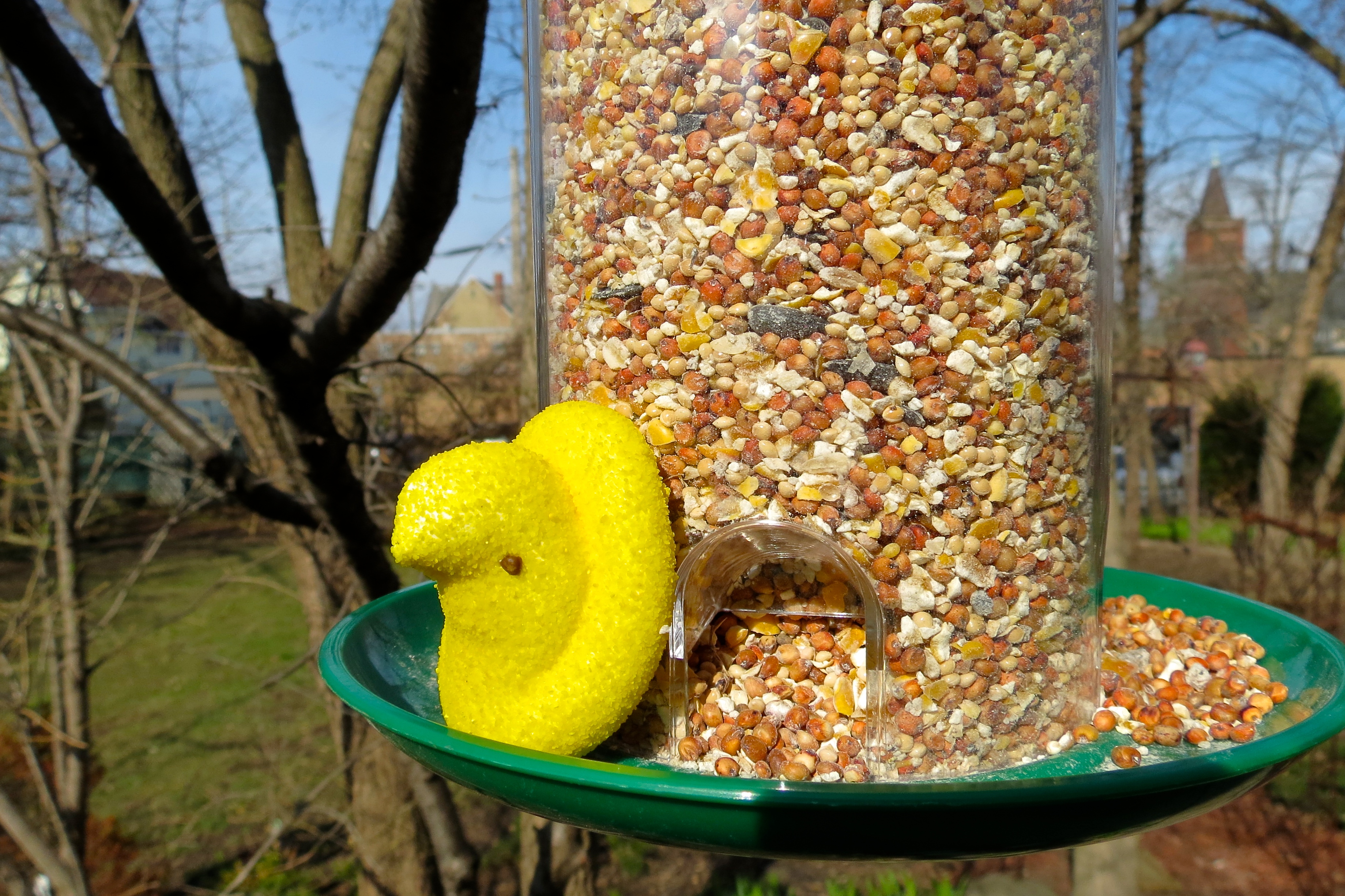
A Peeps’ Gotta Eat

They’re Hatching!
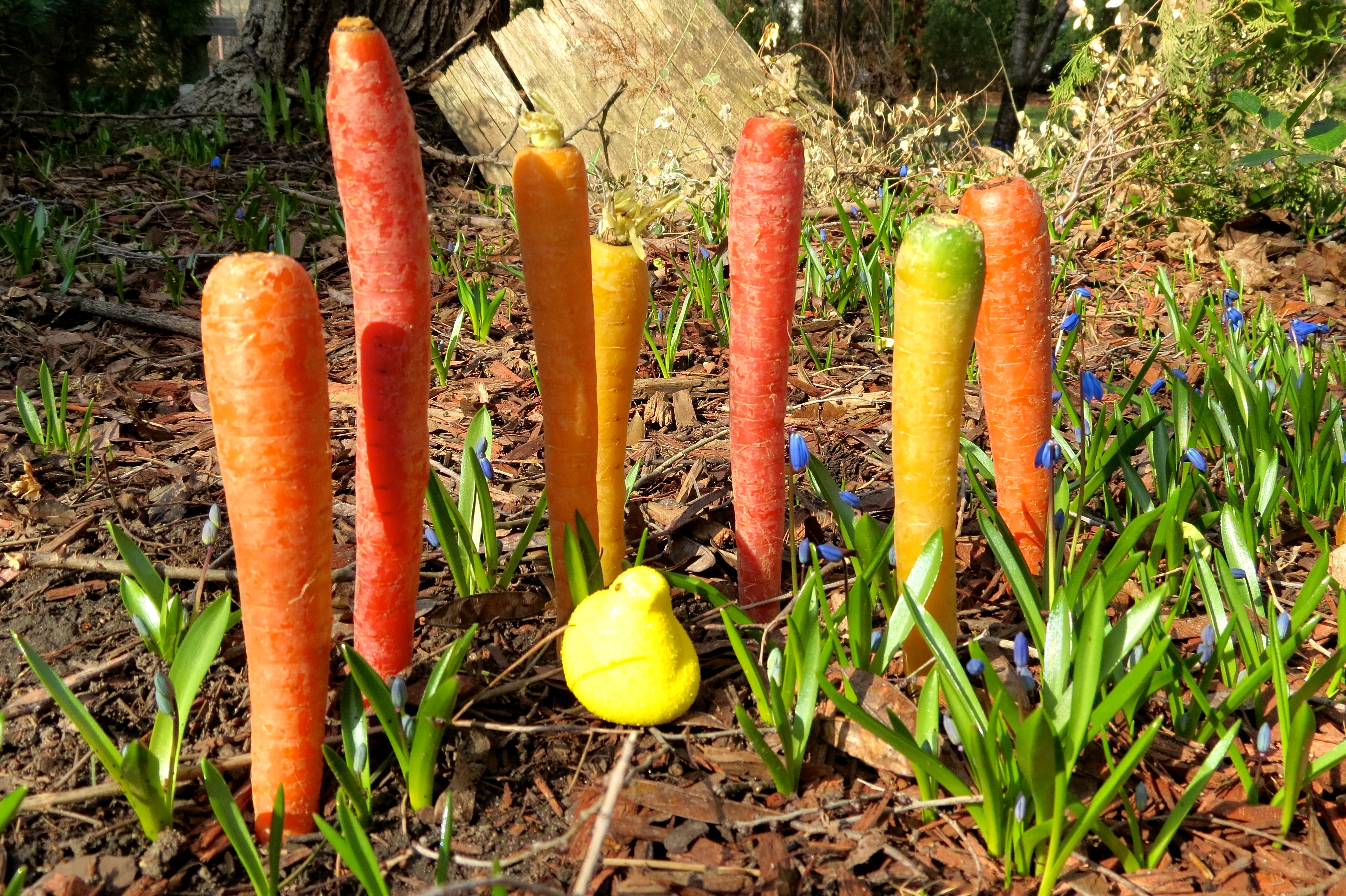
Happy Peepster!
The GMO Skinny: What You Need to Know about GMO: Genetically Modified Foods
 You’re already eating them and most people don’t know it. Some of the food on your table has been altered to produce toxins— toxins that are entering your body. It’s not on the label and it may not be safe.
GM or GMO foods (Genetically Modified Organisms) are now making their way to grocery shelves, in restaurants and into your home. The biggest concern for consumers should be the results of studies showing the adverse affects of GM foods on the digestive system, liver, kidneys, and reproductive organs of the animals tested. They have also been linked to premature aging. The studies show the consumption of certain GM foods have caused allergic reactions to other normally non-allergenic foods that didn’t previously exist.
What are GMOs?
To put it in the simplest terms, GMOs are plants and animals that are genetically altered by inserting or splicing the genes of different species with the goal of a specific result. For example, combining the genes of a fish and a potato. Scientists are crossing species barriers set up by nature. They are creating hybrids that would be impossible to occur naturally. It’s also known as Genetic Engineering.
Why GMOs?
The official reasoning behind genetic modification is to produce crops that offer improved yields, enhanced nutritional value, tastes better, have a longer shelf life, and are resistance to drought, frost, or insect pests.
Unfortunately, to date, there is no proof of any increases in the quality of GM foods either in yields, taste or nutritional values over Non-GMO foods. Modified GMO crops that have increased primary pest tolerance, start to be attack more readily by secondary pests, requiring further engineering and genetic modification. Herbicide tolerance in GMOs, allows and encourages the higher usage of chemical herbicides on food crops to kill weeds, increasing their overall toxicity. The most common used herbicide is Monsanto’s Round Up.
The genetic engineering of plants often requires the alteration of more than one single trait, when that trait fails to completely fulfill its intended purpose or when multiple results are desired. Stacked traits in one particular GM corn hybrid has eight GM traits to alter insect resistance and herbicide tolerance.
 GMOs are rapidly changing the natural balance of our ecosystem, causing a chain-reaction effect that cannot be reversed. The environmental effects of these changes may not be felt immediately but will take years to accurately measure and understand. Geneti modification cannot be undone. To better understand this, look at the serious long term affects the Japanese Beetle and West Nile virus are creating after being artificially introduced into other parts of the world other than their origin. They affect all elements of the environment (i.e. plants, animals, humans) directly, as well as the effects caused by the use of new chemicals introduced into the ecosystem in an attempt to combat them.
The genetic engineering of plants often requires the alteration of more than one single trait, if that trait fails to completely fulfill its intended purpose or when multiple results are desired. Stacked traits in one particular GM corn hybrid has eight GM traits to alter insect resistance and herbicide tolerance.
“Most studies with GM foods indicate that they may cause hepatic, pancreatic, renal, and reproductive effects and may alter haematological [blood], biochemical, and immunologic parameters, the significance of which remains to be solved with chronic toxicity studies.” – Dona A, Arvanitoyannis IS. Health risks of genetically modified foods. Crit Rev Food Sci Nutr. 2009; 49: 164–1751
– Dona A, Arvanitoyannis IS. Health risks of genetically modified foods. Crit Rev Food Sci Nutr. 2009; 49: 164–1751 – See more at: http://earthopensource.org/index.php/3-health-hazards-of-gm-foods/3-1-myth-gm-foods-are-safe-to-eat#sthash.Du1Kv9fg.dpuf
“Most studies with GM foods indicate that they may cause hepatic, pancreatic, renal, and reproductive effects and may alter haematological [blood], biochemical, and immunologic parameters, the significance of which remains to be solved with chronic toxicity studies.”
– Dona A, Arvanitoyannis IS. Health risks of genetically modified foods. Crit Rev Food Sci Nutr. 2009; 49: 164–1751 – See more at: http://earthopensource.org/index.php/3-health-hazards-of-gm-foods/3-1-myth-gm-foods-are-safe-to-eat#sthash.Du1Kv9fg.dpuf“Most studies with GM foods indicate that they may cause hepatic, pancreatic, renal, and reproductive effects and may alter haematological [blood], biochemical, and immunologic parameters, the significance of which remains to be solved with chronic toxicity studies.”
– Dona A, Arvanitoyannis IS. Health risks of genetically modified foods. Crit Rev Food Sci Nutr. 2009; 49: 164–1751 – See more at: http://earthopensource.org/index.php/3-health-hazards-of-gm-foods/3-1-myth-gm-foods-are-safe-to-eat#sthash.Du1Kv9fg.dpuf
GMO labeling is not regulated or required in the United States. Legislation to require labeling is being fought by the major corporations that use GM ingredients in their products. Currently, 60 countries around the world, including the European Union, have very strict laws regarding GMOs, if not completely banned altogether. You can see a list of countries and what is banned: here.
The genetic modification of animals foods is best explained by the wide usage of antibiotics, growth hormones and outright genetic engineering; in addition to GMO feed used in animal production.
Currently, the largest commercialized GM crops in the U.S. include: soy (94%), cotton (90%), canola (90%), sugar beets (95%), and corn (88%). This has resulted in GM ingredients invading 80% of our prepared foods.
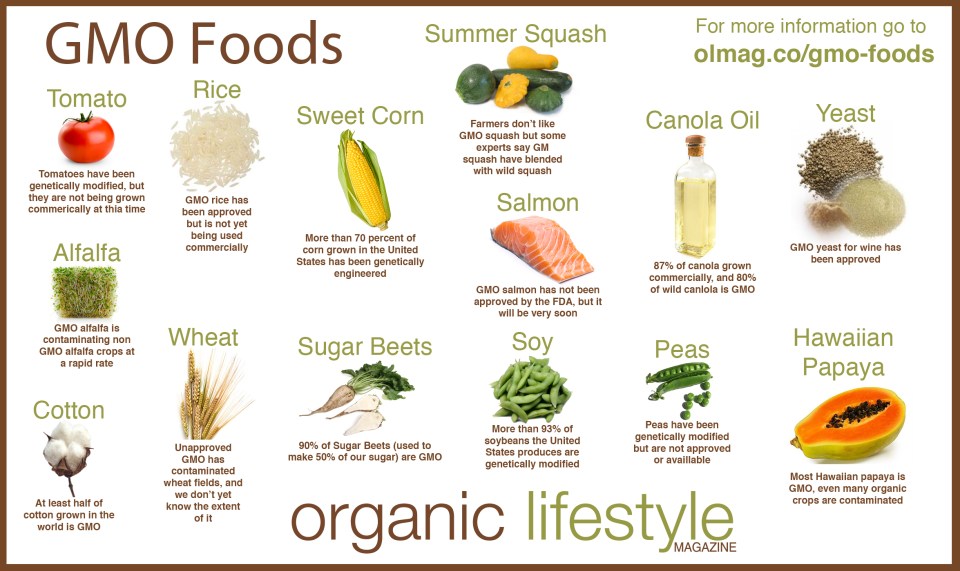
The production and human consumption of GM foods is still in its infancy. Very few studies have been done to even begin measuring the effects it has on people and the environment. The limited studies performed on animals show potentially dangerous and life-threatening consequences.
For More Information:
I highly recommend you download the full GMO Myths and Truths PDF file and read it carefully.
Here’s a detailed list of GMO Health Risks.
Here’s another link: Former Pro-GMO Scientist Speaks Out On The Real Dangers of Genetically Engineered Food.
You can find and download a list of vertified Non GMO Product here.
So Is It Organic Or Not? And Does It Really Matter?
Is it really organic?
How can you tell if it’s organic?
What is organic, anyway?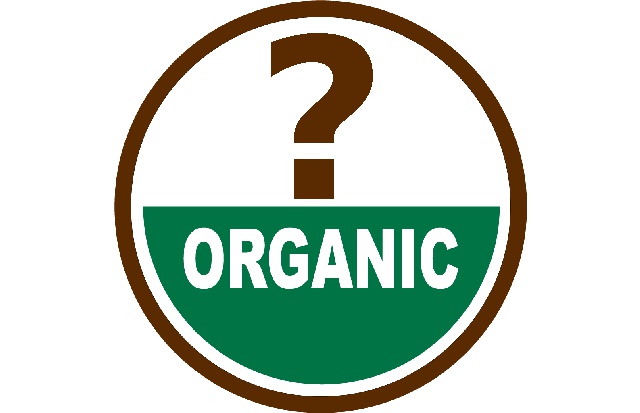
The word organic doesn’t mean the same thing to me as it did back in the 1970’s when my aunt started organic gardening in her backyard. She had a small garden, so using manure and compost to fertilize, constantly aerating the soil and hand-picking insects from the plants instead of using pesticides, was time consuming but manageable.
Imagine trying to do that on a large scale farm.
Organic refers, not to the quality of food produced, it refers to how it is produced. Organic fruits and vegetables are supposed to be grown in clean, uncontaminated soil using only clean, organic fertilizers (non-chemical) and without the use of any pesticides. They also cannot be treated with preservatives. Organic animal products can’t be raised using medications, antibiotics or growth hormones. Also, organic foods cannot be genetically modified (GM or GMO). Producing foods organically is also considered much better for the environment.
Sounds pretty healthy, doesn’t it?
The way the use of the word organic is used and regulated, leaves most of us confused and often misled.
The USDA uses four different categories in organic food labeling: 100% Organic; 95% Organic- labeled Certified Organic; 70-95% Organic– labeled, Made With Organic Ingredients; and 70% Organic– labeled, Contains Organic Ingredients. You should be suspicious of any products labeled or displayed in stores with any form of the word organic, that is not accompanied by the USDA seal.
We have to ask ourselves, if it’s not 100% organic, is it still worth the increased cost?
Common sense tells us that foods without pesticides; and animal products that were produced without antibiotics and hormones should be healthier for us, right?
Unfortunately, studies show that pesticide residue, though lower in organic products, still exist in them, To date, there is no proof that any of the pesticide residue found in organic or conventionally farmed foods affect our health. There is also no proof that antibiotics used on animal products interfere with the affects of human antibiotic effectiveness.
It is important to know that there are no claims by the USDA, or any evidence that supports the existence of any increased nutritional value or quality in organic foods. All studies indicate that they are comparatively the same.
I’m frustrated to know that there have been very few attempts to even study and compare the health of people eating only organic foods versus conventionally grown foods. The data just doesn’t exist.
It’s also important to note that people frequently become confused by the terms: organic, fresh, natural, sustainable and locally grown. Each word or phrase can mean a totally differently thing. Though the use of any of these descriptions are intended to suggest a healthier and more nutritious product– that proof doesn’t exist.
So is it worth it?
All currently available research shows no measurable health benefits to consuming organic foods over conventionally grown foods. So is it really worth paying the average additional 40% to 120% increase in cost?
Without clear data supporting it, it really just becomes a personal preference. Many people can’t afford to spend the extra money on a chance that organic is better for you.
Some people claim that organic foods taste better than conventionally grown foods. Yet in my own personal research, I have not found any noticeable differences.
Organic produce isn’t always ‘as pretty‘ as conventionally grown produce and may contain natural imperfections that end up equaling waste. This might also be a deciding factor in the value, particularly when purchasing produce by the pound as opposed to individual item-pricing.
One last thing to consider is that organic foods are not supposed to be treated with any preservatives, leading them to spoil much quicker. This can be problematic for individuals that find it difficult to make frequent trips to the market.
Whether you decide to buy organic or not, Americans as a whole, do not eat enough fruits and vegetables.
Whichever you buy, the Mayo Clinic website highly recommends washing all produce thoroughly because all of it can contain dirt and bacteria, not to mention possible contamination from handling, no matter how it was produced.
The decision is yours.
A Healthy Lifestyle: What You Eat Is Probably Killing You
 The food you eat on a daily basis is probably killing you. I’m not saying this simply for shock value, I’m saying it because it’s true. You may fool yourself into thinking you’re eating healthy because you only eat organic, are vegetarian, follow a low fat or high protein diet but the bottom line is… our food supply holds many dangers we need to know about.
I hope you’ll read this before you rush to judgement and click away to another page. I’m not a doctor or a scientist– I’m just a consumer that has the same struggles and concerns regarding health and living a good long life, just like you. What I hope to do in writing this, is to encourage you to look beyond the commonly accepted perceptions regarding the food you eat (and other products you are exposed to) and to stay healthy.
The three most important things I have to say are:
1) Educate yourself;
2) Don’t trust the packaging; and
3) Listen to your body.
It’s really that simple.
Educate Yourself
Last month another of those infamous reports came out damning high protein consumption and equating it to smoking a pack of cigarettes a day. (Seriously? Is that really a logical comparison?) A few days ago another report came out saying salt wasn’t as bad for you as previously stated.
So who can you trust? I think most people realize that the results of many of the studies released to the public are funded by companies that stand to gain financially if the results are in their favor. Universities and medical institutions are funded, at least in part, by corporations. So my advice is: Don’t just accept a single report you hear in the news– Do your own research!
Do you know what GMO stands for? You should. (I‘ll be discussing that in the near future.)
Hot Dogs cause Cancer. At least, that’s what we’ve been told. Have you stopped eating them? Do you know what it is about them that was supposedly linked to Cancer? Are you putting you and your family at risk eating them? Do the research.
Don’t Trust the Packaging
Do you pay more for poultry and eggs that are free range? Are you aware that ‘free range‘ is not a term that is closely or specifically regulated? Have you purchased eggs because the package has a picture of a happy chicken in a field running free on the carton? Misleading packaging is not a crime.
I’ll repeat this: Misleading packaging is not a crime.
The way I understand it, it is perfectly legal for companies to use misleading pictures or words like some uses of words like: organic, all-natural, fresh, etc. — In their company name, brand and description because there is no law against it. It only becomes a crime when it can be proved in court that it was misleading and caused documented damages. (Example– all spring water doesn’t come from springs and all cows don’t happily munch on grass under apple trees.) There are regulations regarding the use of certain wording in a product name, or list of ingredients— and this can indicate whether the product is certified, which is where it can really get confusing and misleading.
So are you over-paying for the organic celery over the plain celery, or purchasing the low-salt or low-fat products because you think it’s healthier for you? Read the label. (I’ll go into more detail about organic foods in my next post.) You could be wasting your money. You should know and need to know that anytime manufacturers takes something out of a product— they have to put something else in just to make it taste good. What they put in– could be worse for you than what they’ve removed!
Listen to your body
Are you gaining weight? Are you dieting but can’t lose weight? Do you frequently feel sick after you eat? Do you take medications to allow you to eat certain foods? Are you always tired or always hungry?
Listen to your body.
It isn’t just about over consumption or specific food allergies. There could be a variety of factors that could be affecting you physically or mentally, based on: what you eat, the amount, or combination of foods you eat… and how your body reacts.
Listen to your body.
I love chocolate. Too much of it makes me sick, as does too many chocolate-covered strawberries or too much chocolate & peanut butter. It doesn’t mean I’m allergic to it— but too much causes a negative chemical reaction in my body so I have to know when enough is enough.
We are all different. As a result, foods are going to affect us all differently, as well. Sure, there are known factors that can affect most of us– but there are also different reactions for different people. This is why I believe the food pyramid and popular diets aren’t helpful to all people. You can use them as a guide but you have to modify any healthy eating regiment based on what your body is telling you.
It’s Up To You
Obviously, we have to eat to survive. I’m only trying to encourage you to make educated decisions when you purchase your foods and not rely on the marketing or trust that every food sold is good for you. Food is a business. Businesses have to make money. Sometimes, the bottom line outweighs the nutritional value of the foods that are sold. You have to make a conscience effort to not be fooled.
(In the near future I’ll be writing posts about organic foods, GMO, chemicals in processed foods, contamination of our food supply and more nutritional concerns that affect us all. Feel free to comment or contact me if their is a topic you’d like me to explore.)
The Blue Balloon
 Monday was the first nice day this year, where it was actually warm enough to sit out on the front porch and enjoy a cup of coffee without shivering between sips. I can’t recall, specifically, what I was daydreaming about— but my thoughts were suddenly interrupted when out of the corner of my eye, the sight of a light blue balloon drifting across the front yard came into view.
It was hovering for the most part, about a foot or two above the ground, dragging its fresh and clean, matching blue ribbon behind it. It would pause momentarily, the ribbon appearing to latch on to anything in its path— but then the balloon would tug at the ribbon and it would resume its journey.
When it reached the sidewalk that runs from the porch to the front gate, it suddenly lifted up, dancing its way through the branches of the lilacs that border the path, about ten feet in the air. By this point, I was thoroughly mesmerized and couldn’t help wondering where it was going and where it had been.
Did it escape from some unlucky child’s birthday party? A child, sheepishly letting go of the ribbon under the disapproving glare of their parents— Who, minutes before had told them not to let go?
Was it tied to a sign, alerting passersby of some impending open house or sale? Bored by the inactivity, did it tear itself free with the first convenient gust of wind that came to its rescue?
Had it drifted down, sorrowfully, from someone’s memorial balloon release? After climbing high in the sky, helping some poor mourning soul release some of their pent-up grief— it drifted far out of sight and had started its own descent in search of a final resting place?
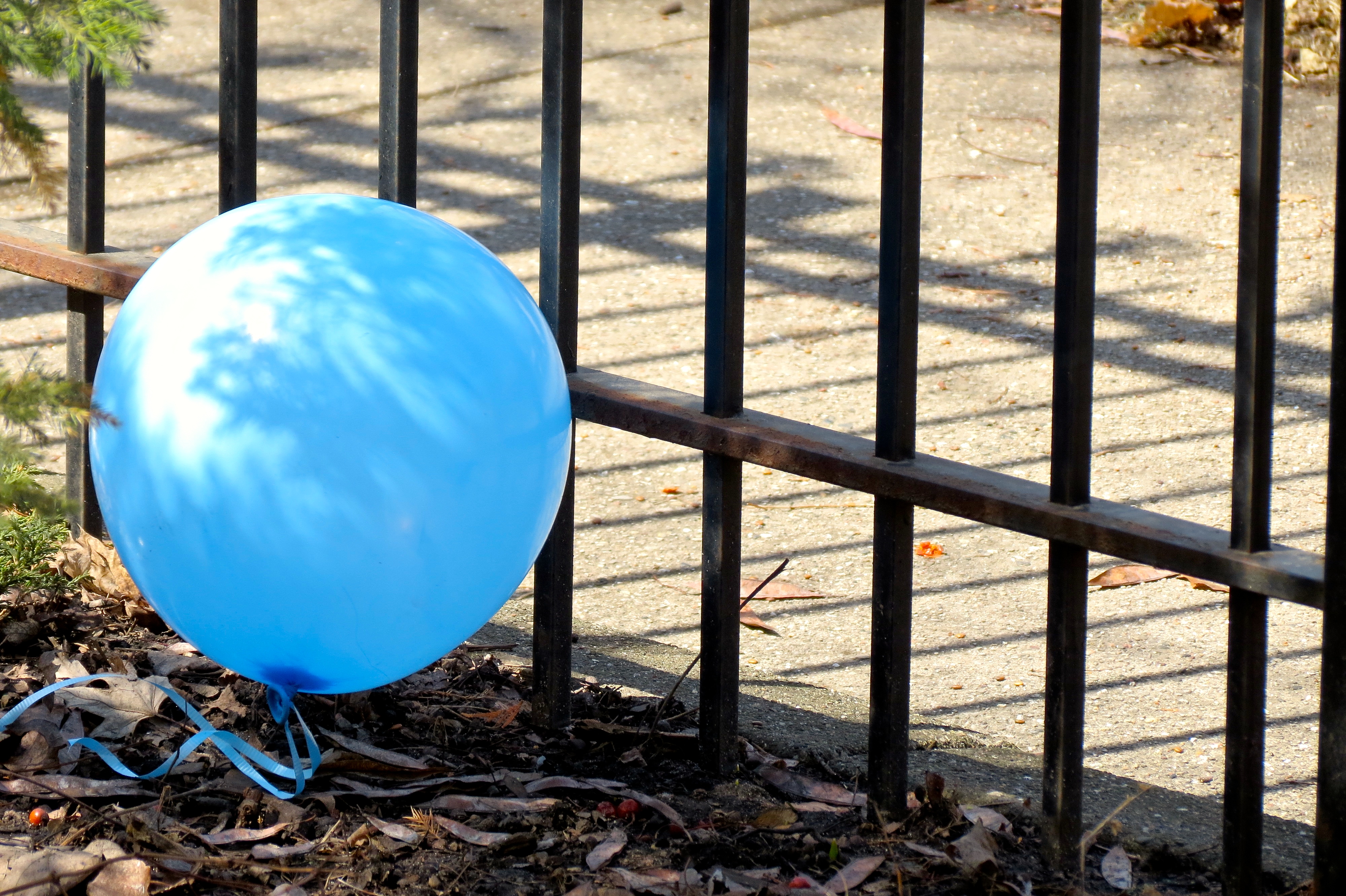 Whatever had been its original, intended purpose, it had suddenly assumed a life of its own and become a part of mine.
As I followed it, I found myself getting very philosophical. My head filled with metaphors… all because of this silly blue balloon.
There are things happening all around us that often go unnoticed. Life is happening all around us. Sometimes it’s refreshing to let go of our all important tasks, open our eyes, and see things with a new, undetermined clarity.
Like this balloon, people drift in and out of our lives. Some stay for a while, becoming friends or co-workers, while other simply pass through hardly noticed. This is not to say that there is not always some impact, great or small.
Some of us find ourselves wandering, searching, exploring life– propelled by the winds of change, adapting to our surrounding, then moving on until we find the place we belong.
After a while, the balloon ended up being trapped between the front shrubs and our fences. The wind was picking up and the temperature was starting to drop. The balloon started to deflate and was forced to roll about, back and forth, trapped in the narrow path between the shrubs and fence. The ribbon continued to wrap around rocks and twigs, holding on as long as it could, until the wind would once again give the balloon the momentum to break free.
 I went back to my tasks, for a time— but then later, went back out to check on the blue balloon. It had somehow freed itself from its spot and was all the way across the yard to the west. I’m not sure how it got there but it was now dirtied and shriveled, appearing to finally be at the end of its journey.
It got dark, I forgot about the blue balloon and life went on.
When the sun came up Tuesday morning, I thought to look for it again. I went to where I last saw it, looked all around, but it was gone. I had thought its life was over— I was wrong. It journeyed on.
I’ll let you fill in the metaphors here.
Happy travels.
My Technology Challenge: Storing Media
 I love music. All kinds. The problem is I have so much of it! If it’s not already loaded on my computer, I can’t usually find what I want, when I want to listen to it. Why isn’t it all loaded on iTunes, you may ask? Well, I did have 22,000 songs loaded (no, that’s not a typo) but I didn’t have enough space on my computer to load any more. In fact, for the past year I’ve been fighting to get by with about 50 GB of free space on my 500 GB hard drive. Needless to say, my computer was running slow and any time I downloaded something new, it usually required deleting something else.
I’d tried storing media on an external drive– years ago– but the communication between the two drives was just too slow. I’ve been wanting to do some video editing and the only way was to clear some space. I got a 2 TB My Passport external drive and have now begun the process of moving files and ripping all my music, pictures and video. After moving all my iTunes media from my computer to the drive, I got back nearly half of my hard drive’s storage and I immediately noticed a difference in my computer’s overall operating speed.
Now I find myself surrounded by CDs, in the middle of uploading six bankers boxes to my drive. Then finally, I’ll have immediate access to all my music in one place. (I’ll back it all up, of course.) That is— as long as iTunes doesn’t mysteriously start deleting songs again.
What’s that, you say? Have you ever gone to listen to an album you’ve loaded and found songs missing? This is a regular occurrence for me. I’d say probably 2/3rds of the albums I’ve ripped from CD are missing an average of two songs. This has even happened with mp3s I’ve purchased through Amazon.
For example, I went to listen to Michael Jackson’s Thriller album and all the song tracks were there– except one… Thriller. How is that even possible!?!
The only albums that appear to be safe are… digital albums purchased from iTunes. Coincidence?
It might not entirely be an issue with the iTunes app but the files are no where to be found on my computer. It could also be partially due to the cataloging of the Gracenotes Media Database and the constant updates that occur between the two. But that doesn’t explain how the files disappear from the computer. I can listen to an album one week and all the tracks are there– the next time I go to listen… two or three songs are missing– and the disappearing songs aren’t consecutive in the playlist (album) making it more of a mystery.
Sometimes an album gets split into multiple locations, or playlists making it frustrating when you want to listen to a complete recording. The only way to do that, when this happens, is to manually create a new playlist with the song files. Sound complicated? It shouldn’t be this hard. Understandably, these issues occur, caused by human or computer database error. In the long run, this technology is still relatively new and will continue to improve over time.
 As I add more CDs to my digital collection, I have noticed more frequent communication with the Gracenotes Database, hopefully, cleaning up the files. I still have a huge stack of discs that aren’t recognized in the database. This will required, should I decide to add them all, that I enter the titles of each album, song, artist for each individual song track. After that, iTunes gives you the option to share/send the information to the main database for better recognition. It’s a lot of work for the ability to access music but the future convenience of it will make it worthwhile.
End Note: Since I started this process, I’ve gone from just over 2,000 albums in my digital collection, to over 4,000– and so far, no more songs have been lost.
Yet.
 How Do You Measure 525600 Minutes?