Home » Posts tagged 'traveling the world' (Page 3)
Tag Archives: traveling the world

Travel 2016: Day Fourteen – Back to Rome and Vatican City
We sailed into Cittavecchia as the sun rose, ending our seven day cruise. Before we disembarked the Silver Wind, we had breakfast, said a few goodbyes and waited to be called. We were provided transportation from Cittavecchia to the taxi stand at the Piazza Barberini in Rome. From there we headed to Vatican City.
 Arriving at the Residenza Paolo VI Hotel, our home for the night– we had plenty of time before our tour. The hotel was literally across a narrow side street from St. Peter’s Square. George and Mary were able to check in when we arrived but our room wasn’t ready. We left our bags in their room and then we went upstairs and checked out the view from the terrace.
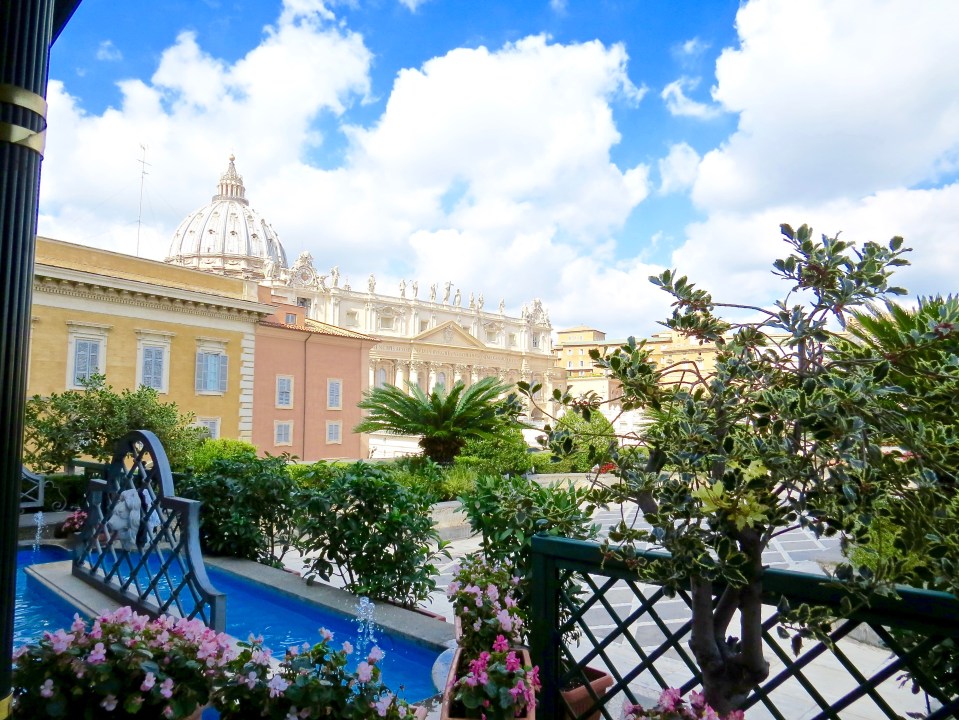
View of St. Peter’s from the terrace of the Residenza Paolo VI Hotel in Rome.
Michael had booked our private tour before the trip. This allowed us to bypass the lines at the Vatican Museum which can be quite long. We were supposed to meet our guide by some park stairs near the museum — we just had to find them. After spending a little time in St. Peter’s Square, we headed out around the perimeter of Vatican City– and of course. we chose the long way around.

St. Peter’s Square, Vatican City, Rome.
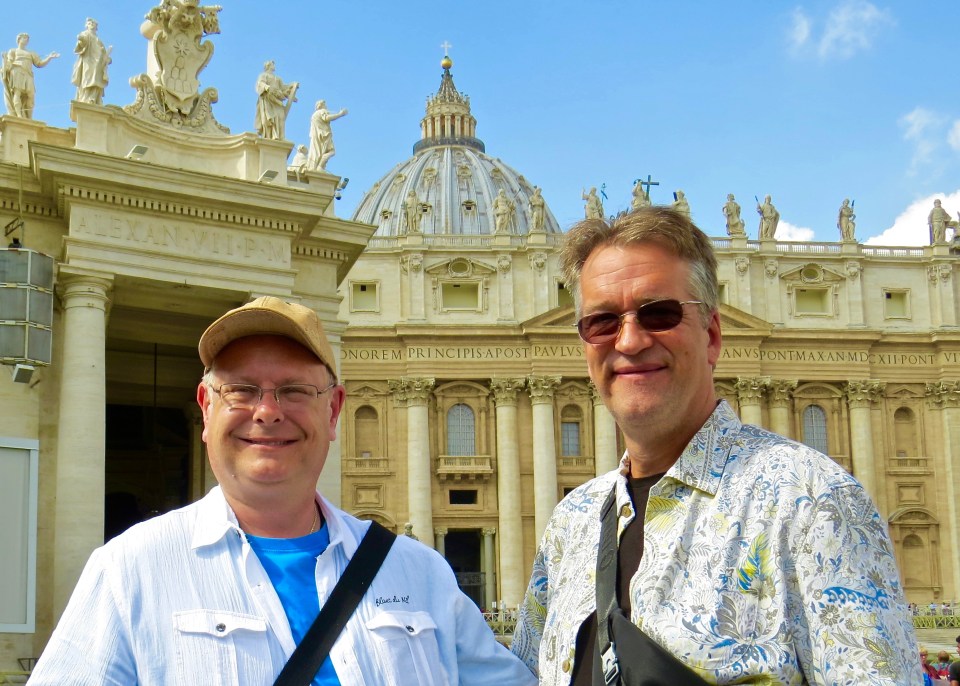
Michael and I in St. Peter’s Square.

The fortress-like wall around Vatican City.
After about a half mile walk, we found the meeting point and then decided to get a little lunch before the tour. We ended up at a little corner joint — didn’t look like much on the outside but inside it was actually quite nice. We had a nice filling lunch (I had pizza) and then headed to meet our guide.
The Vatican Museum is massive. We only saw a portion of it, marveling at the incredible content as we moved from room to room. Detailed frescos, hundreds of enormous tapestries, thousands of marble sculptures– not to mention the wide variety of architectural styles throughout the museum.
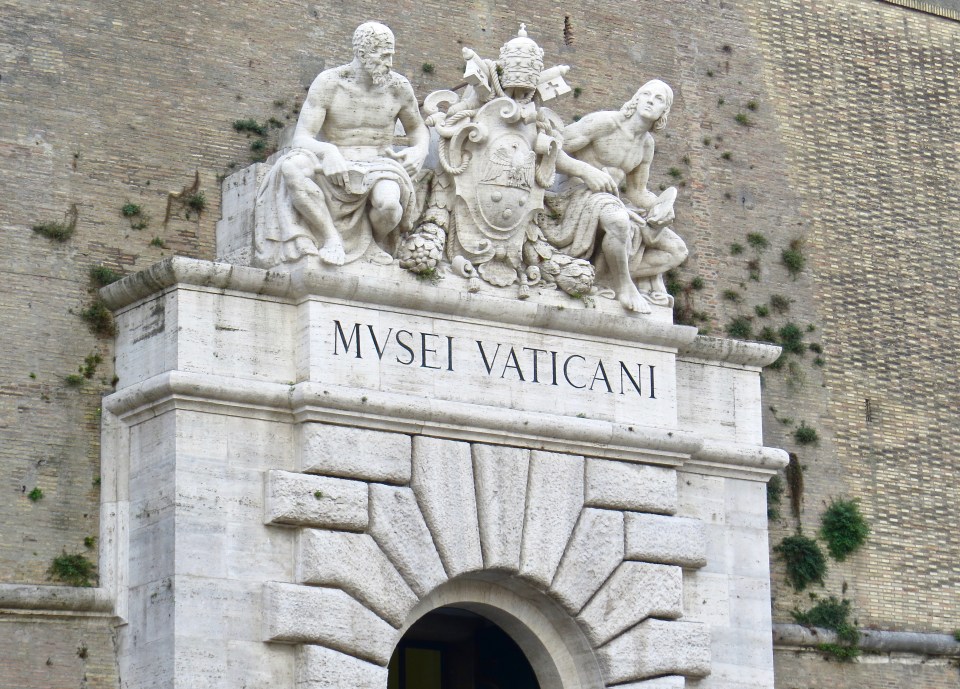
Above the entrance to the Vatican Museum.

Ancient Marble Roman Busts.

Inside the Vatican Museum.
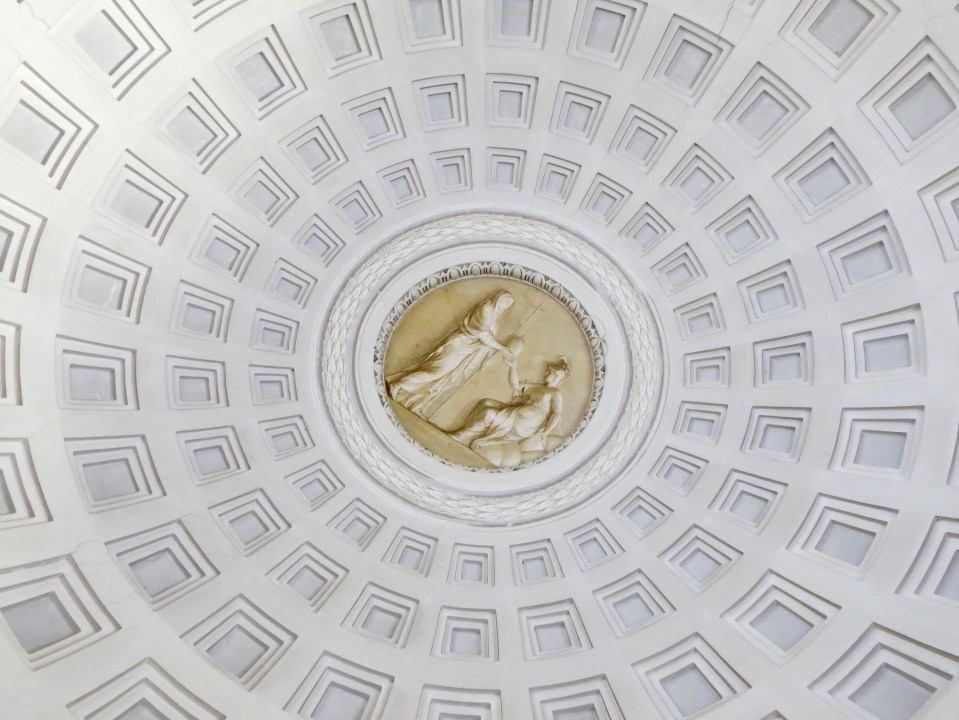
Domed Ceiling in the Vatican Museum.

I loved this sculpture.
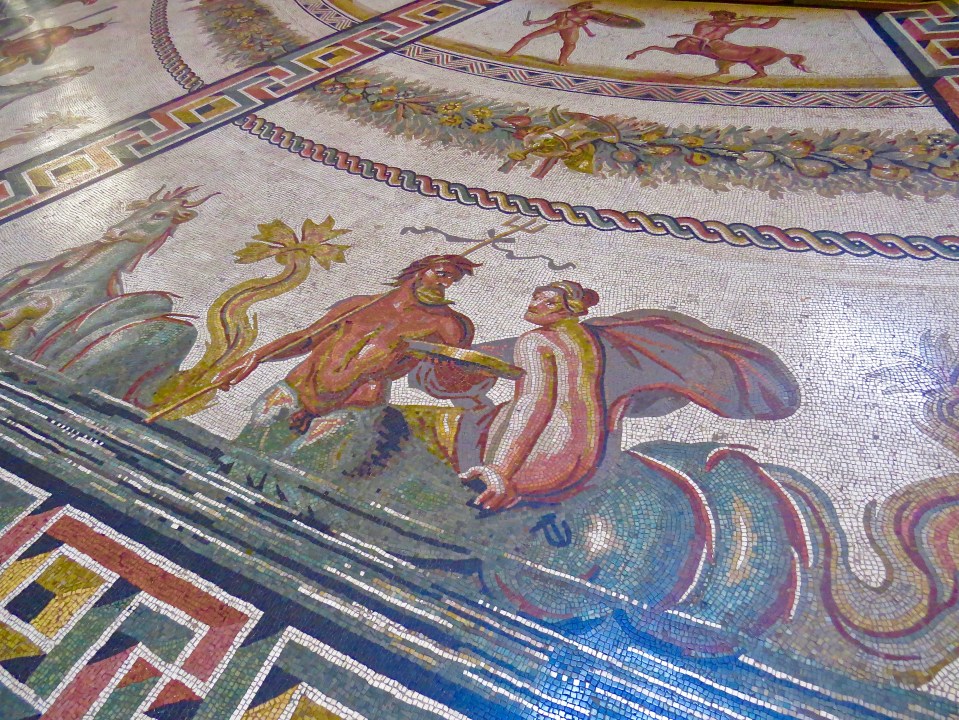
Incredible detail in this Mosaic Floor.
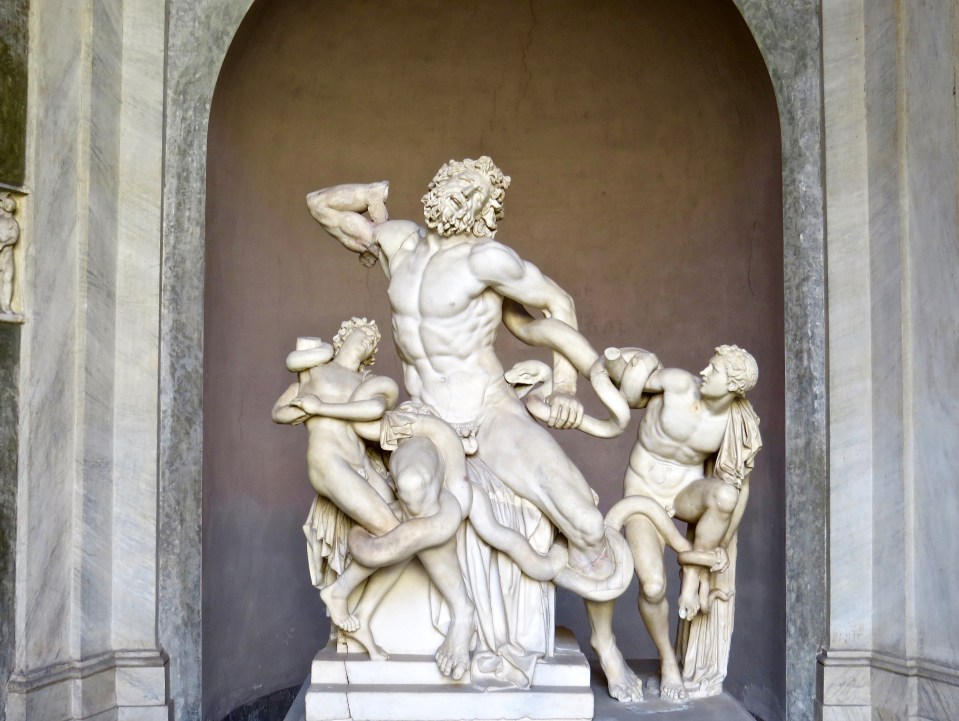
Laocoon and His Sons, excavated in Rome, 1506.
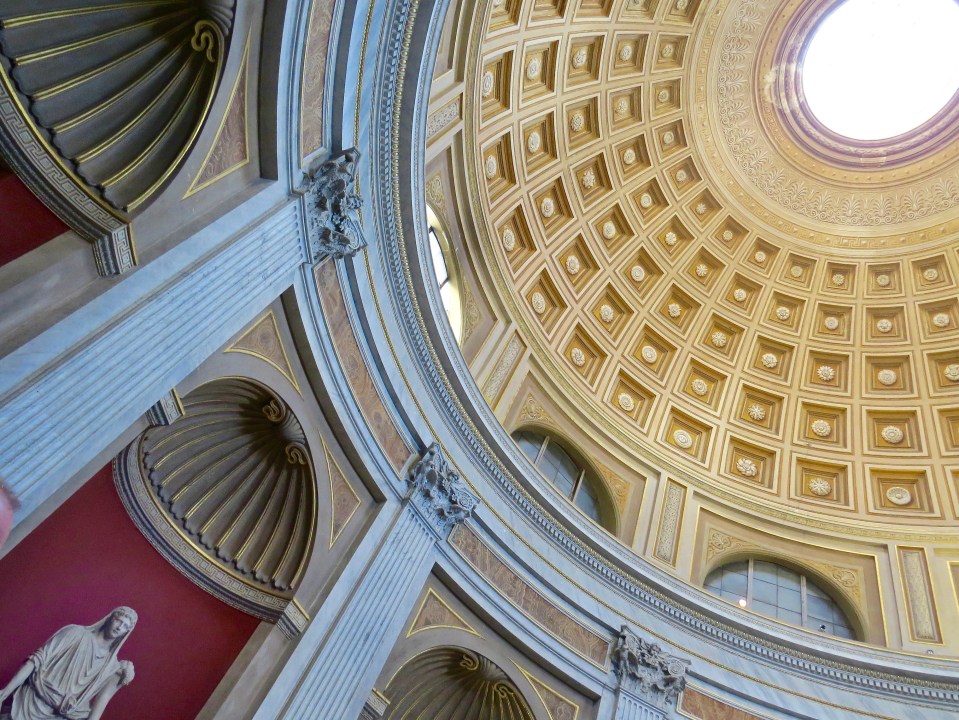
Sala Rotonda in the Vatican Museum.

Roman Mosaic Floor in the Vatican Museum.

Inside one of the four Raphael Rooms.
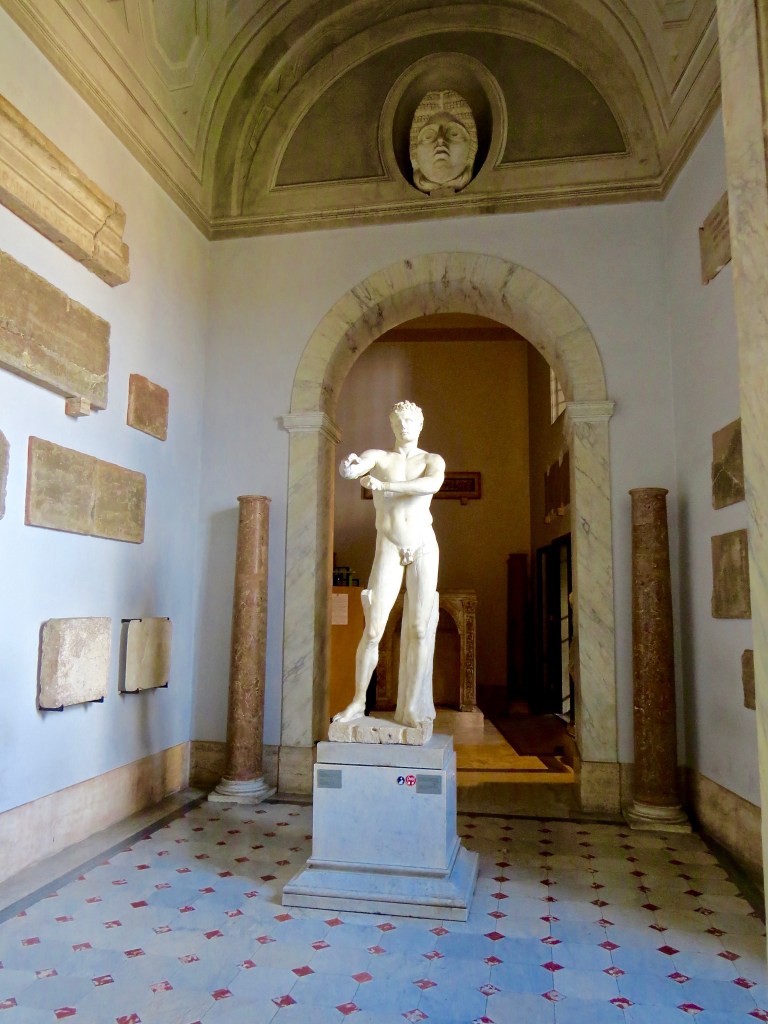
Lysippos, Apoxyomenos.

Inside a large room filled with animal but mostly dog sculptures.

In a courtyard at the Vatican Museum in Vatican City.
The Sistine Chapel. I’ve always heard this was a must-see in Rome and it is only accessible with a ticket to the Vatican Museum. We were warned before entering that there was to be no talking and no photography inside.
We entered, and were in and out in probably five minutes or less. Why? It was extremely crowded and a little uncomfortable. Visitors were crammed in like sardines, most staring up at the magnificent ceiling. But– people were talking, taking cell phone pictures and prompting the guards to yell at the crowd, repeatedly, to stop doing both.
I kept getting bumped into and brushed against. I was honestly afraid I was going to fall victim to the rumored pick-pockets. It was the only time during the whole trip that I had any concern. I was just anxious to get out of there. By the time I got to the other side of the room– the rest of our party was also there– we all just wanted to leave that claustrophobic environment.
St. Peter’s Basilica. The Papal Basilica is considered by many as one of the world’s most holy places. We’ve toured many churches, cathedrals and basilicas around the world. This is THE basilica, right? Nothing can prepare you for how colossal it really is until you walk inside and experience it for yourself. The tallest dome in the world, it rises 448 feet above the sanctuary.

St. Peter’s Basilica in Rome.
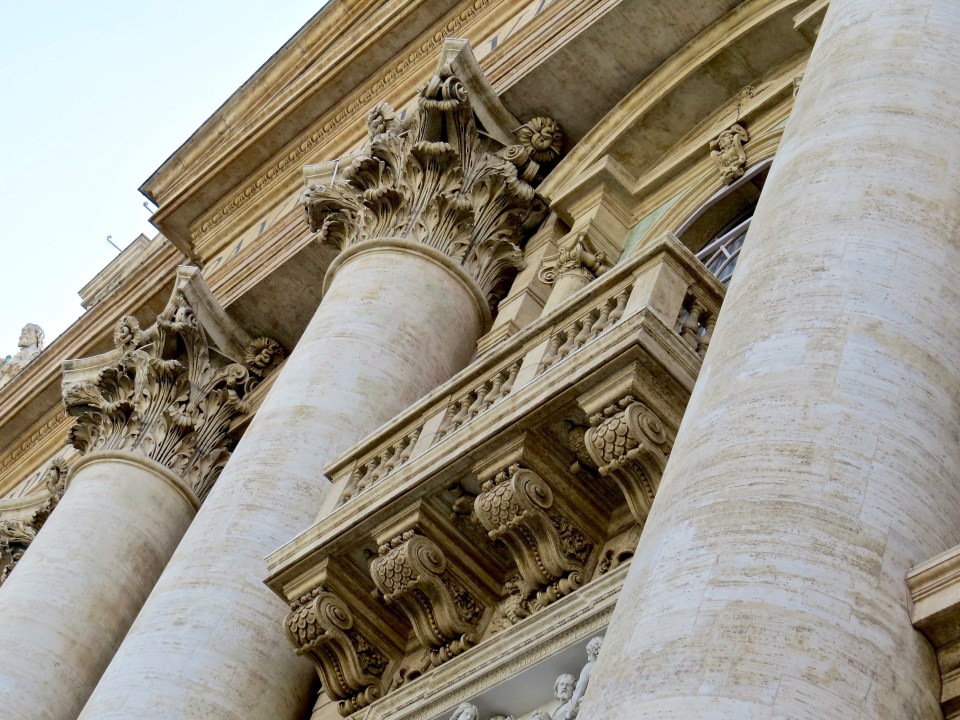
The famous Popes Balcony at St. Peter’s Basilica.

Preparing to Enter St. Peter’s Basilica.
As we were nearing the end of a Jubilee year, we were still able to pass through the Holy Door which according to Catholic beliefs, cleanses the pilgrims that pass through it. (The Holy door was just resealed by the Pope a few weeks ago.) It is normally sealed from the inside with mortar.

Waiting to enter the Holy Door that is only open during a Jubilee year celebration.
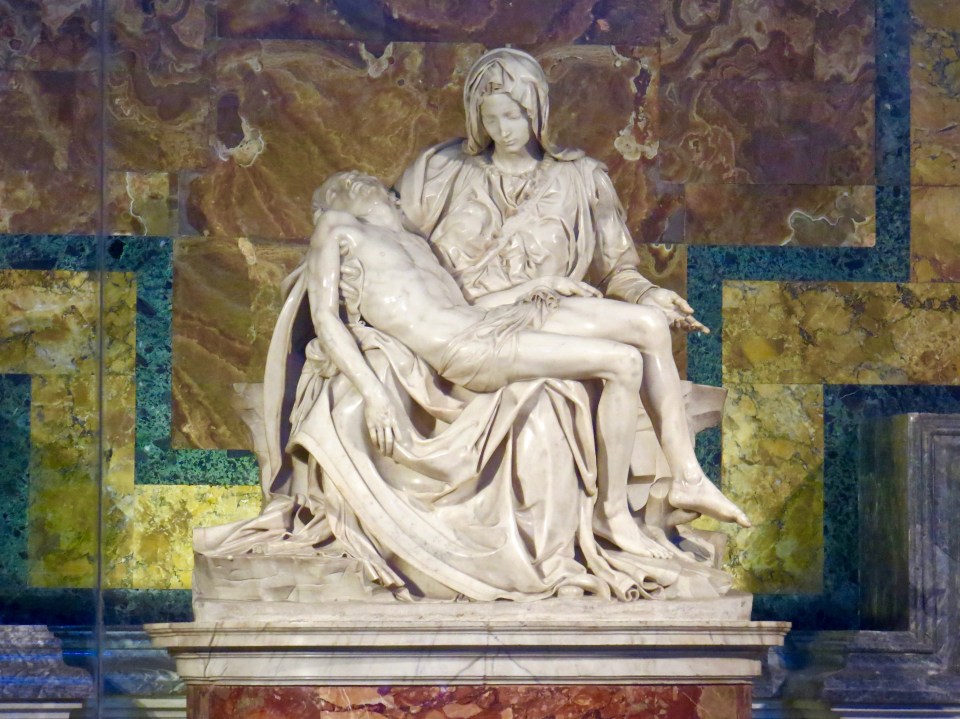
Michaelangelo’s Pieta, 1498.
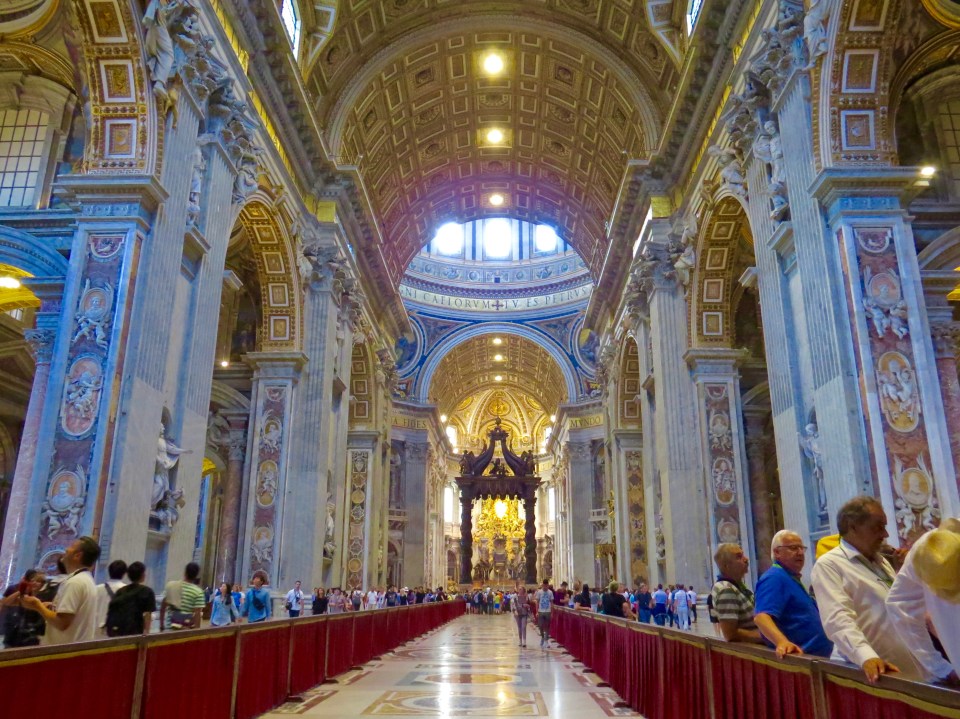
The stunning interior of St. Peter’s Basilica.

Inside St. Peter’s Basilica.

Dome inside St. Peter’s Basilica.

The Altar Canopy Inside St. Peter’s Basilica is only used by the Pope.
There is no charge to visit St. Peter’s. If you are visiting Rome but limited on time, you should most definitely visit St. Peter’s Square and the Basilica, even if you don’t have time to tour the museum.
For dinner we headed to Su & Giu Cucina Romana on the recommendation of George’s sister. We arrived too early (just after 6) forgetting that most restaurants close after lunch and then open later for dinner. In our case, they didn’t open until 7:30. So we took a walk through the neighborhood and did some window shopping in the meantime.

George and I enjoying the street view on our last night in Rome.
The streets were quite lively. There were lots of street vendors and people hurrying about. I found a special pleasantness about it all– a wonderful vibe and quite charming. It was enjoyable just to sit, people-watch and soak it all in.
We were the first to be seated when we got back to the restaurant. We couldn’t have shared a more perfect meal for our last night. There was an overabundance of delicious food. We were stuffed!
We took a taxi back to the hotel, George and Mary went upstairs, while Michael and I walked back over to St. Peter’s Square to view it all lit up and snap a few photos.

St. Peter’s Square at night.
I’m really glad we planned our trip this way. Saving a day just dedicated to seeing the Vatican was a smart move. There’s really no way to truly experience all that Rome has to offer and the Vatican in one day. Splitting it up the way we did, I feel like we were able to fully experience this incredible city– even if it was crammed into a couple days.
(Original Travel Date: September 30, 2016)
Travel 2016: Day Thirteen – Bonifacio, Corsica, France
Bonifacio is a French commune (city) on the island of Corsica (Corse). It is a fortress city with a modest population of just under 3,000 inhabitants. Though it has a Roman origin, the island changed hands several times and in 1769 was conquered by France. Still, it retains much of its Italian culture to this day.
We tendered in from our ship to the gorgeous little harbour, nestled among the high cliffs of the island. From the port, we took a short train (tram) ride– uphill, to the top of the city sitting high above the sea.
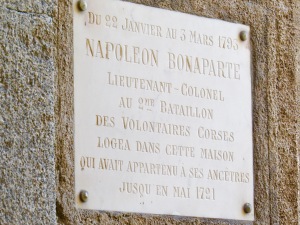
Plaque commemorating the house where Napoleon had once lived.
After a rather long-winded introduction, our guide took us through the narrow streets of Bonifacio, pointing out several churches and showing us some of the more breathtaking scenic spots. Along the Rue des Deux Empereurs we saw where Napoleon lodged (1793) and where Charles V had lived (1541), across the street.
Bonifacio has the feel of a resort town, full of history with many quaint shops and restaurants.
Once we were oriented, we were on our own to explore. George, Mary and I chose to take a boat ride from the harbour along the coast while Michael did some shopping along the docks.
As you can see from the pictures, the scenery is just gorgeous. It was all enhanced by perfect weather and great company to share it with.

The rocky coast of Corsica.

Looking out at the Mediterranean Sea.

Michael, George, Mary and I in Bonifacio.
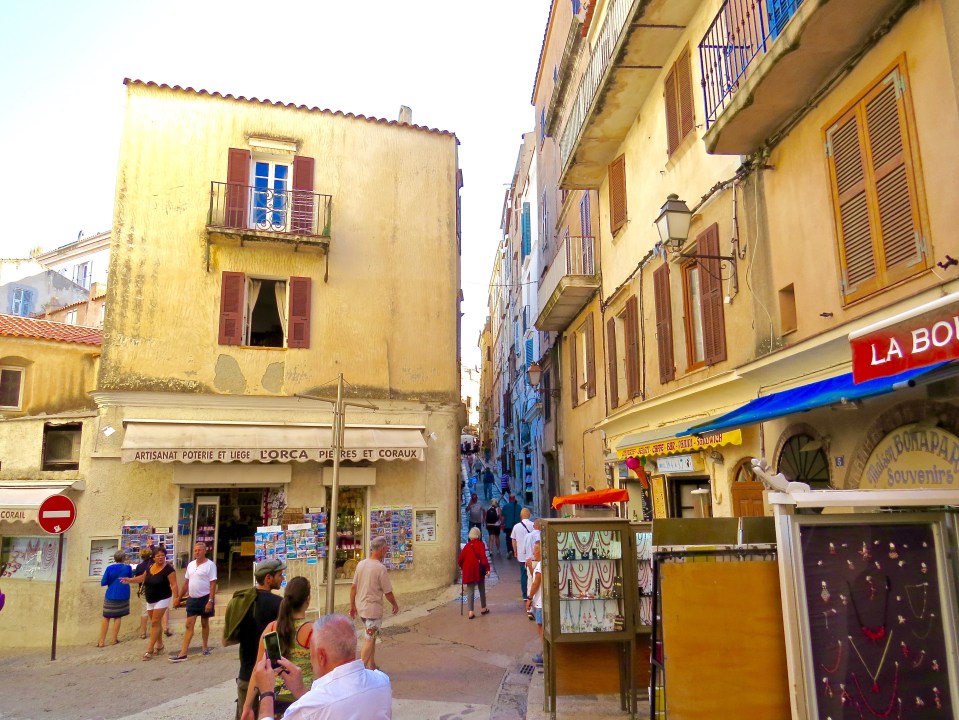
On the street in Bonifacio.

I loved the textures in this shot.

A typical street in Bonifacio, Corsica.

Looking down towards the stunning harbour.
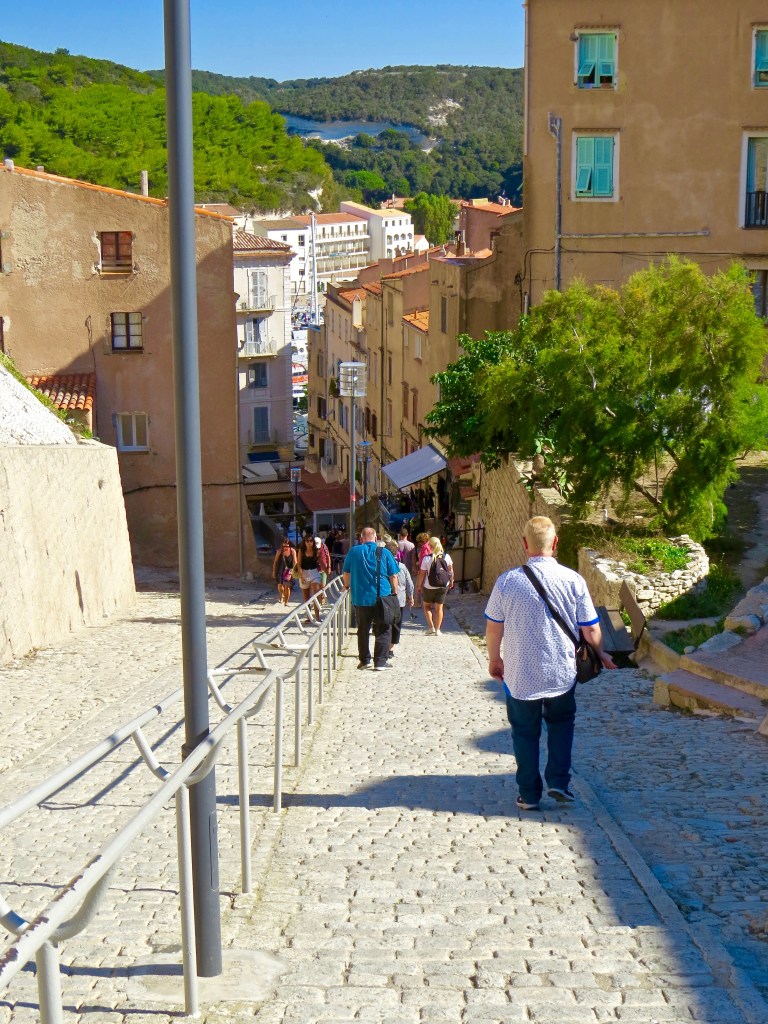
Starting the steep descent from the top of Bonifacio.

The fortress walls from our little tour boat in the harbour.
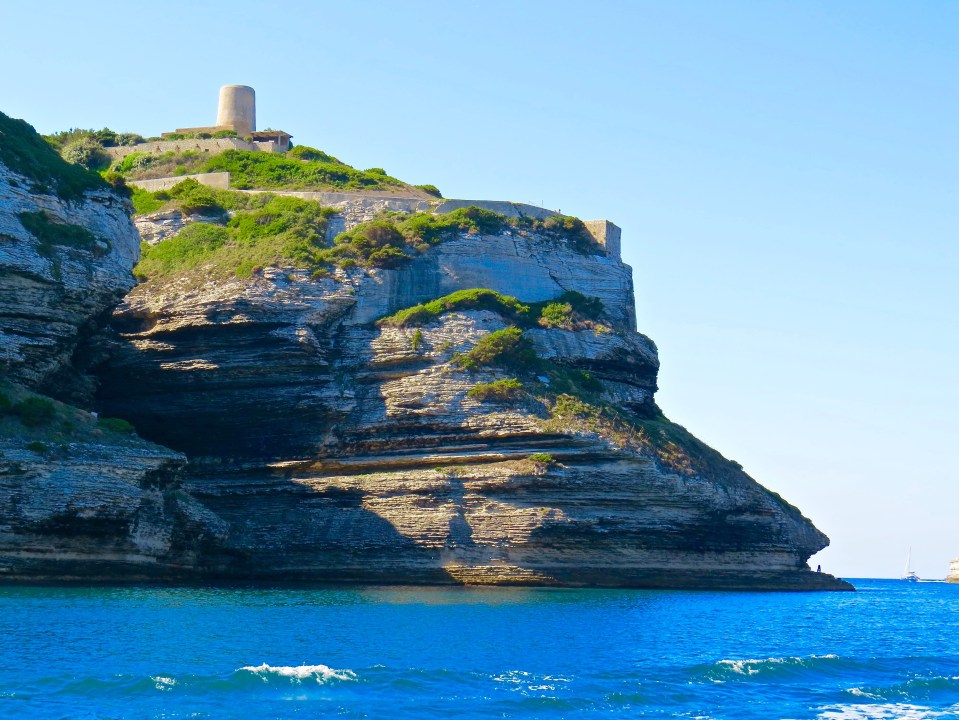
Leaving the harbour.

Inside the Cave of Sdragonato.

You can see where the rock of the island of Corsica changes from limestone to granite.

Bonifacio sitting high on the limestone cliffs of Corsica.
Last Night Onboard. The last night of a cruise is always difficult because you’re trying to say goodbye to everyone, pack and get your bags out to be moved off the ship by the staff; plus you still have dinner and a big final show. So between rushing around and trying to get everyone coordinated for our last dinner together, it was kind of a circus.
We made some great new friends and got to spend time with some of our favorite people from past cruises as well. Since many of us live all over the United States, and Anthony and Michael in London– you just never know when you’ll see each other again.
The good news is that quite a few of us have booked the Broadway on the Rhone River Cruise in May so we have that to look forward to in 2017.
The Big Show. Our final show of the cruise featured all of the performers including the ‘Broadway Ambassadors’ that didn’t give solo concerts. Here are a few of the highlights:
- Faith Prince on stage with her husband Larry Lunetta playing his trumpet.
- Charles Busch singing “Those Were the Days” – It was a master class in storytelling.
- Laura Osnes and Lindsay Mendez singing “For Good” – Both got emotional and teary eyed; sweet, spontaneous emotion.
- Hudson Flynn, Lila Crawford, Juli Wesley performing – Hudson is the multi-talented son of Andrea Burns and Peter Flynn; Lila played Annie in the most Broadway revival and Little Red in the film version of Into the Woods; and Juli is the wonderful daughter of Seth Rudetsky and James Welsey. (Juli celebrated her 16th birthday on the trip!)
- West Side Story Quintet – This was the show finale- thrown together in an hour! Featuring Chita Rivera singing Anita ( the role she originated); Andrea Burns (Maria) and husband, director Peter Flynn (Tony) – they met playing those roles in a European tour of West Side Story!; The rest of the performers made up the Jets and Sharks.

Faith Prince

Faith Prince & husband, Larry Lunetta
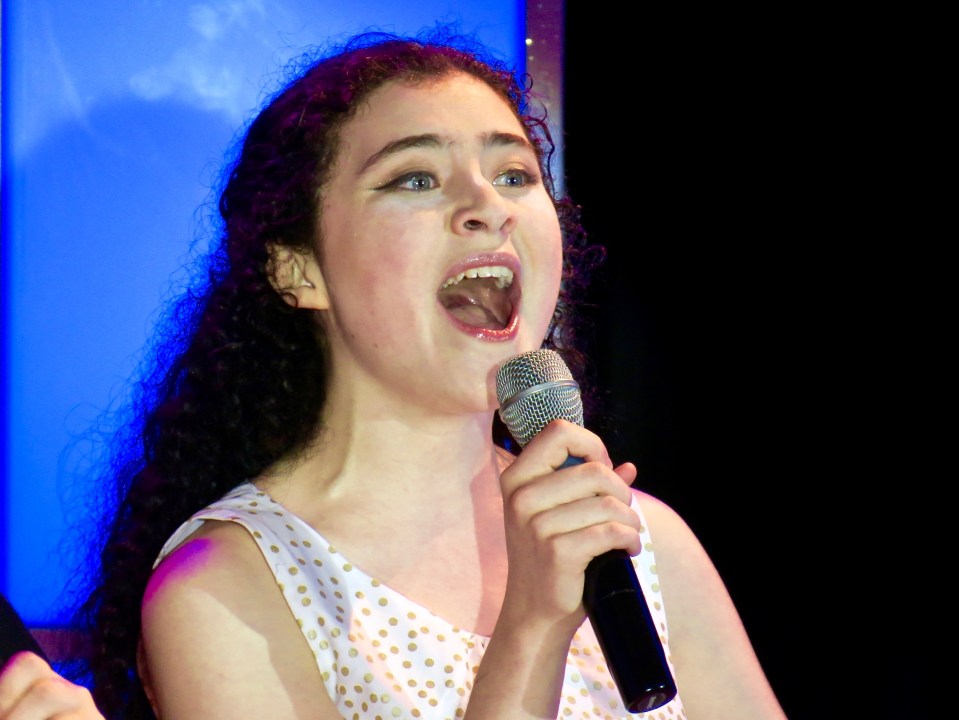
Lila Crawford
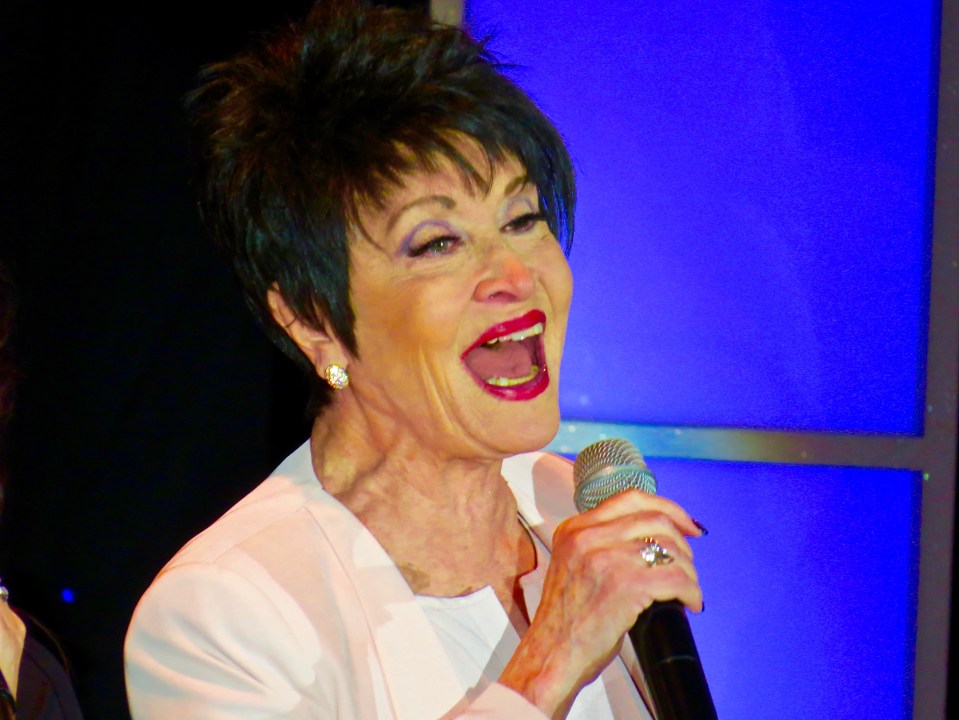
Chita Rivera
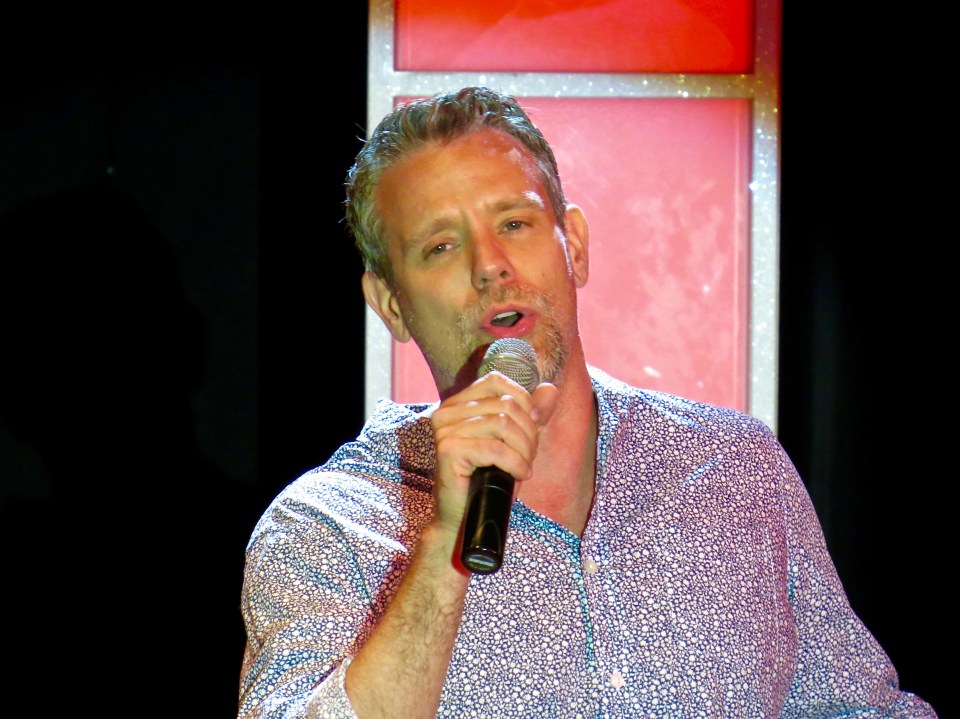
Adam Pascal
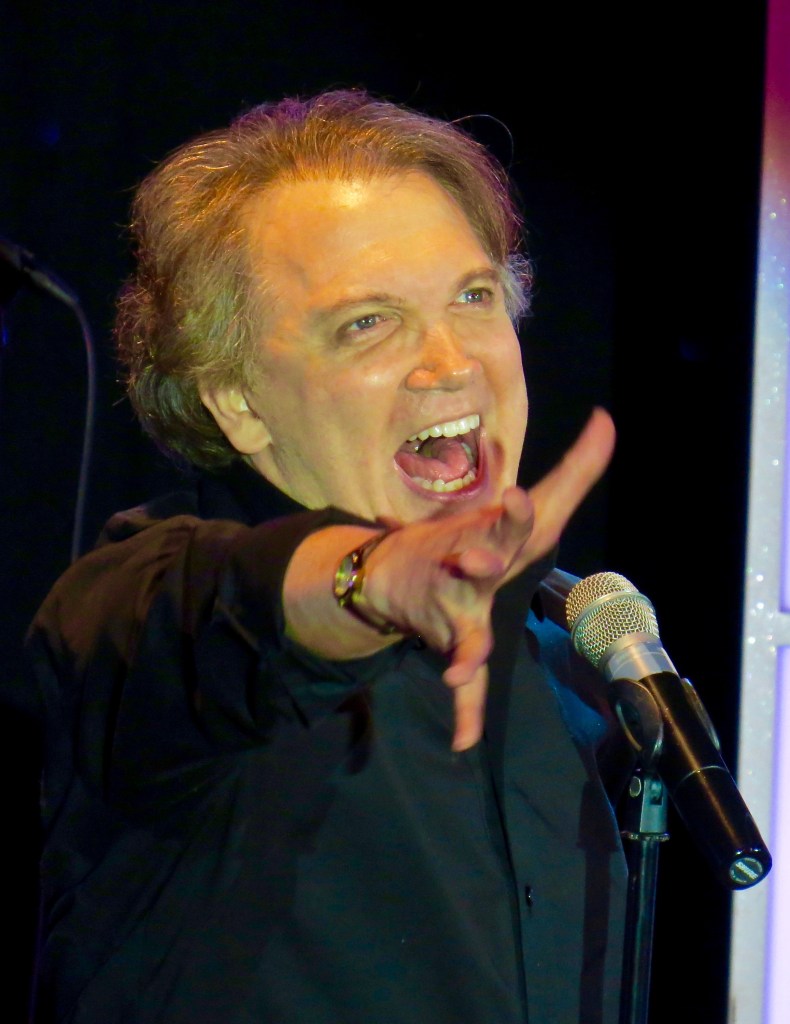
Charles Busch
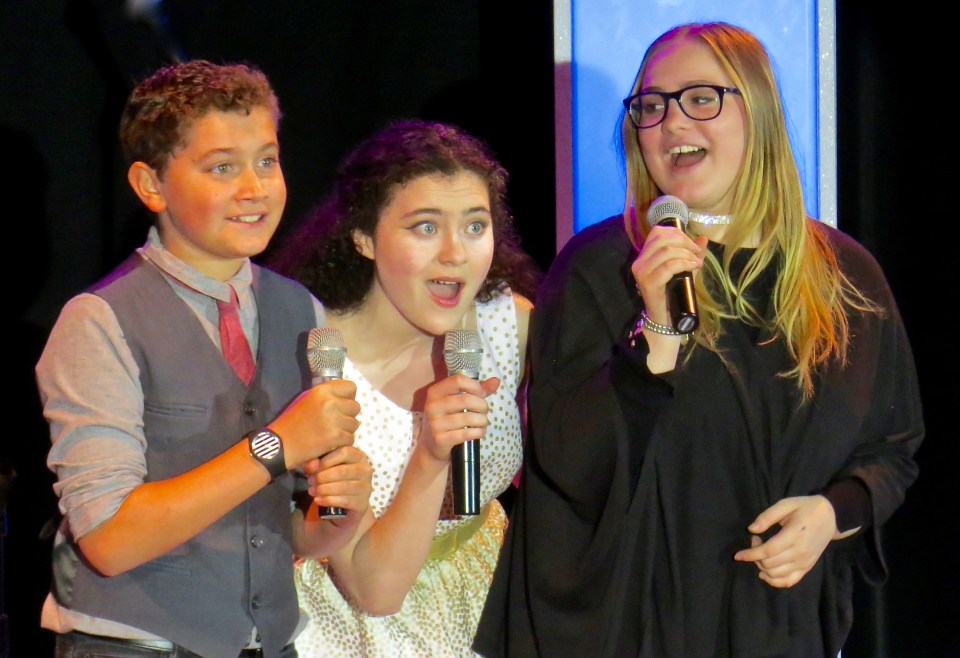
Hudson Flynn, Lila Crawford & Juli Wesley
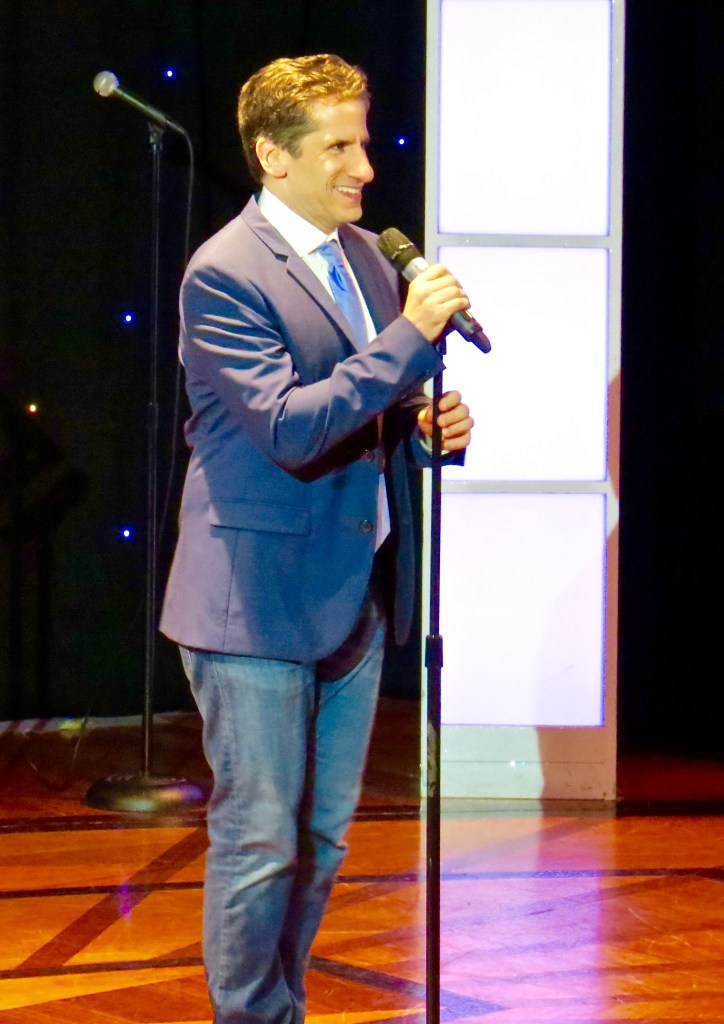
Seth Rudetsky, Music Director and Master of Ceremonies

The Creative Team & Travel Pros for BOTHS7.
Up Late. A bunch of us congregated afterwards for the last time. Bill, Paul, Janet, Ron and a few others came and went, chatting and saying their goodbyes. Michael left to go put his luggage out- it was supposed to be out by 11:30– and I assured him I was right behind him. As everyone left, Janet and I stopped and chatted for a few minutes with Andrea Burns in the lounge.
I escorted Janet to the elevator than headed back to the room. Of course, me being me, I was late getting my bags out– so they sat there all night. I went up to the casino to meet Michael, we played some slots, then headed back to the room and called it a night.
Tomorrow we disembark and head back to Rome for a day at the Vatican.

Travel 2016: Day Twelve – The Italian Ruins of Nora and a Broadway Legend
It was a sunny but hazy morning as we hurried through breakfast and our morning routine.
We boarded the coach bus for day’s tour and it seemed to take forever to get out of the port. We maneuvered through traffic and our guide gave us some of the history of the region as we trudged along.
The Devil’s Saddle on the coast of Sardinia.
It felt like as soon as we actually started moving, we were stopping at an overlook for a panoramic view of the area. We had Cagliari on one side and the Devil’s Saddle on the other.
The Devil’s Saddle is a natural rock formation, jutting out into the sea. The legend says that the Devil loved the beauty of the Cagliari coast. God sent Archangel Michael with an army of angels to banish Lucifer. During the battle, Lucifer was thrown from his horse, losing his seat which later turned to stone.
Cagliari is the capital city of the Italian island of Sardinia. It has about 150,000 residents and is the largest city on the island.

Cagliari, Sardinia, Italy.
It was a nice little stop, not rushed and some great views. The haze hadn’t burned off so my pictures don’t really do it justice.
Archaeological Site of Nora. Nora is located on a peninsula. A portion of it is submerged because the southern part of Sardinia is slowly sinking into the Mediterranean Sea. An ancient Roman town, only part of Nora has been excavated because much of it is under the control of the Italian Army. The part that has been excavated is not nearly as impressive as the ruins of Pompeii, but jutting out into the ocean, it’s a wonder that this much has survived.

From Nora, the skies over Sardinia.
There’s a substantial amount of walking, nothing treacherous– just getting to the site from the parking. Along the way is a beautiful public beach, a rocky coast line and on the other side- a nice view of the island’s mountains.
At the actual entrance, there is a nice little cafe where we stopped to use the facilities while our guide purchased our tickets.
We entered the site and the guide stopped to talk… and talk…. and talk. True to form, Michael and I got bored and decided to wander off, keeping the group in sight so we didn’t repeat our Pompeii incident.
At one point as we were wandering, Michael’s attention was drawn one direction and I walked off in another. Suddenly, alarms were going off– which I ignored– until they sounded a second time. There was also an announcement to return to the main path. I still wasn’t sure it was me until I turn back the direction I’d come from and saw two of those small security cameras pointed my direction. I’m still not sure exactly why the area was restricted. It wasn’t marked, it wasn’t roped off and looked no different than the rest of the pathways. I guess this is why you’re supposed to follow your guide!

Much of the ruins of Nora look like this.

Excavated Walls of the Ruins of Nora.

Portions of a surviving mosaic floor.

The Ruins of Nora set against a stunning backdrop.
We were given very little time to explore so we made the most of it. As it turns out, had there been time, we could have gone out and explored one of the two watch towers on the site.
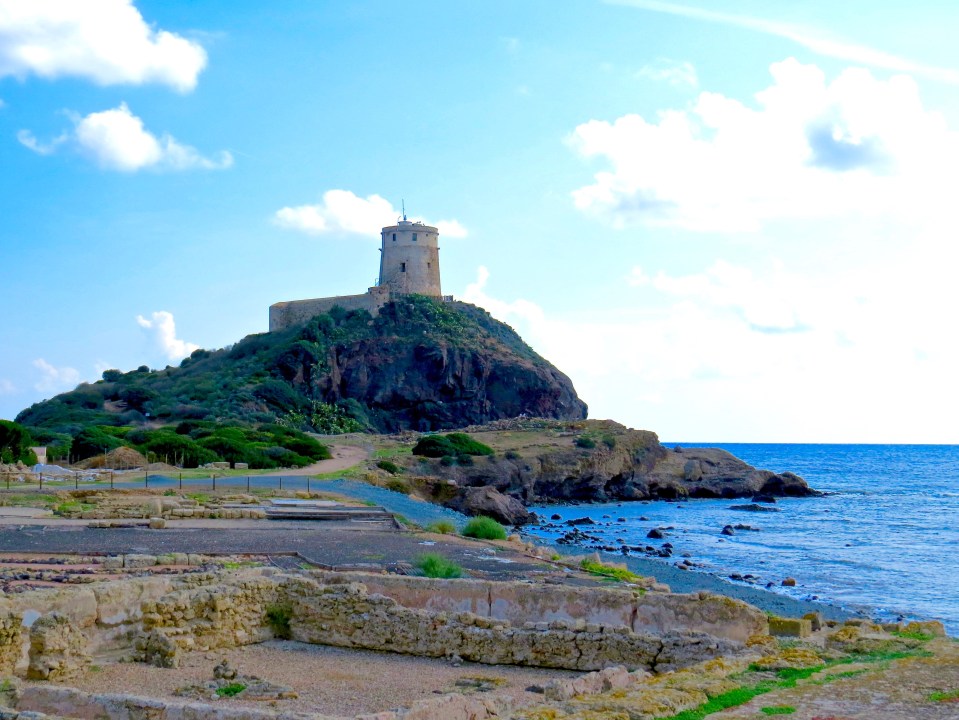
One of two watch towers at Nora.
I’d highly recommend that anyone interested in visiting Nora, make it a relaxing day trip and plan on some beach time while you’re there. Though the ruins themselves aren’t spectacular, the location and views are. A lovely place to spend a relaxing day.
Autograph Session, Part Due. Back on the ship, we went to the second autograph session with the other half of the performers. Immediately following, we went to dinner, excitement building for the headline performance to follow.

Our framed, autographed poster from Broadway On the High Seas 7.
Chita Rivera in Concert. Who hasn’t heard of Chita Rivera? The legendary star of such Broadway musicals as Can-Can, West Side Story, Chicago, Kiss of the Spider Woman and most recently, The Visit. She’s a Broadway Icon.

Chita Rivera.
Michael and I had seen her on Broadway twice before. The Dancer’s Life (2005), was a sort of retrospective of her life and career; and the revival of The Mystery of Edwin Drood, played Broadway in 2012.
Her concert for us tonight, was a mix of interview and song. It featured many wonderful numbers from her illustrious career. I was most thrilled that she sang “Chief Cook & Bottle Washer”, from the musical The Rink, in which she co-starred with Liza Minnelli in 1984.
Of course, the audience loved her! She might have even given the longest concert ever on a BOTHS cruise.
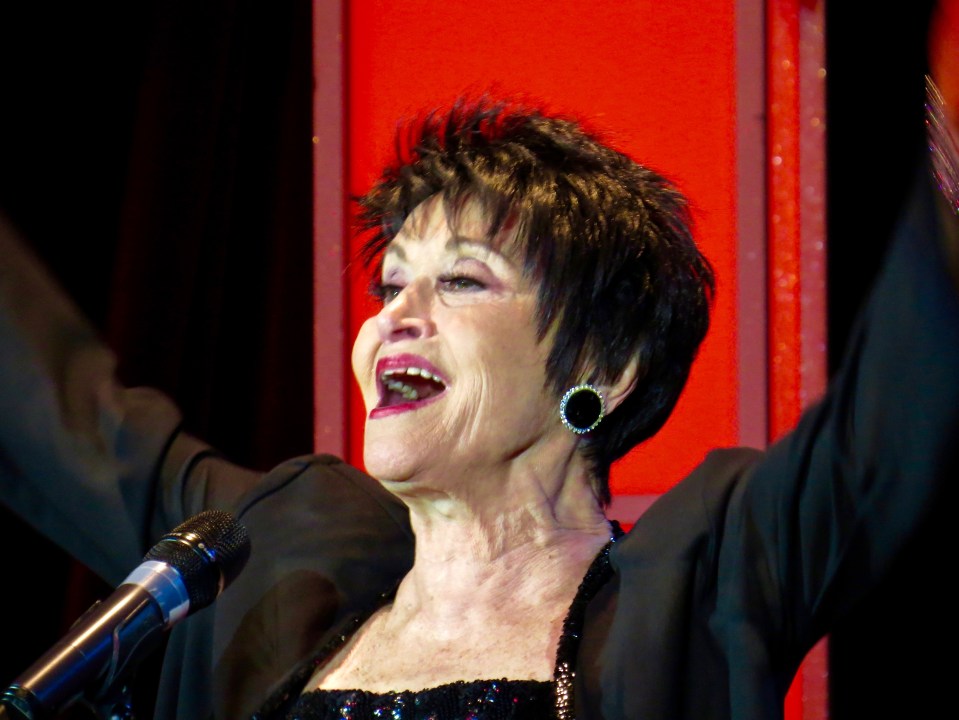
The legendary Chita Rivera.

Chita Rivera in Concert.
Tomorrow is our last full day of the cruise and we’re visiting Bonifacio, Corsica, France.

Travel 2016: Day Six – Rome in a Day & Getting Lost Along the Way
What better way is there to discover a new city than to literally get lost in it? Okay, so maybe not your first choice and it wasn’t ours either– well, kinda-sorta.
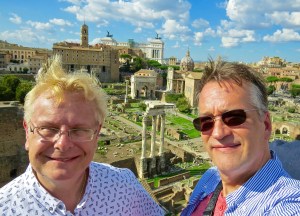
Michael and I, wind-blown on Palatine Hill, overlooking the Roman Forum.
At breakfast, everyone had pretty much decided they were doing there own thing. I think Michael and I were the only ones determined to really go sightseeing and see as much as possible.
The best advice I could find online suggested seeing Rome on foot, skipping the tours and the all-access packages like the Rome Pass and the HOHO bus tickets. We had what we thought was a very modest list of sights we had to see. We figured we’d start at the Spanish Steps since it was closest, then work our way down to end at the Colosseum and Roman Forum. We’d just zig-zag across the city and take in what we could, leaving room for a little exploration along the way.

Obelisk in the Piazza Trinità dei Monti.
We left the hotel using the Map.Me app… and right off, I thought the direction we were going didn’t make a lot of sense. Long story, short– we walked about a half mile to nowhere. Seriously, we reached a point where there wasn’t even a sidewalk! We knew we’d have to turn around, backtrack and pretty much start over. Nothing like getting lost first thing– and not in a good way.
Once we’d reached the Piazza Trinità dei Monti, located at the top of the Spanish Steps, we didn’t seem to have anymore problems with the GPS and the app. Still, with the Spanish Steps closed, we had to find a different route down to the base to be able to see them. Up top there was a barricade blocking it all off.
We found our way down to the Piazza di Spagna at the base of the Spanish Steps. The steps had been closed for renovation for a number of months. Coincidentally, they had the dedication and reopened them, later that same afternoon after we had visited them.

Looking at the Spanish Steps from the Piazza di Spagna. The Piazza Trinità dei Monti is at the top.

Horse and carriages lined up near the Spanish Steps.
Just to the southeast, we found the Colonna della Immacolata (Column of the Immaculate Conception) in the Piazza Mignanelli. From here we started our leisure stroll, turning down streets that looked promising and stopping by shops and visiting many churches. (My next post will just focus on the churches and cathedrals we happened upon.)

The Colonna della Immacolata (Column of the Immaculate Conception) in the Piazza Mignanelli.
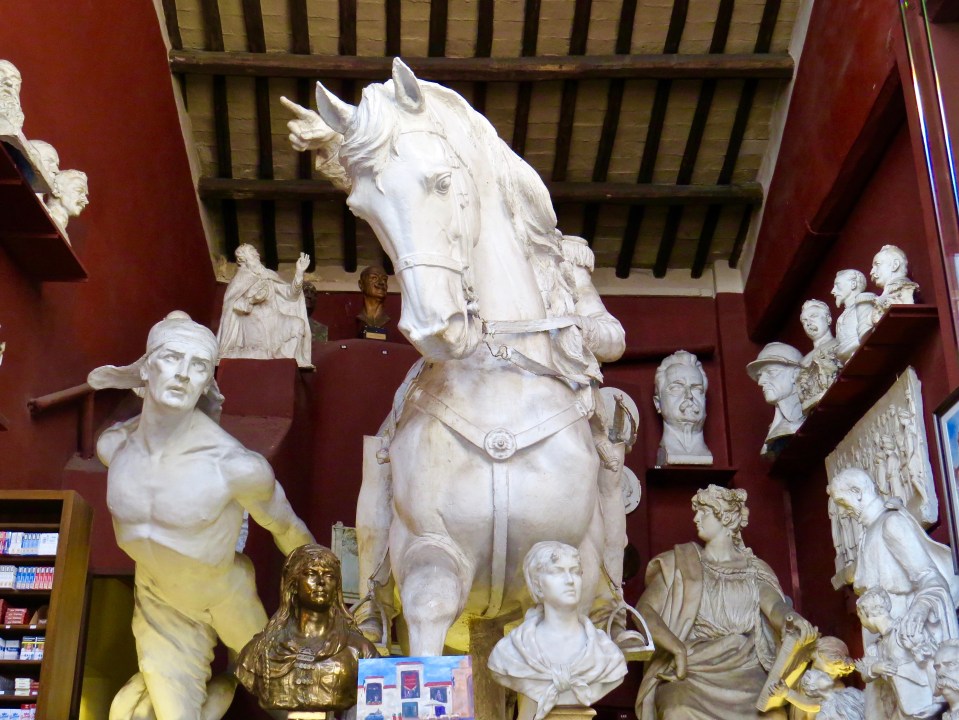
Impressive statuary just inside the entrance of a small restaurant in Rome.
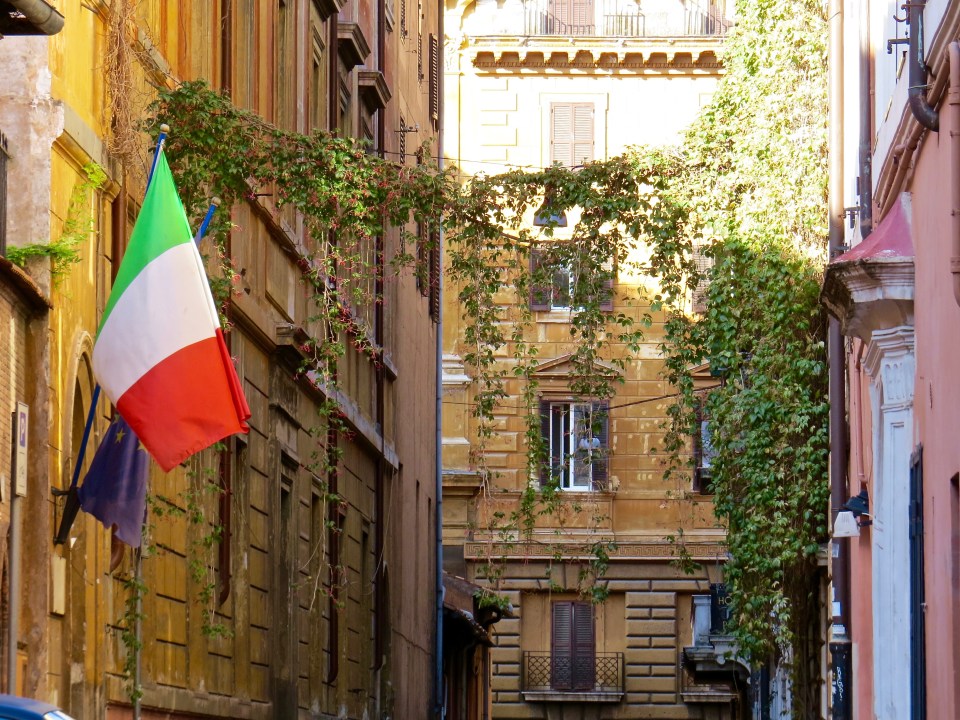
Wandering the streets of Rome.
We saw the Piazza del Popolo from a distance and wandered through. The name’s modern translation is “People’s Square”. I found it to be one of the more beautiful piazzas we encountered.

The beautiful Piazza del Popolo.

Part of the fountain framed by the Porta del Popolo in the background.
Next we found Piazza Colonna with the striking and detailed Column of Marcus Aurelius. Adjoining the piazza is the seat of the Italian Government.

Close up detail of the Column of Marcus Aurelius with the clock of the Palazzo Wedekind in the background.
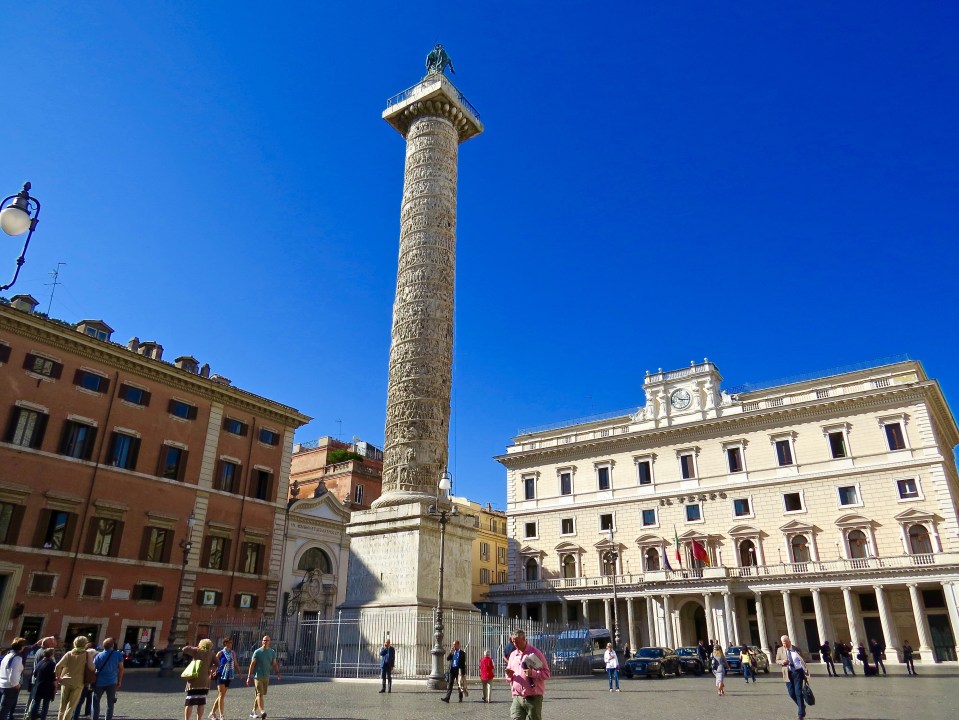
Piazza Colonna.

Wandering through the streets of Rome.
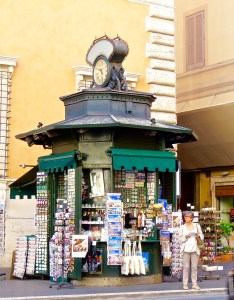
One of many News Kiosks found throughout Rome.
I love the architecture and classic style of the buildings found throughout Rome. I also found the numerous news kiosks very charming.
There is literally something new to see around every corner in central Rome. I could spend days just wandering the city aimlessly.
Piazza di Trevi – Completed in 1762, the Rococo (Late Baroque) Trevi Fountain fed by an aqueduct that was built in 19 BC. It is one of the most famous fountains in the world. It is also the centerpiece of this small, extremely claustrophobic piazza.
There is the legend that if you throw a coin in the fountain… you will return to Rome one day. Well, it was so crowded, there was no way we were going to get close enough without taking up valuable time- so no wish was made.

The world famous Trevi Fountain.
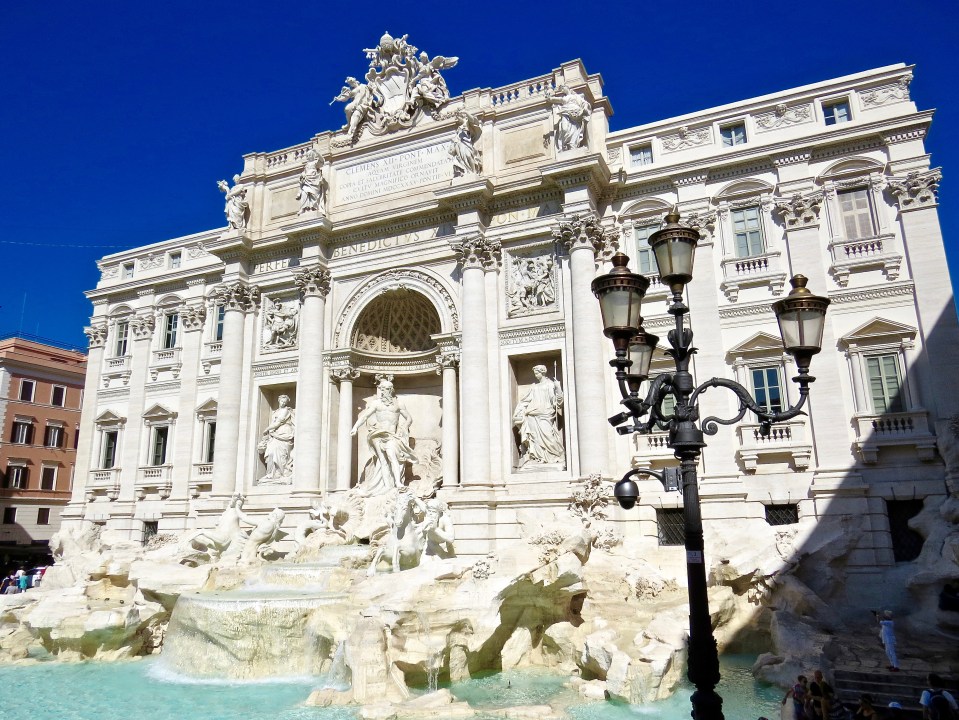
The Trevi Fountain in the Piazza di Trevi.
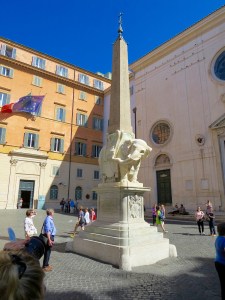
Bernini’s Elephant and Obelisk.
Near the Pantheon, was the Elephant and Obelisk designed by Gian Lorenzo Bernini. The Egyptian Obelisk was excavated nearby.
The combined work was unveiled in 1667 in its home in the Piazza Della Minerva.
Piazza della Rotonda – is the location of the Pantheon – formally a Roman temple and now a church. It’s excellent condition is due, in part, to its continuous use throughout history.
When you consider the age (completed in 125 AD) and its condition, it really is a world-wonder. The interior is primarily lit by the sun through the nearly 30 foot oculus above, in the center dome.

The Pantheon in Rome.
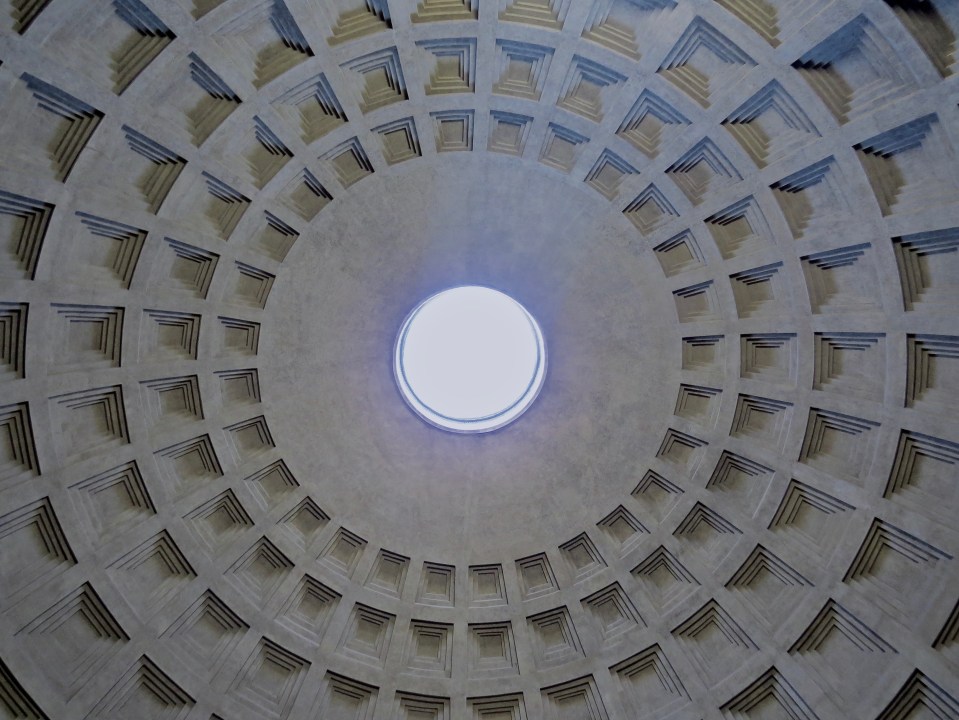
Looking up at the oculus in the Pantheon.
The sun casting its rays on the Palazzo Madama.
The Palazzo Madama is the seat of the Senate of the Italian Republic; built on top of the ruins of the ancient baths of Nero.
We happened to stumble upon the changing of the guard taking place as we passed.
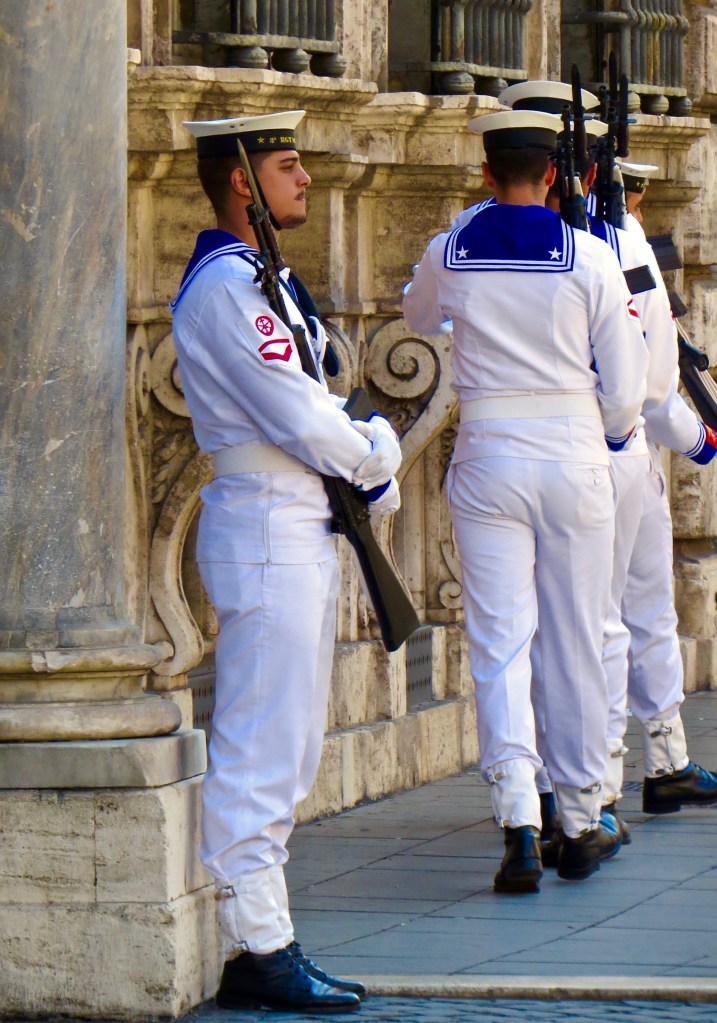
The changing of the guard at the Palazzo Madama.
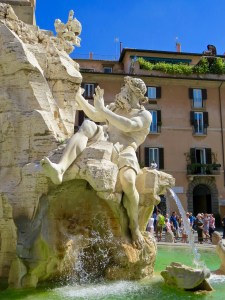
Close up of the Bernini Fountain in Piazza Navona.
Piazza Navona is one of the most popular and visited piazzas in Rome. It features three fountains, including Bernini’s world famous Fontana dei Quattro Fiumi (Fountain of the Four Rivers) as the centerpiece.
The historic significance of the space is that it was built on the site of the Stadium of the Domitian, also known as Circus Agonalis. It was an important competition stadium back in the first century AD.
At one time, it was also the home of the city market. Over the years, many films have featured scenes that were shot here.

Entering the Piazza Navona.
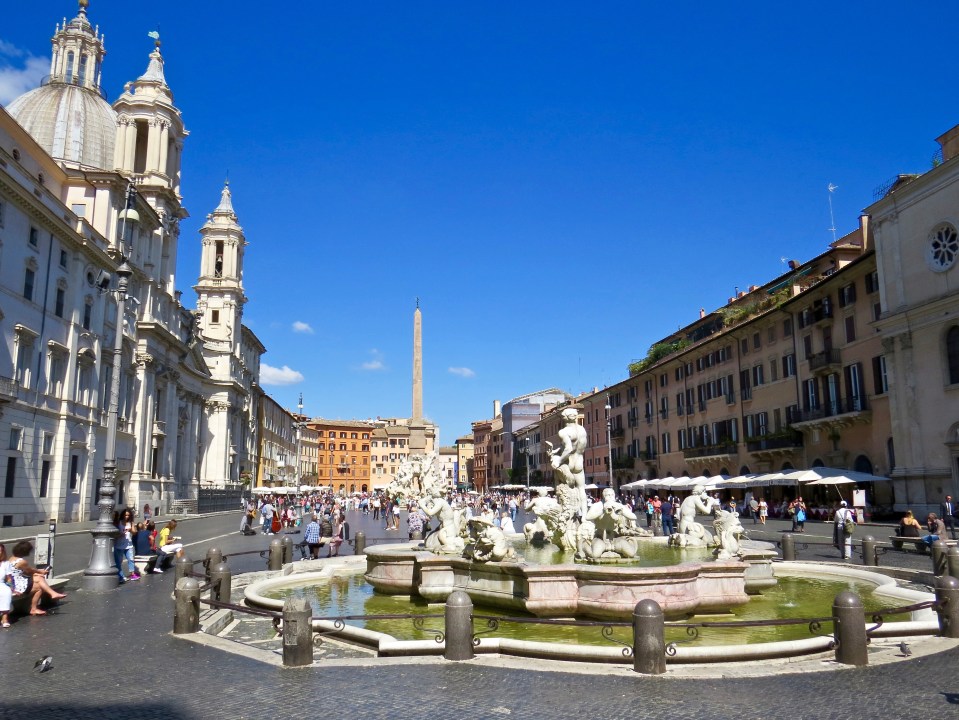
The historic Piazza Navona.
Finding the Sacred area del Argentina was completely unexpected. In 1927, during demolition work, parts of the holy area were discovered. The original square was uncovered that includes the ruins of four Roman temples and part of Pompey’s Theatre, with portions of the ruins dating back to 241 BC. Julius Caesar was believed to have been assassinated in this square. The area is currently undergoing restoration.
It is also the location of Torre Argentina Cat Sanctuary, a no-kill shelter run by volunteers. In addition to protecting them, they sterilizes the cats to help control the city’s feral cat population. There is a no-kill law in Rome protecting homeless cats. We didn’t see any cats here on our visit.
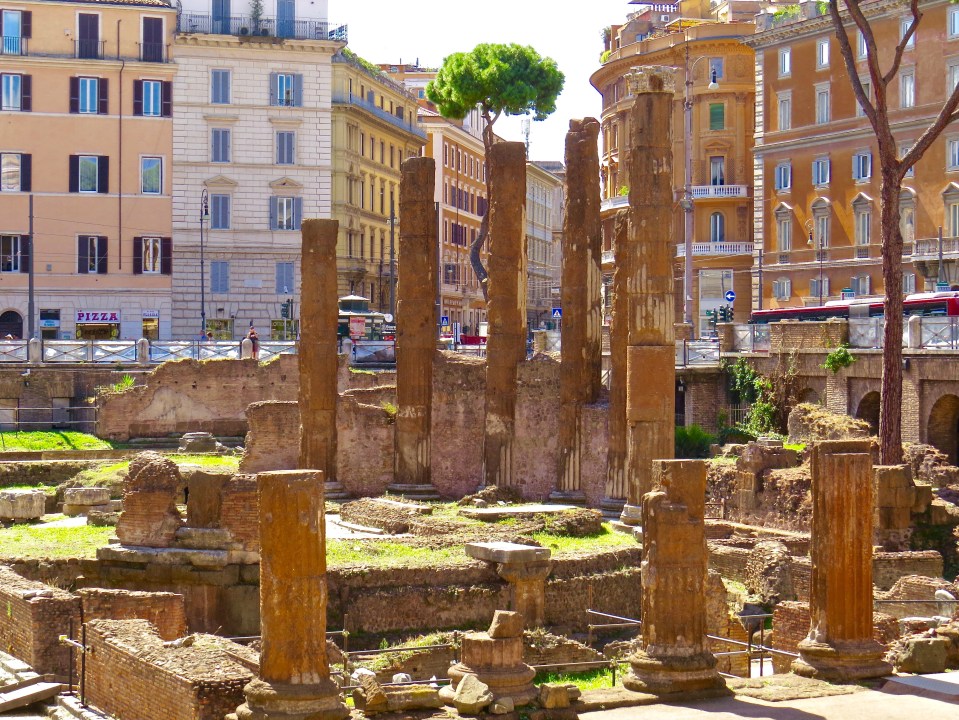
The Sacred area del Argentina.

Sacred area del Argentina, believed to be the site of Julius Caesar’s assassination.
The Piazza Venezia is the central hub of Rome. We actually passed through here four times throughout the day. On one side is the Palazzo Vallenti framed by two churches.
Also on the piazza is Altare della Patria (Altar of the Fatherland), built in honor of Victor Emmanuel the first king of a unified Italy. It was designed by Giuseppe Sacconi in 1885 but not completed until 1925. It is the largest monument in Rome. Immense in size, it is despised by many because a large part of Capitoline Hill and its historic artifacts were destroyed in order to build it.
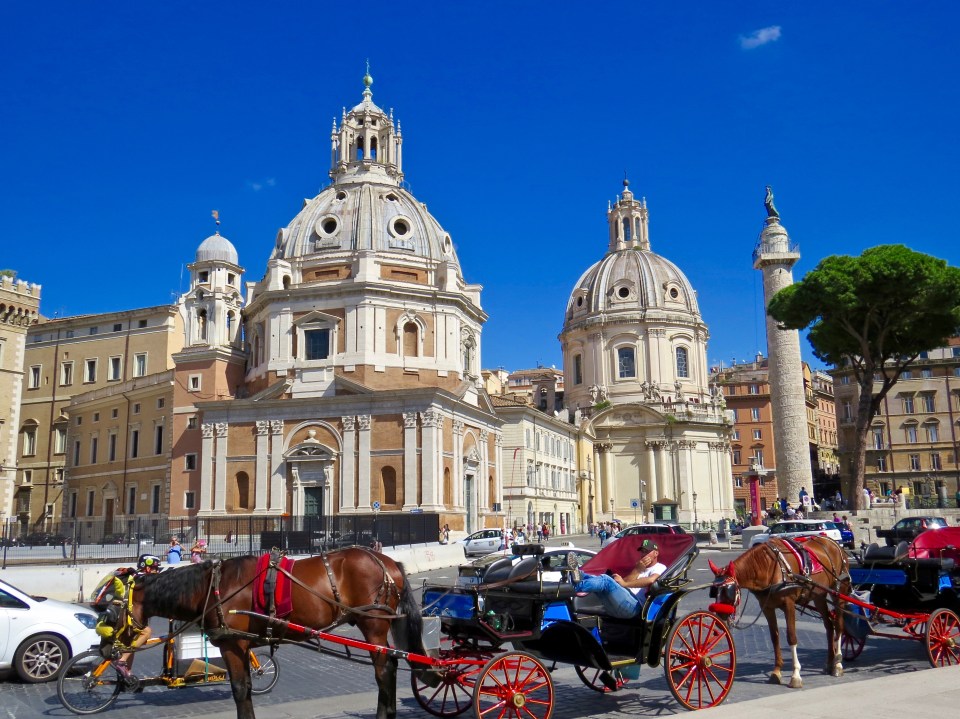
Near the Piazza Venezia.

The Altar of the Fatherland.
Outside the Colosseum.
Colosseum (or Coliseum) was something we had to see. We’d wisely purchased tickets ahead of time to avoid the lines. It included the Colosseum and Palatine Hill/Roman Forum which could be used on two separate days, but only one entry into each location.
When we arrived, the line to get into the Colosseum, even with a ticket, was pretty long. We let a guide on the street talk us into joining a group tour (for only a few Euros since we already had tickets) and he said we’d get in right away. Big mistake. We waited another 20 minutes and still had to wait to get in the queue. We ended up only staying with the tour a short time because the guide was long-winded and wasn’t going any place fast. So we left the group and finished it on our own.
The Colosseum is massive and quite impressive. I’ll admit that the interior was actually in a greater state of decomposition than I expected. Still, iconic– a must-see when visiting Rome.
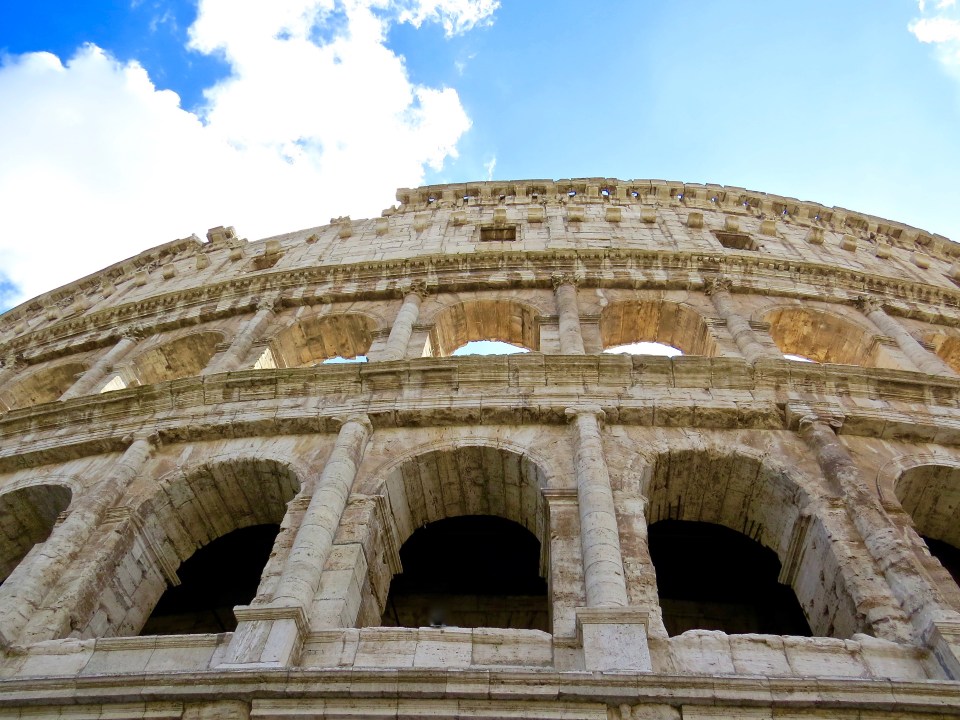
Looking up at the Colosseum.

Inside the Colosseum.
Leaving the Colosseum and starting to get a little tired, we continued on to Palatine Hill and the Roman Forum. The breathing-taking views from the hill were the highlight of the day. One of the seven hills of Rome, it is one of the oldest areas of the city. With multiple viewing points, we had exceptional panoramic views of Rome, the Colosseum and the Roman Forum below.

Overlooking the Roman Forum from Palatine Hill.

Incredible view of Rome from Palatine Hill.

Walking through the Roman Forum with Palatine Hill in the background.

Columns and excavated pieces in the Roman Forum.
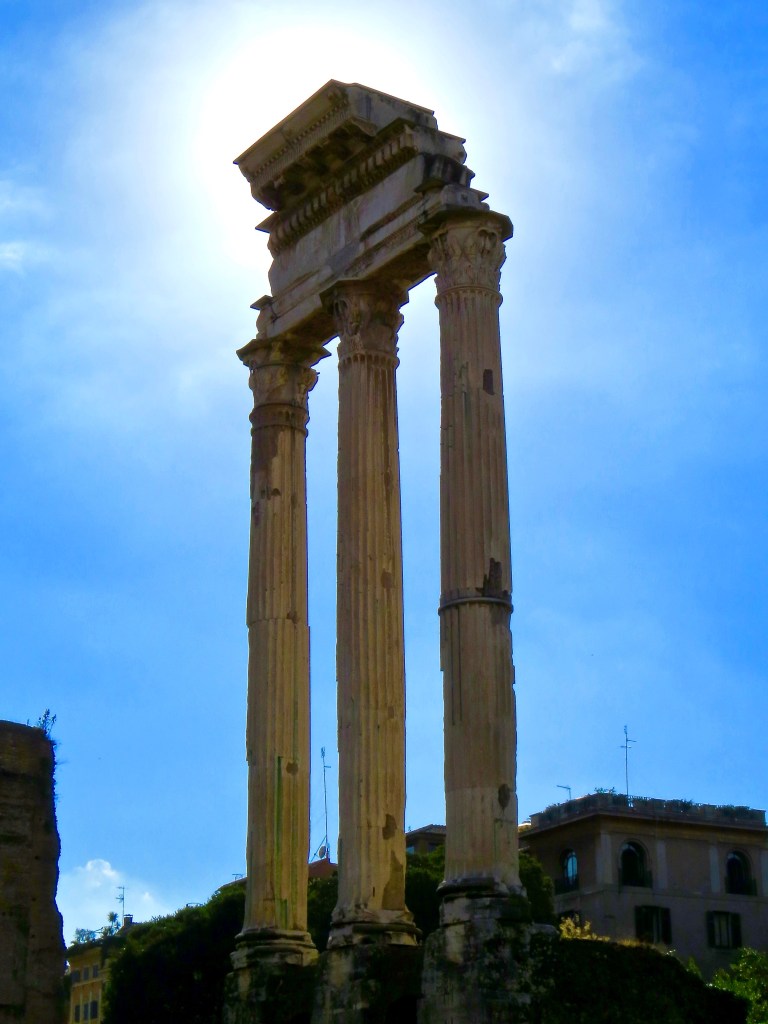
Majestic Columns surviving the ravages of time in the Roman Forum.
After the Forum, we walked out past the Piazza Venezia and on to the Via del Corso where we wisely hailed a taxi back to the hotel. In all, we walked fourteen and a half miles through the city.
Back at the hotel, we had an early dinner/late lunch, having not eaten since breakfast. We had about an hour to kill before we had to get ready for the evening’s reception.
Broadway On the High Seas 7 Reception. As with the last cruise, Playbill Travel hosted a pre-cruise reception with champagne and entertainment. It was a chance to socialize and see friends from past cruises we hadn’t seen yet. We also caught up again with Anthony and Michael, that we met in London.
So in addition to the fact that I was standing a few feet away from Adam Pascal (the original Roger in RENT) during the entertainment– the highlight of the evening was hearing Kate Baldwin sing “Ribbons Down My Back” from Hello Dolly. She will be performing as Mrs. Malloy on Broadway in the upcoming revival starring Bette Midler.
Afterwards, we took a stroll down the street for Gelato with George and Mary before calling it a night.
I think we did pretty good seeing Rome in a day. Not to mention all the churches we also visited, that I’ll share in my next post. (We’re spending the day at the Vatican after the cruise.)
We managed to get lost literally and figuratively in one the most beautiful, historic cities in the world.
Bellissima Roma!

The Majestic Beauty of the Angkors
Southeast Asia Travel Day Four: Michael and I were both up and wide awake way too early this morning. Not that unusual for me but Michael is usually a good sleeper. Between jet lag and the exciting day ahead, it was difficult to go back to sleep.

Silly Selfies at Ta Prohm.
We were the first ones at breakfast and there was an incredible spread. So many choices from traditional breakfast to local cuisine– everything that Raffles Grand Hotel d’Angkor does is first class.
In regards to this trip, today was probably my most anticipated day. That can be dangerous this early in a long vacation but there are also so many unique and exciting things ahead. As a precaution, I try not to allow my expectations to be too high; just to avoid any chance of disappointment.
Today did not disappoint.
Today was one of those few days in your life you’ll remember forever. A whirlwind of experiences that totally consumes you. Every sense heightened and challenged. Memories indelibly imprinted in your mind.
I have a bit of an obsession with history and what was left behind. I’m not as consumed by the facts as I am the aura of the experience. To put it bluntly: I like old things.
History not only connects us from the past to where we are now; it connects us metaphysically to all the people that came before us. For me, it’s magic. It gives me chills. There’s nothing else like it in the world.
On the Road to… This was our first opportunity to meet some of the people that would be continuing on with the Broadway On the High Seas 5 (BOTHS5) cruise. About 80 of the nearly 300 BOTHS5 participants came to Siem Riep for the 3-day pre-cruise adventure. As we’d find out later, the group was pretty evenly divided between three choices of hotels; then split again into groups of about a dozen for our tour experiences in Siem Riep. This gave us a perfect opportunity to meet new friends, more intimately; prior to the whole group coming together in Ho Chi Minh (Saigon) in a few days.

On the road in our tuk-tuk.
We all boarded tuk-tuks for the short ride to Angkor Wat. What a fun and relaxing way to travel!
Some tuk-tuks are bicycle-driven but most are now powered by motor bikes.
We were all connected to our guide, Jun, by headset so he was able to narrate the sites along the way.
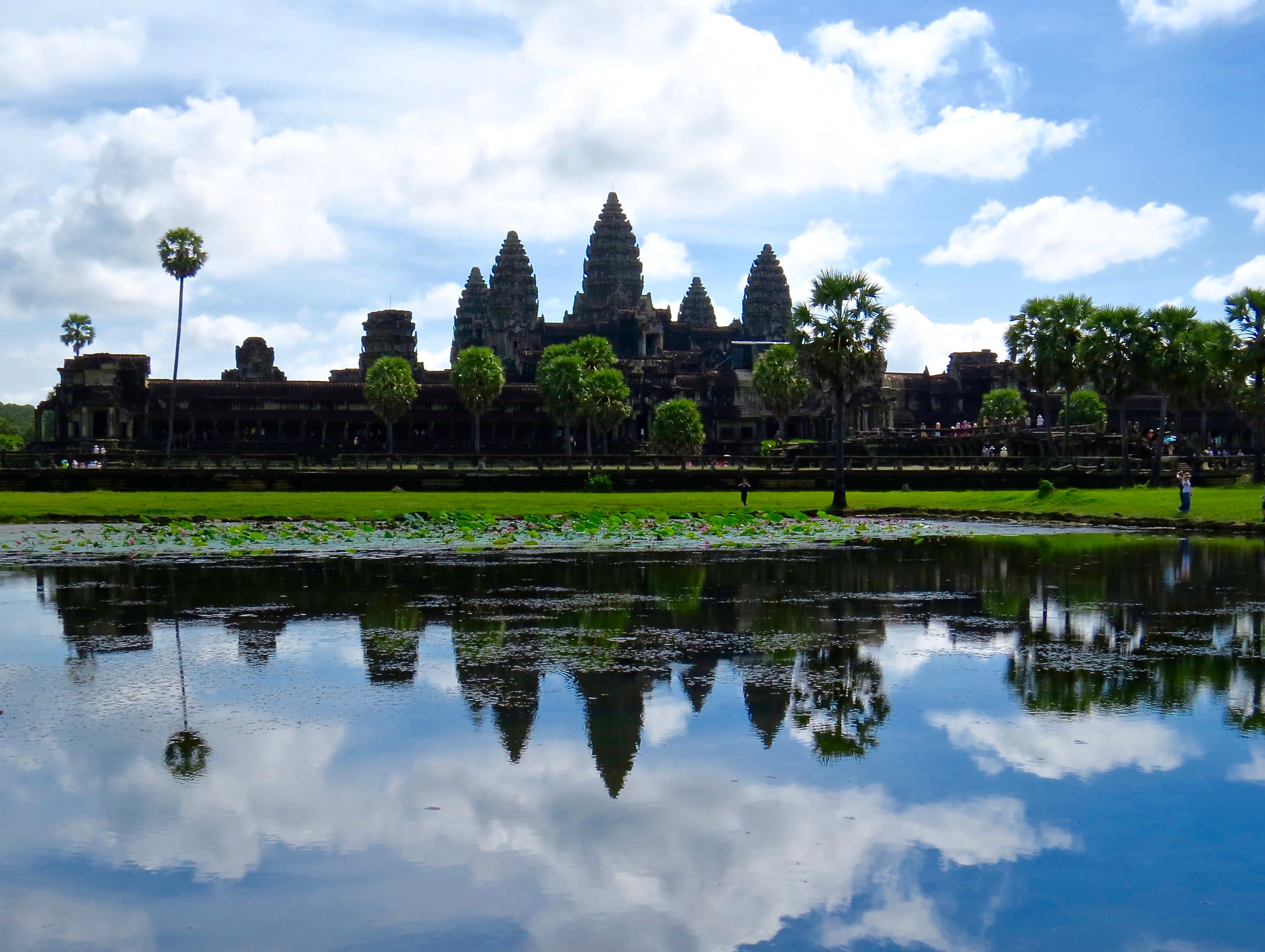
Angkor Wat.
Angkor Wat. Depending on the source, Angkor Wat is frequently called the unofficial 8th wonder of the world. It’s often on lists of must see places in your lifetime. I think all the Angkor temples (as a group) should be included.
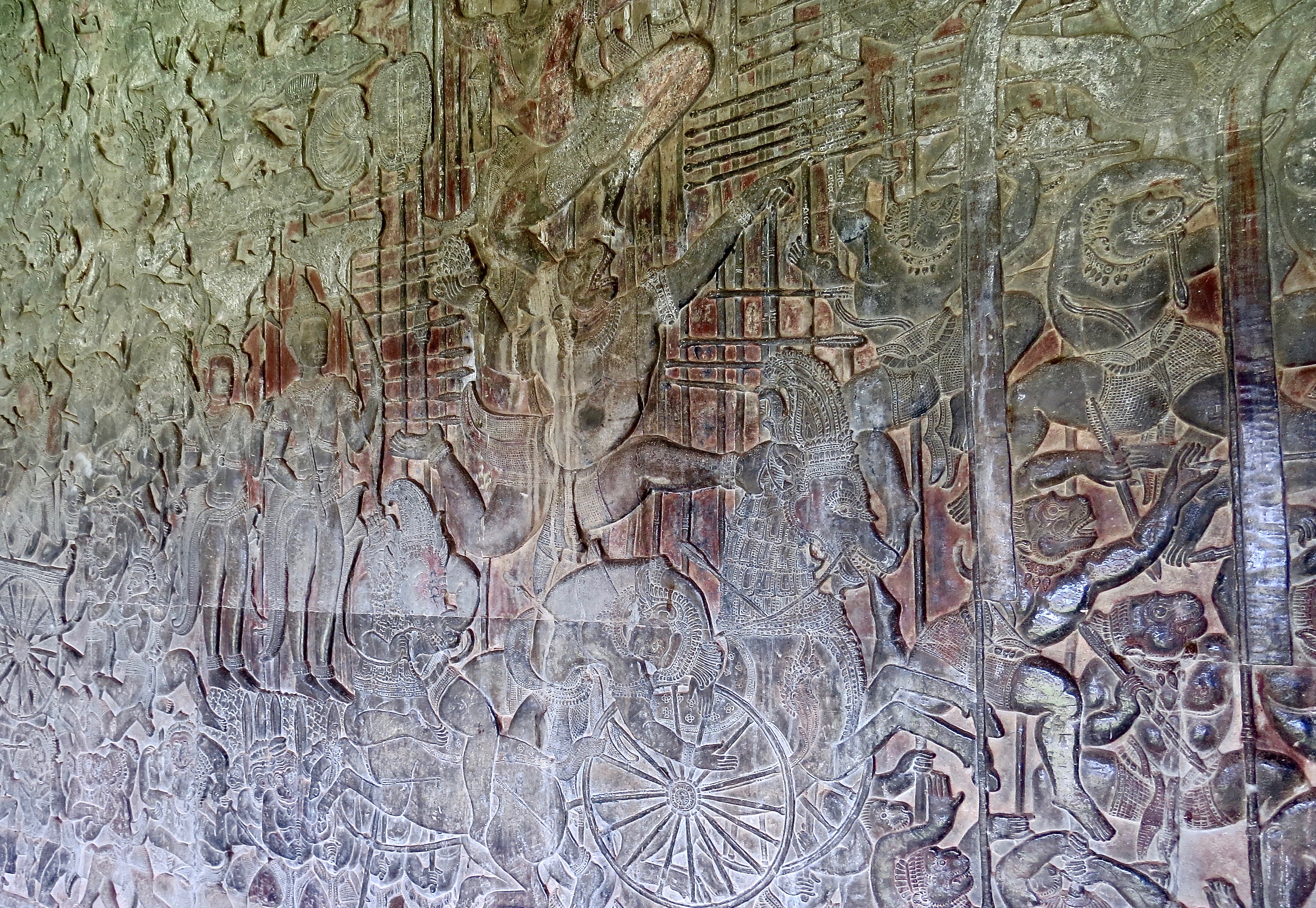
Bas Reliefs at Angkor Wat.
Angkor Wat was built in the early part of the 12th century, over a 30 year period. The workmanship is almost impossible to comprehend. From a distance, it looks like a massive, crumpling stone ruin. As you get closer, the impressive detail begin to be revealed. There are so many elements to be appreciated. The bas reliefs alone contain more than 12,000 square feet of intricate sandstone carvings. What stands out most about Angkor Wat from the other temples is the size. It’s pretty incredible that it has survived the centuries and much of the detail is in such good condition.

Inside the heart of Angkor Wat.

Looking up in one of the entries in Angkor Wat.

One of the statues of Budha.
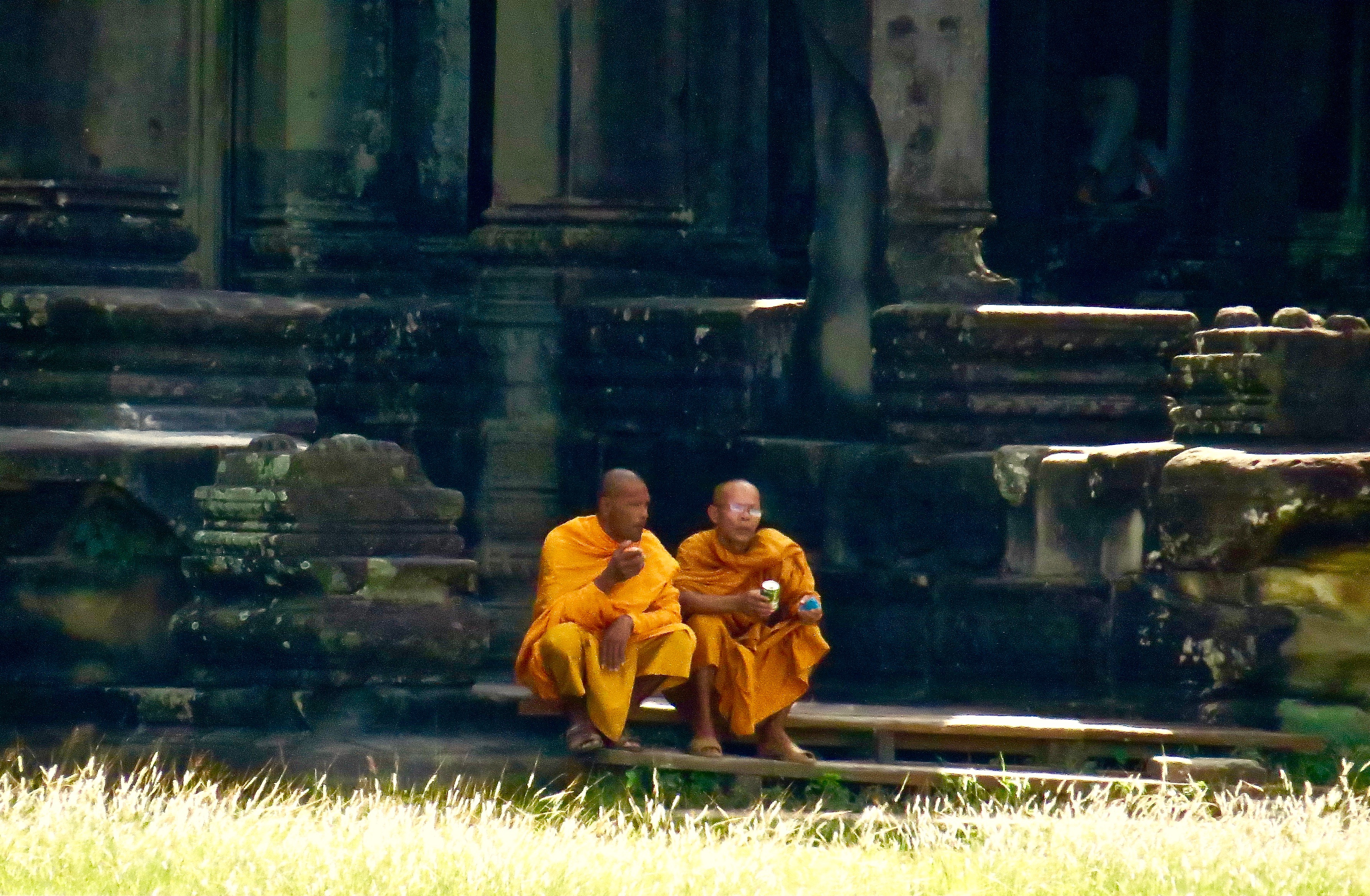
Monks can be seen throughout Angkor Wat.
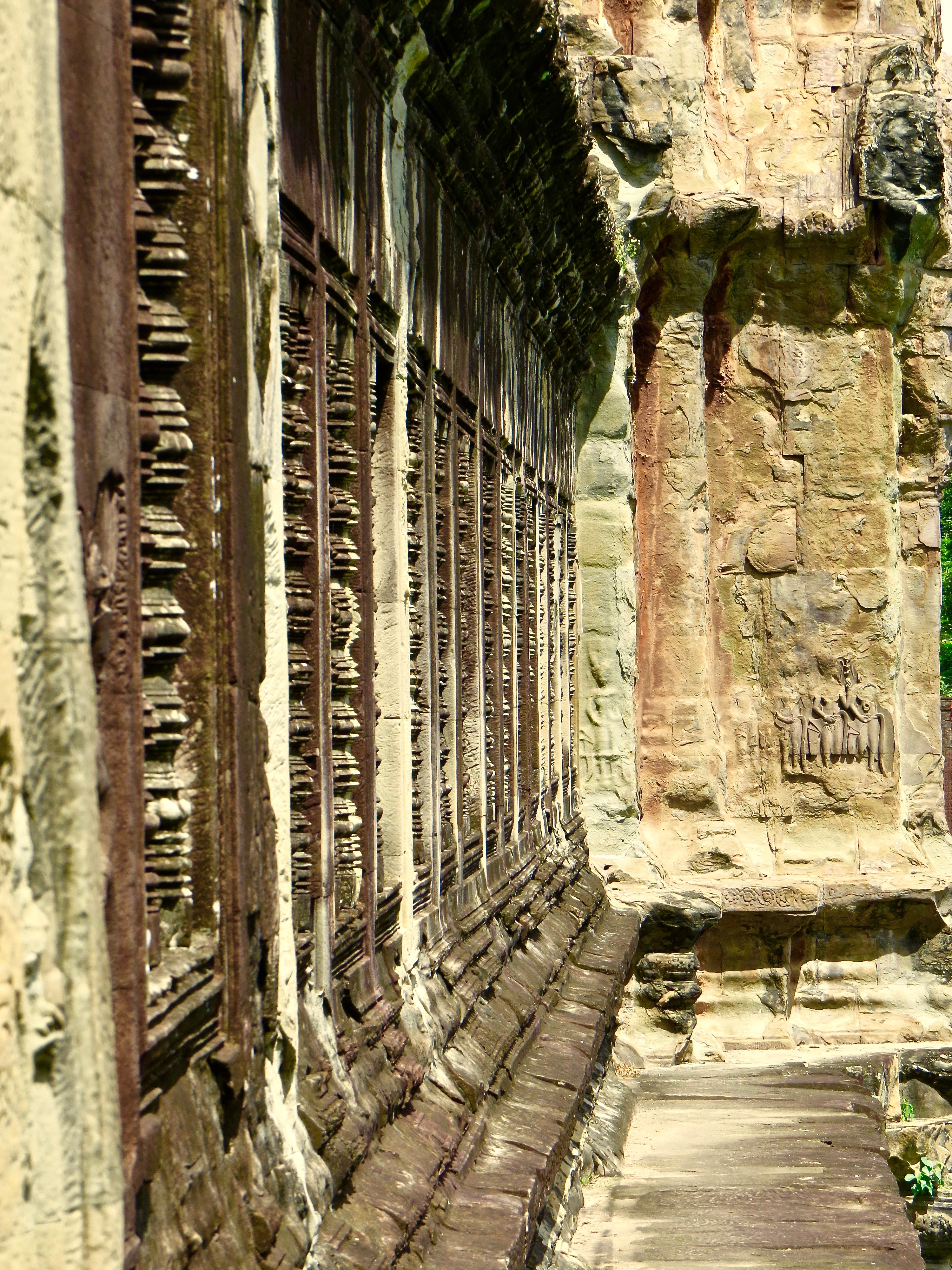
Incredibly detailed exterior walls protect the inner temple.
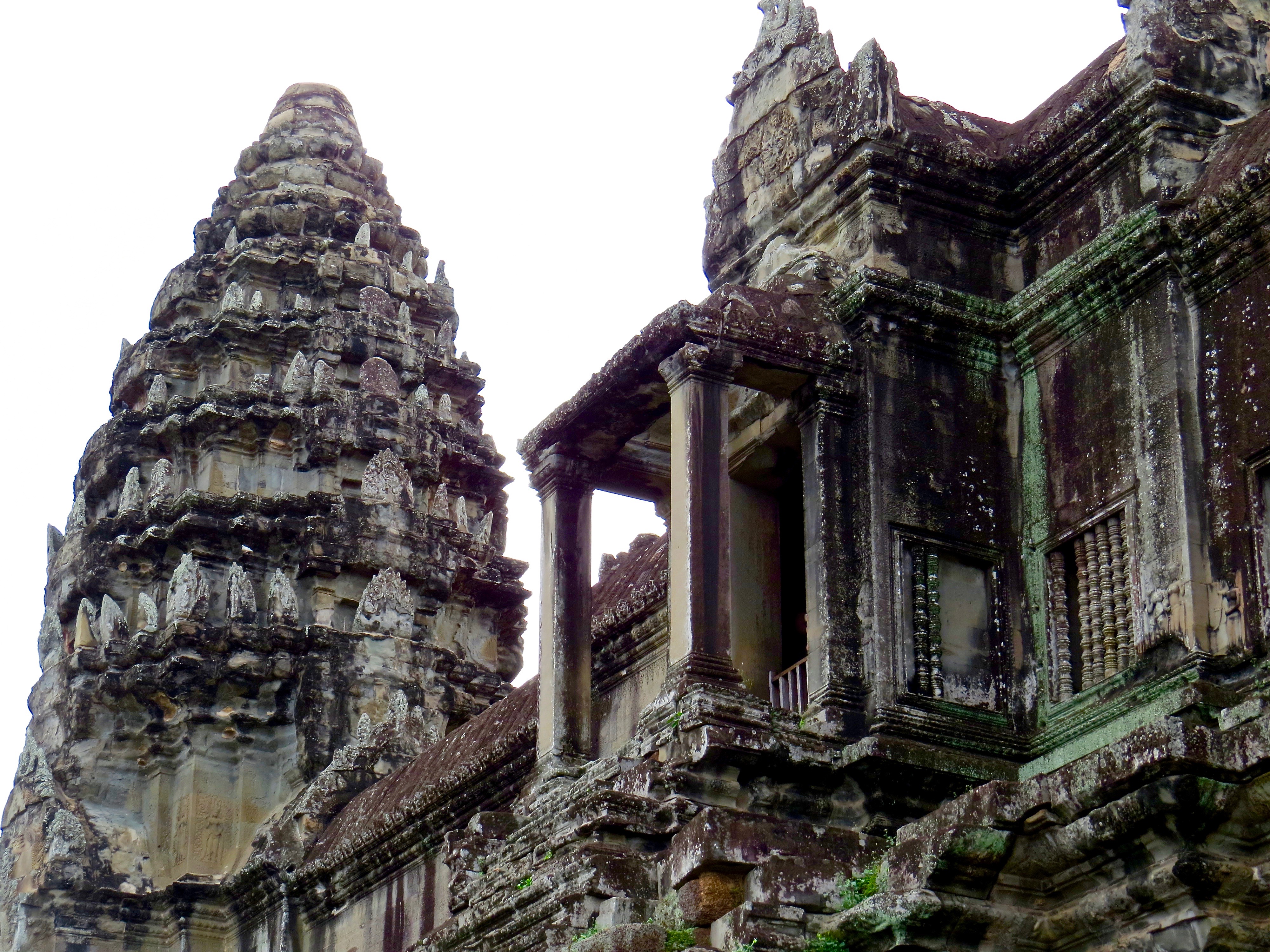
One of the Angkor Wat towers and balconies.
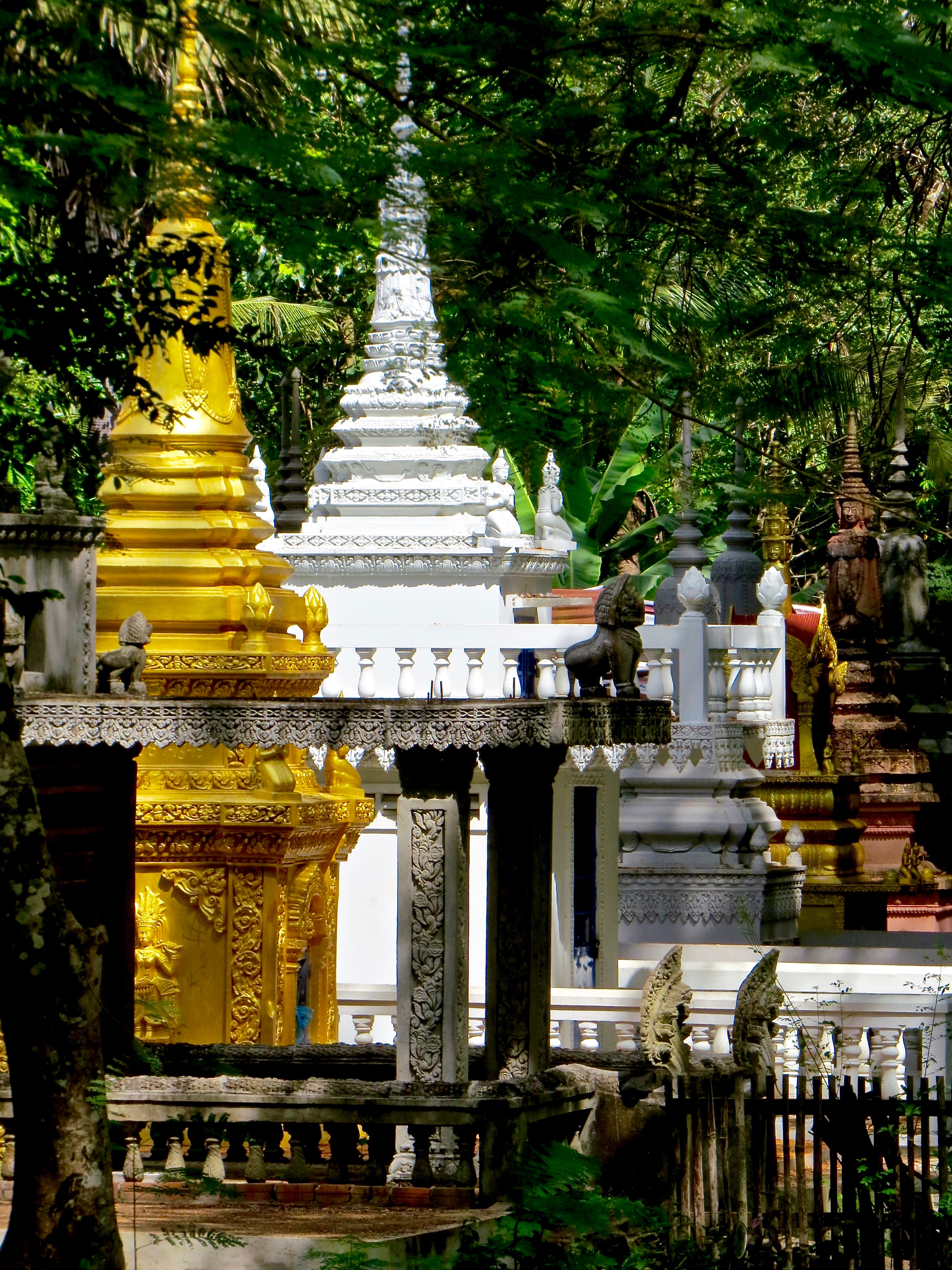
A cemetery at Angkor Wat.
Tomb Raider, Jungle Temple or Ta Prohm? Here is a spot that nearly everyone is familiar with, even if they don’t realize it. Most famously recognized from Tomb Raider, Ta Prohm has survived from its origins in the mid 12th century.
The famous Banyan tree root snakes its way through the temple. There are hundreds of statues in the complex. Ta Prohm is under a long, delicate preservation and restoration process. Primarily, this involves structural strengthening to prevent any further, rapid deterioration.

The famous Banyan root at Ta Prohm.
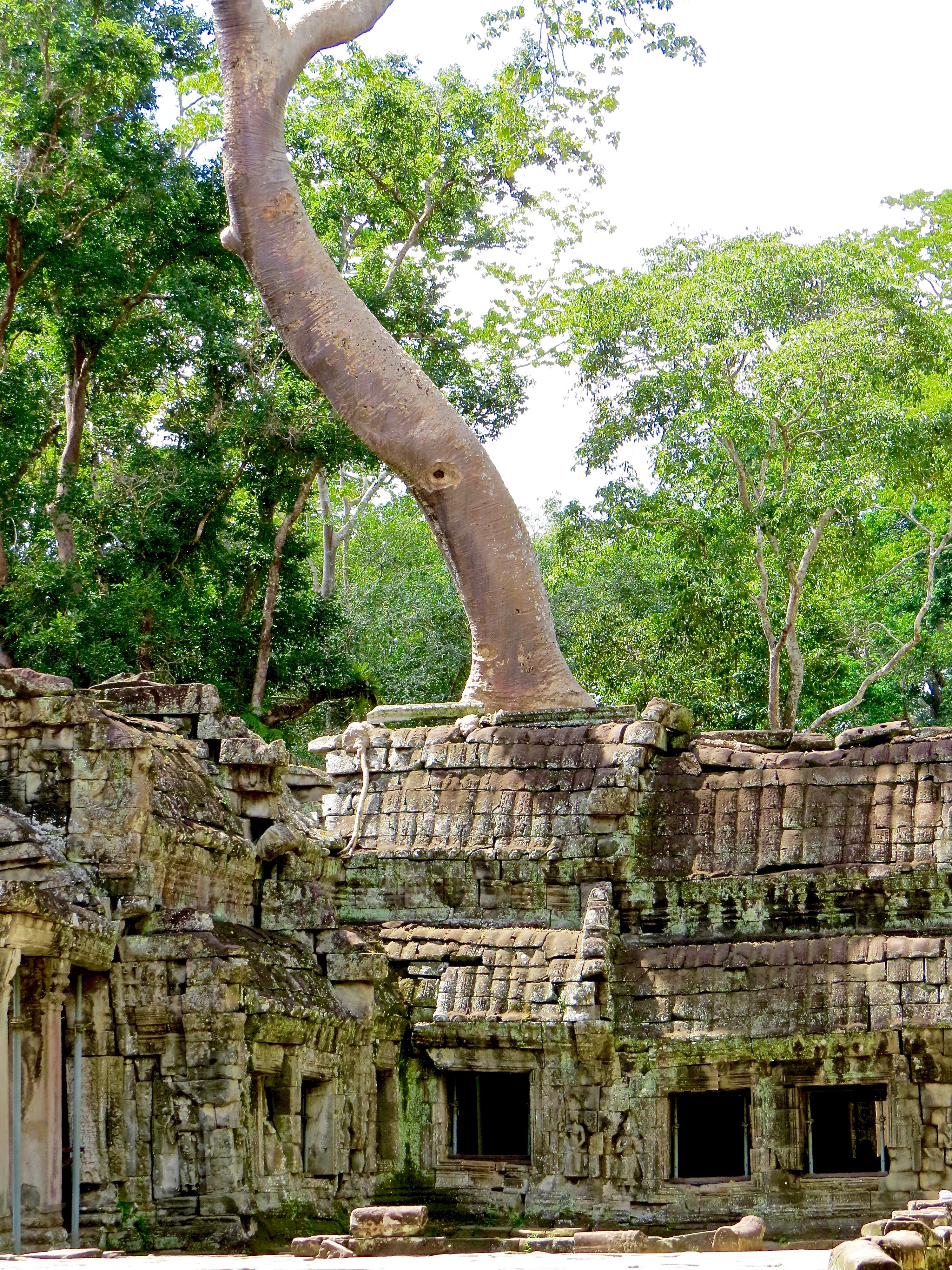
The Banyan tree rising out of the temple.

Deteriorating but naturally beautiful.
Angkor Thom. It means the great city. It is the temple of faces. Each tower has four carved faces so they can be seen from any direction. Angkor Thom was the final capital of Khmer Empire. The city was surrounded by a wall with causeways lined with 54 statues on each side leading to the entry towers. Inside the ruins is the magnificent Bayon Temple… a sight to behold.
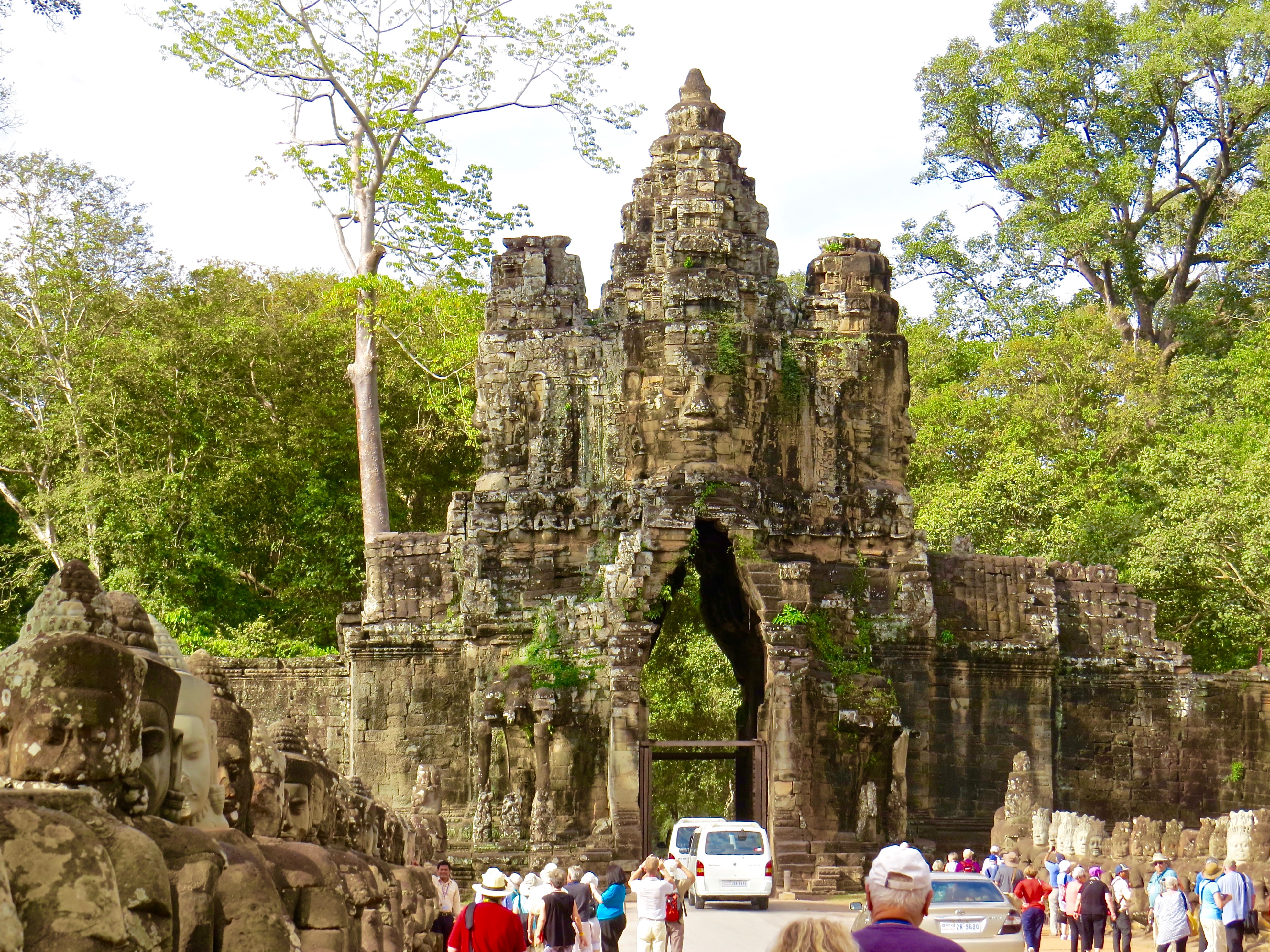
The causeway and entryway to Angkor Thom.

Statues lining the causeway.

The Bayon Temple of Angkor Thom.

Looking down in the maze of pathways at Angkor Thom.

Four faces surround every tower.
I took nearly 800 photos today. In an effort to try and keep up with posting here, I’m only sharing a few now. Later I’ll do a couple photo essay posts with many more pictures of the Angkor temples. This was such an incredible experience.
Raffles Grand Hotel d’Angkor
Southeast Asia Travel Day Three: We arrived at the beautiful Raffles Grand Hotel d’Angkor at 11 AM, November 1st, not expecting to be able to check in until 4 PM. We’d packed a carry on so we could use the pool while we waited– but as luck would have it, we were able to check as soon as we arrived.
 The historic 5-star hotel first opened in 1932. It welcomed the beginning of travelers coming to the region to visit the ancient Angkor temples.
It is situated on 15 acres which includes several classic French gardens and boasts the largest swimming pool in Cambodia.
We couldn’t have selected a better place to call home for the three days we’re in Siem Riep. Everything about it is classic. It has the desired modern amenities while maintaining all of its original, traditional charm.
The entire staff is very friendly, helpful and perfectly accommodating. They truly go out of their way to make you comfortable and welcomed. It’s a luxurious experience without the pretense.
We checked in, briefly settled into our room; then did a little exploring of the grounds before returning to our room for a much needed nap.

Raffles Grand Hotel d’Angkor.
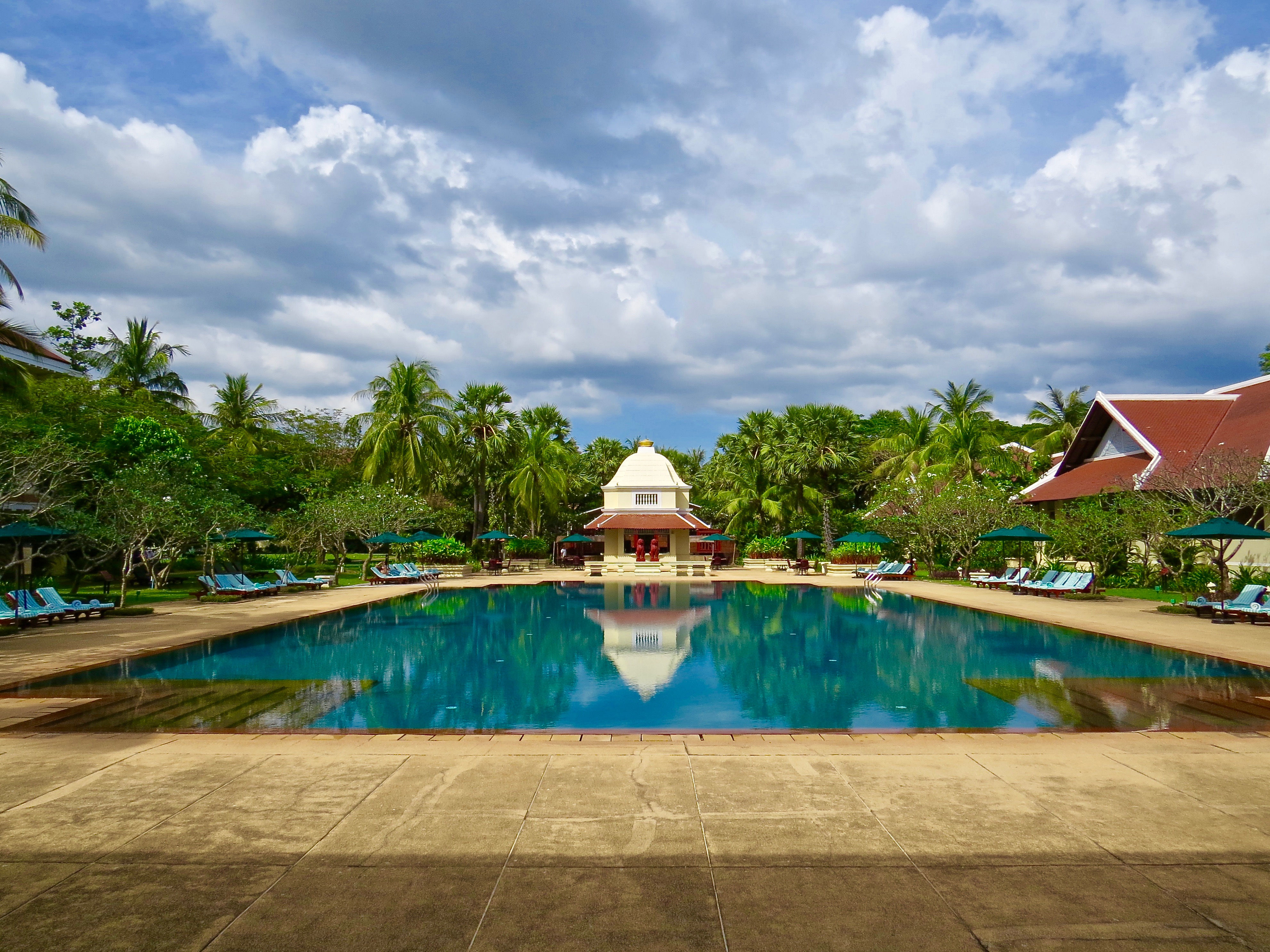
Raffles pool is the largest in Cambodia.

The working, vintage lift.

Our Room facing the balcony.
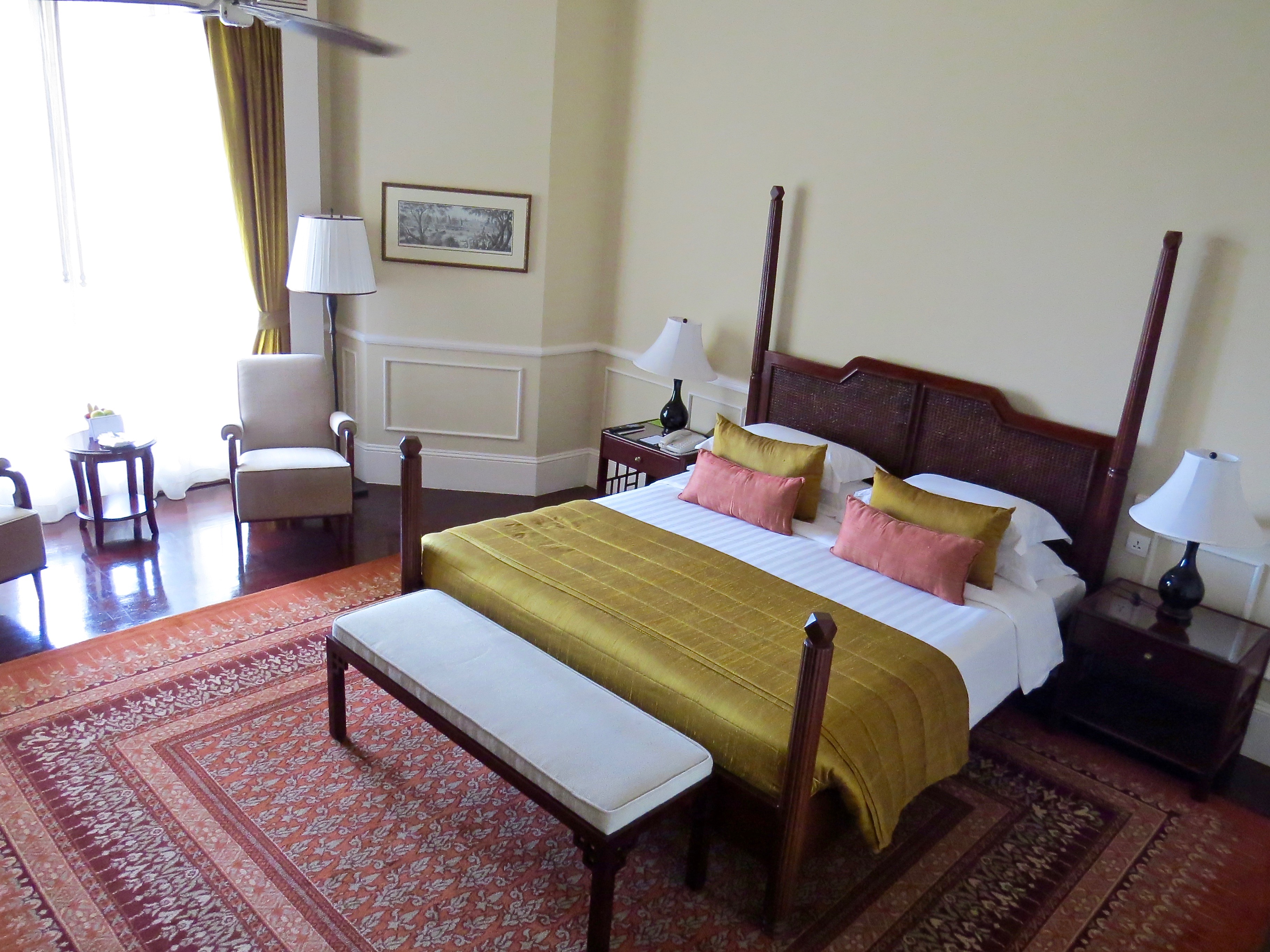
Our room in the original 1930’s building of the Raffles Grand Hotel d’Angkor.

The view from our balcony.

Up, Up and Away
Southeast Asia Travel Day 1 & 2: 35 hours to travel halfway around the world. Even flying business class — it’s a challenge. I don’t know how people who travel internationally on business manage to keep their sanity.
The good news is that none of our flights were delayed. All the airports we used had free WiFi, making the stops go by pretty quickly. There were only small pockets of turbulence once we got out over the Pacific Ocean that came and went throughout the rest of our flights.
 We flew Virgin America from Chicago to Los Angeles. (I have to note their use of contemporary music and pink and purple mood lighting for a refreshing take on air travel.) From LA we flew Singapore Airlines to Tokyo in about 12 hours. We had to disembark, go through security again; then get back on the same plane (same seats) about an hour later. The flight crew changed at this point and I was envious that they didn’t have to continue on. By this point, Michael and I were both ready to be done with the flying.
 From Tokyo, we continued on Singapore Airlines– for another 7 hours to Singapore. We had a five hour layover at Singapore’s Changi Airport, which has a reputation as one of, if not the best in the world. We spent a chunk of time in the SilverKris Lounge and then did some exploring. Lots of interesting things to see and do at Changi including free movies, a pool, many stores and some beautiful gardens spaced throughout the massive complex.
 Our last 2 hour flight was on Silk Airline to Siem Riep, Cambodia. (I barely had time to finish my movie on this one.)
I watched the movies Trainwreck, Magic Mike XXL, The Age of Adeline, Once and The Lucky Stiff. I was especially glad to see the last one since it was recently released but not available yet in our area. It’s based on a small cult musical and was a lot of fun.

Beautiful cloud formation on the last leg of our journey to Siem Riep.
By the time we reached Siem Riep, Michael and I were both tired, sore and in desperate need of showers. I slept as much as I could during the flights but still felt exhausted and disoriented. Honestly, by that point it didn’t matter if it was breakfast or dinner time or morning or night; I was just completely grateful to be on the ground.
When we left Chicago and it was 37 degrees and when we arrived in Siem Riep in was humid and about 80 degrees– and climbing.
We were fast-tracked through customs in Siem Riep, where we met Jun, from Trails of Indochina. He escorted us to our vehicle that transported us to our hotel, Raffles Grand Hotel d’Angkor. It turned out that Jun would be our guide during our stay in Cambodia– but more about that later.
All in all, the length of the trip aside, it was a fairly painless process. Sleeping on planes, even in business class is challenging. We both managed to get some decent sleep time in though. The service personnel all along the way were very attentive and extremely nice. We moved through all the security checkpoints quickly and I loved not having to take off my shoes after leaving the United States.
Here are some images from Singapore’s beautiful Changi Airport:
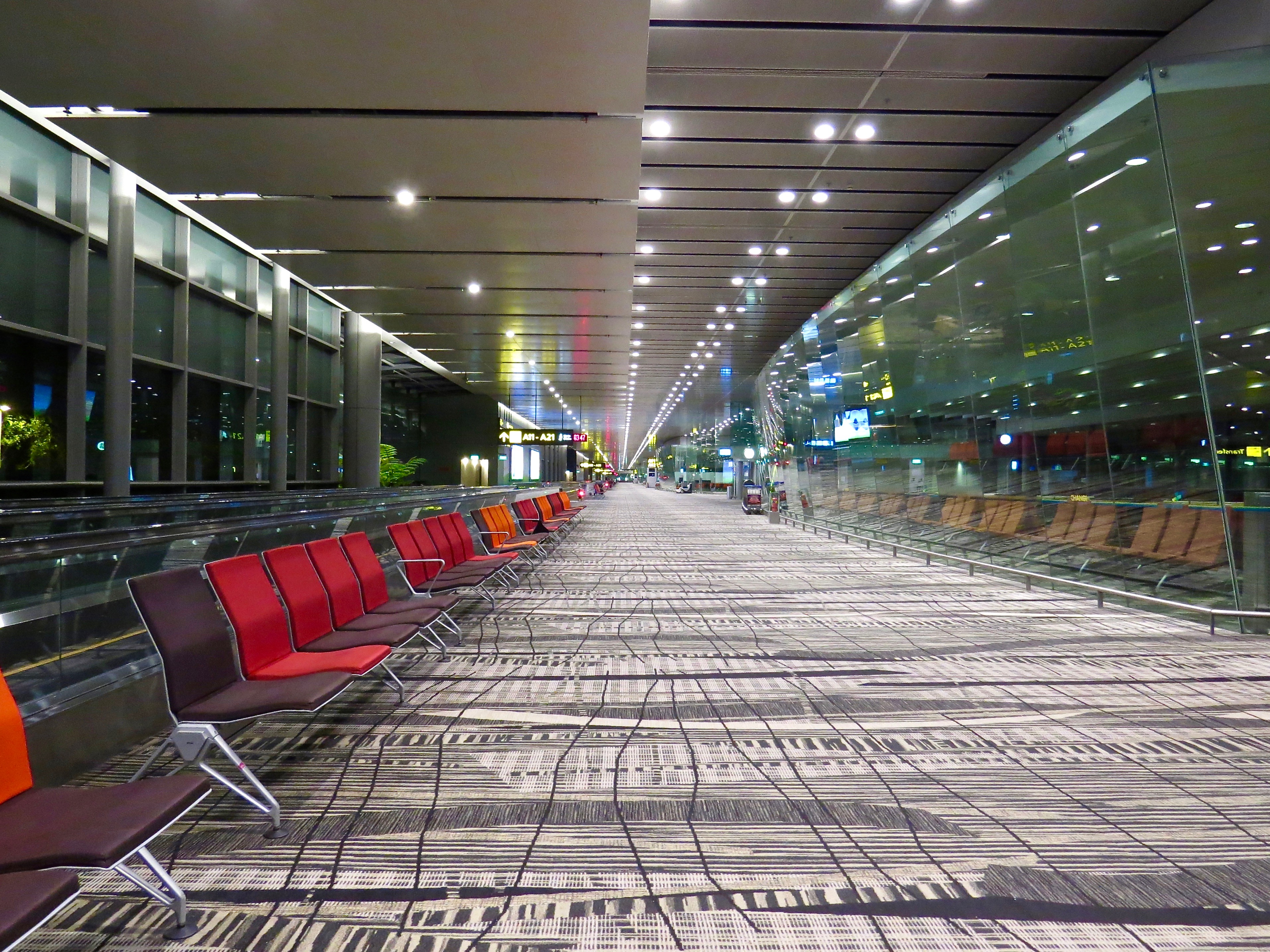
Deserted at 3 AM. Changi Airport.
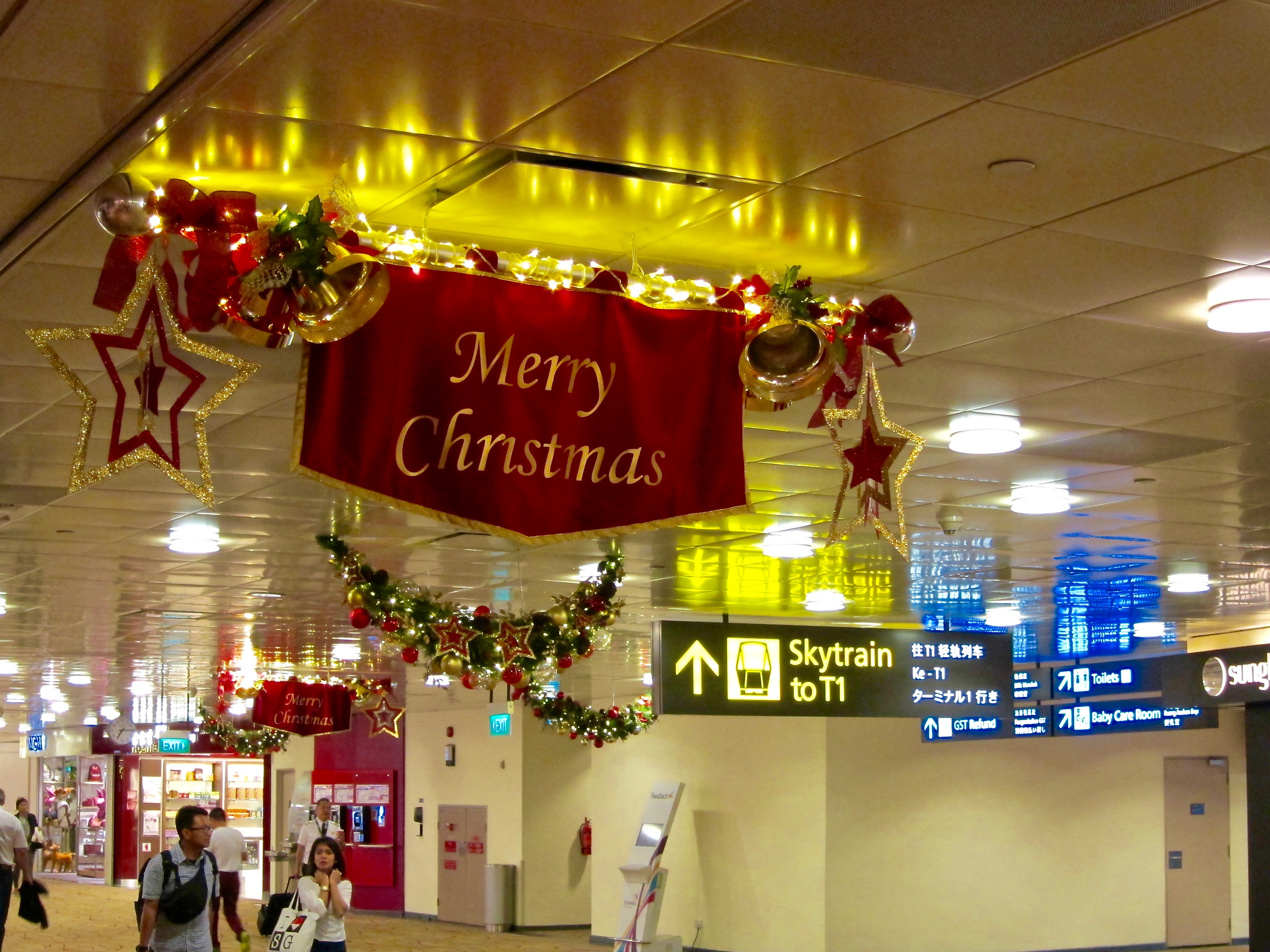
On November 1st, even Changi Airport is already decorated for Christmas.

A Koi pond in Changi.

One of the many gardens in Changi Airport.

Inside the SilverKris lounge at Changi.

The Sunflower Garden at Singapore Changi Airport.
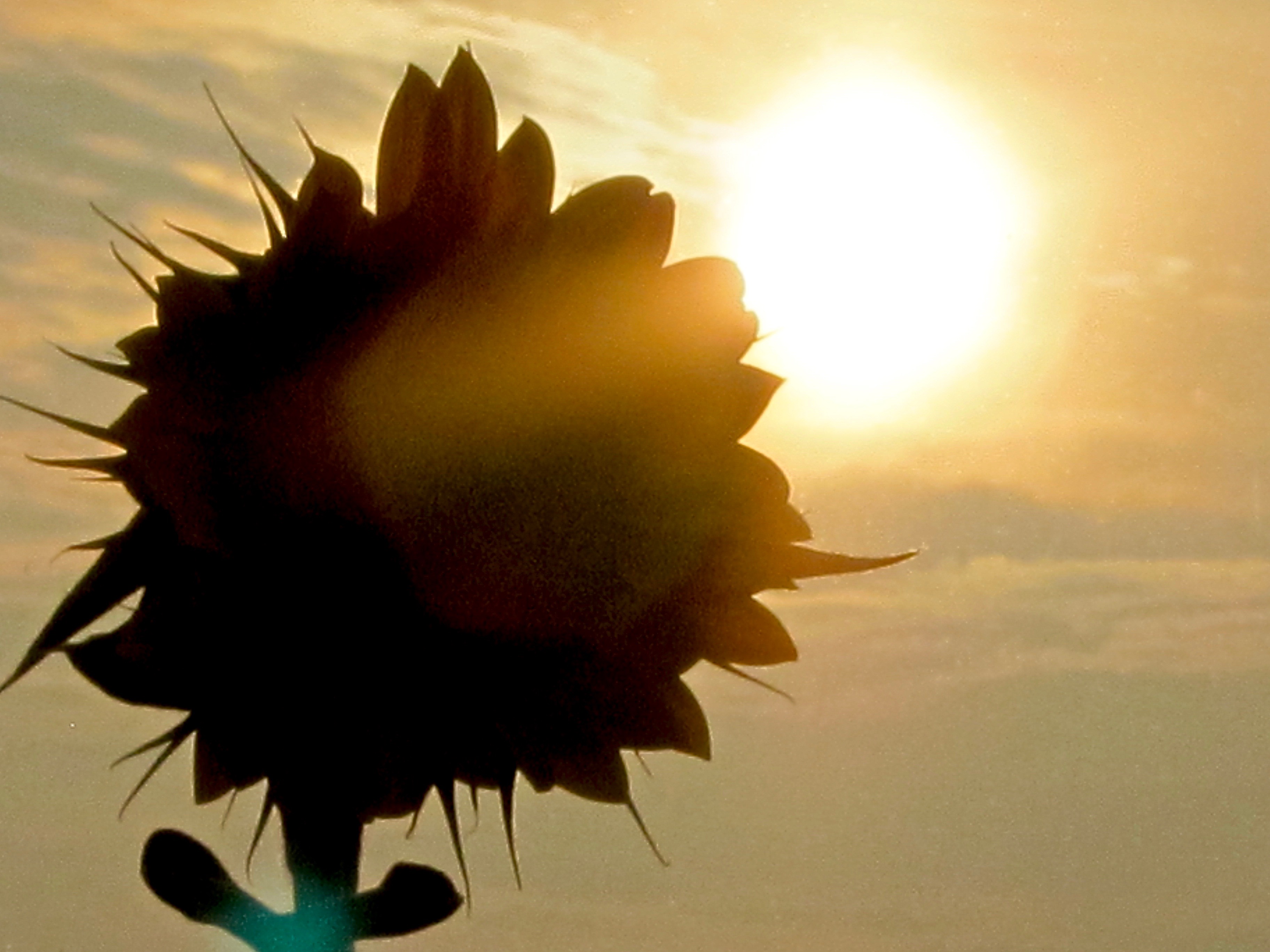
Singapore Sunrise.
 How Do You Measure 525600 Minutes?