NetChallenge
Over the Hump: Turning 51
Last year I celebrated my 50th birthday, December 29th– at 12:01 am (my official birth time), in my favorite city in the world: New York– standing in Times Square. This year, the moment was spent snuggled in bed with my babies, Cash and Roxie. Two vastly different scenarios but both equally appealing and memorable.
I can’t say I’ve looked forward to this birthday the way I did the last but I haven’t dreaded it either. Turning 50 was magical. Why does turning 51 feel like it just sounds so much older? I’m now officially over the half-century hump.
I’ve always said age is just a number and it’s more about how old you feel. Better put: it’s how old you act. Measured that way, I must seem pretty schizophrenic to some people. Believe me, the old adage, act your age means very little to me. Acting your age assumes that you know how someone in your shoes should act. How can you actually know that, if you haven’t already experienced it?
I think society still expects that once you reach a certain age, there are certain behaviors that should be adopted to exhibit a perceived level of maturity. As our population ages and life expectancy increases, some of those presumptions are also changing. Nevertheless, I’d prefer to be referred to as an old, crazy, creative guy than someone that acts their age. Being 50-plus may not be considered old anymore but I think it’s still considered something worse by the younger generation: boring. I hope I never fall into that category.
I’m pretty lucky. Most of the people I know– my age and older are active, adventurous mold breakers. In their seventies, my parents are extremely active and constantly on the go. One of my friends that just retired has basically traveled the world, non-stop this past year. So I have some great examples going forward.
I’ve had plenty of time to reflect and to reevaluate my ambitions over this past year. What is clear, is that there are still so many things I want to accomplish, places I want to visit and things I want to experience in this short lifetime. I want to leave my mark, my thumbprint on the world– in some way, making it a better place. I’m still not sure how I accomplish that. Whether it be through my writing, some action, or some impact through connecting with others… I guess only time will tell.
My fiftieth year was in many ways a difficult one. A big year for change. At the same time, it was year full of affirmations. So even though I may be over the half-century hump–it’s certainly not all downhill from here. Onward, upward… so much to do, to see… to create. There are many new adventures ahead.
Live life, love those around you… and above all else: Be Yourself!
Christmas at 321 Division Street: Photo Essay
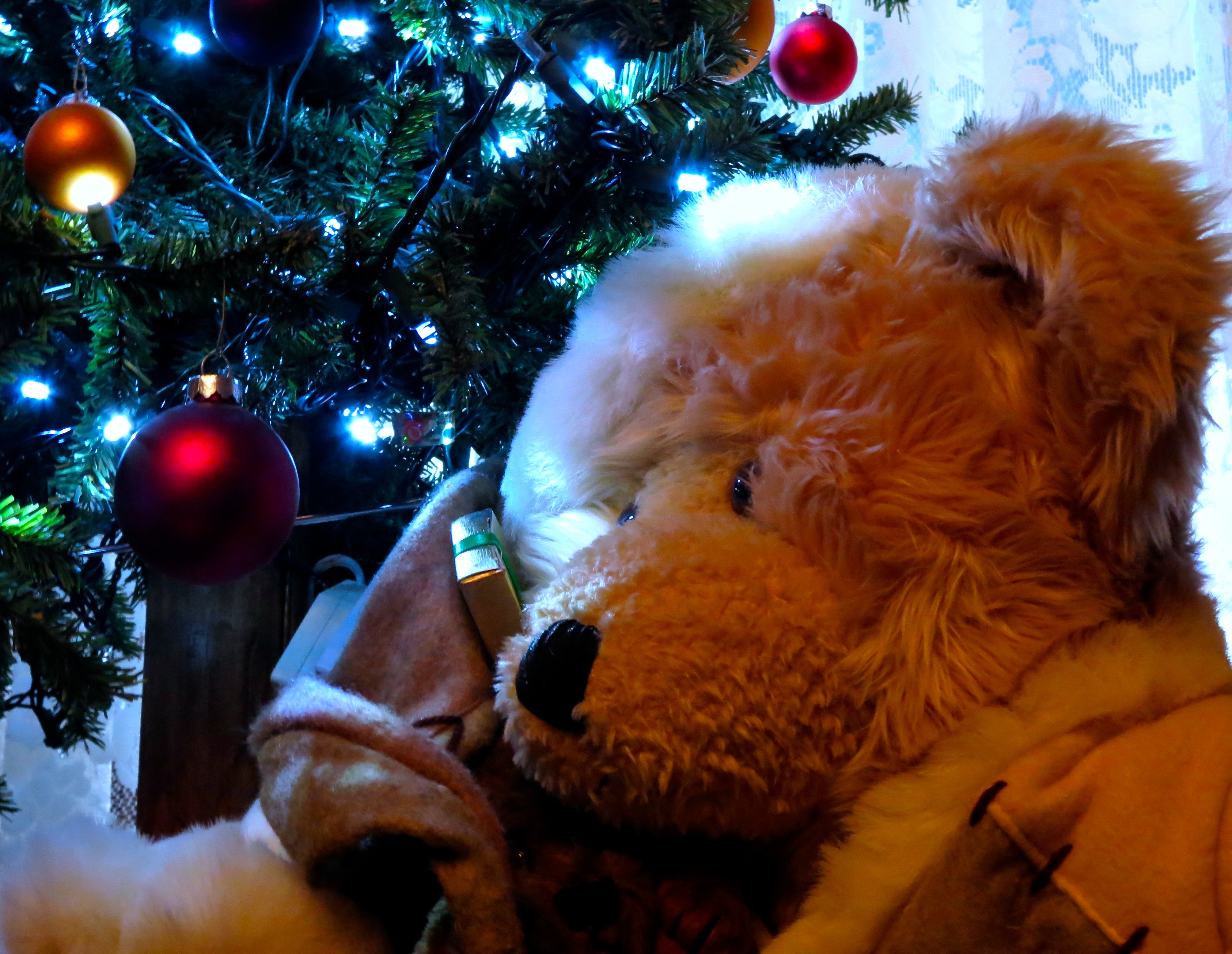
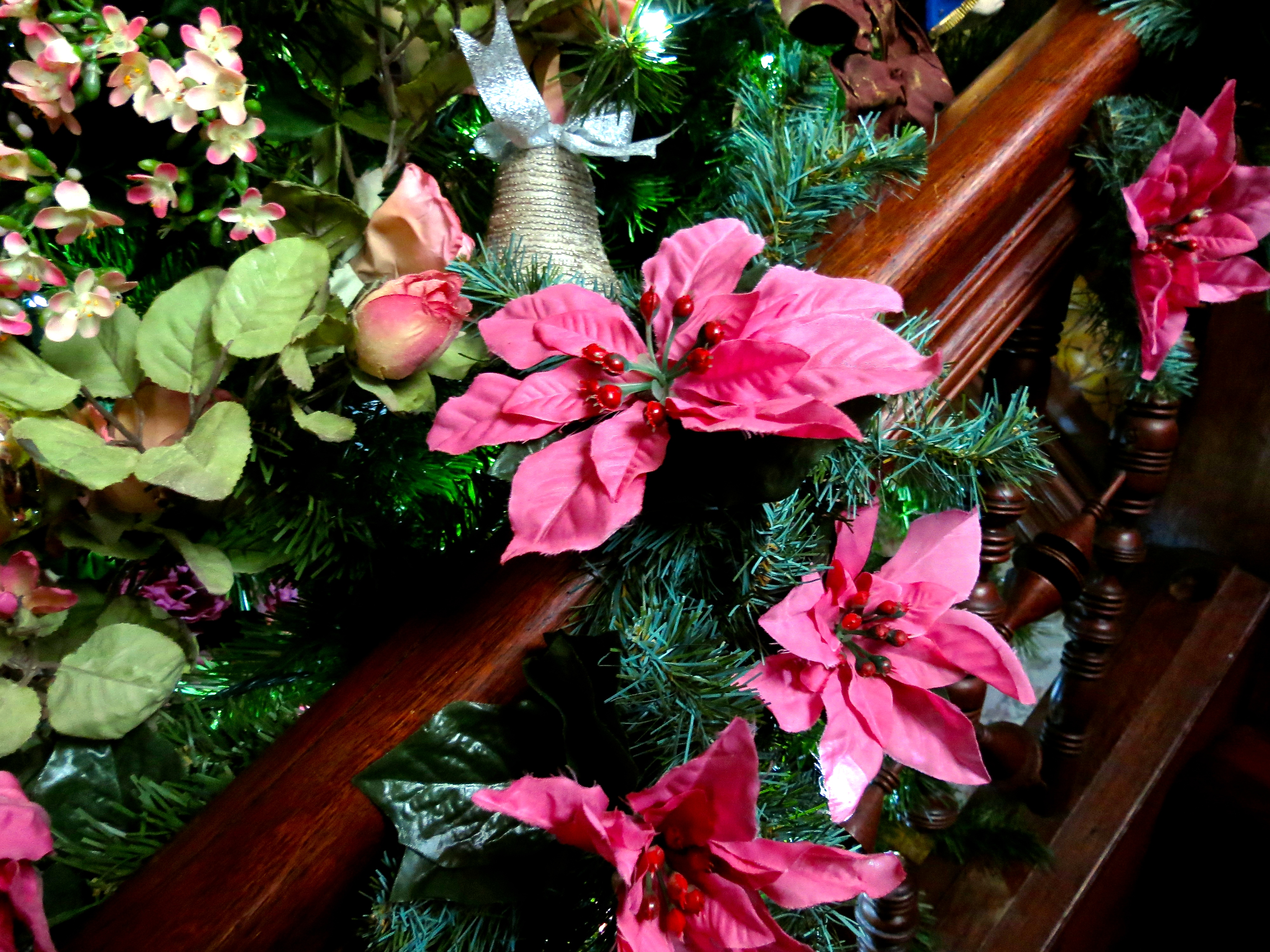
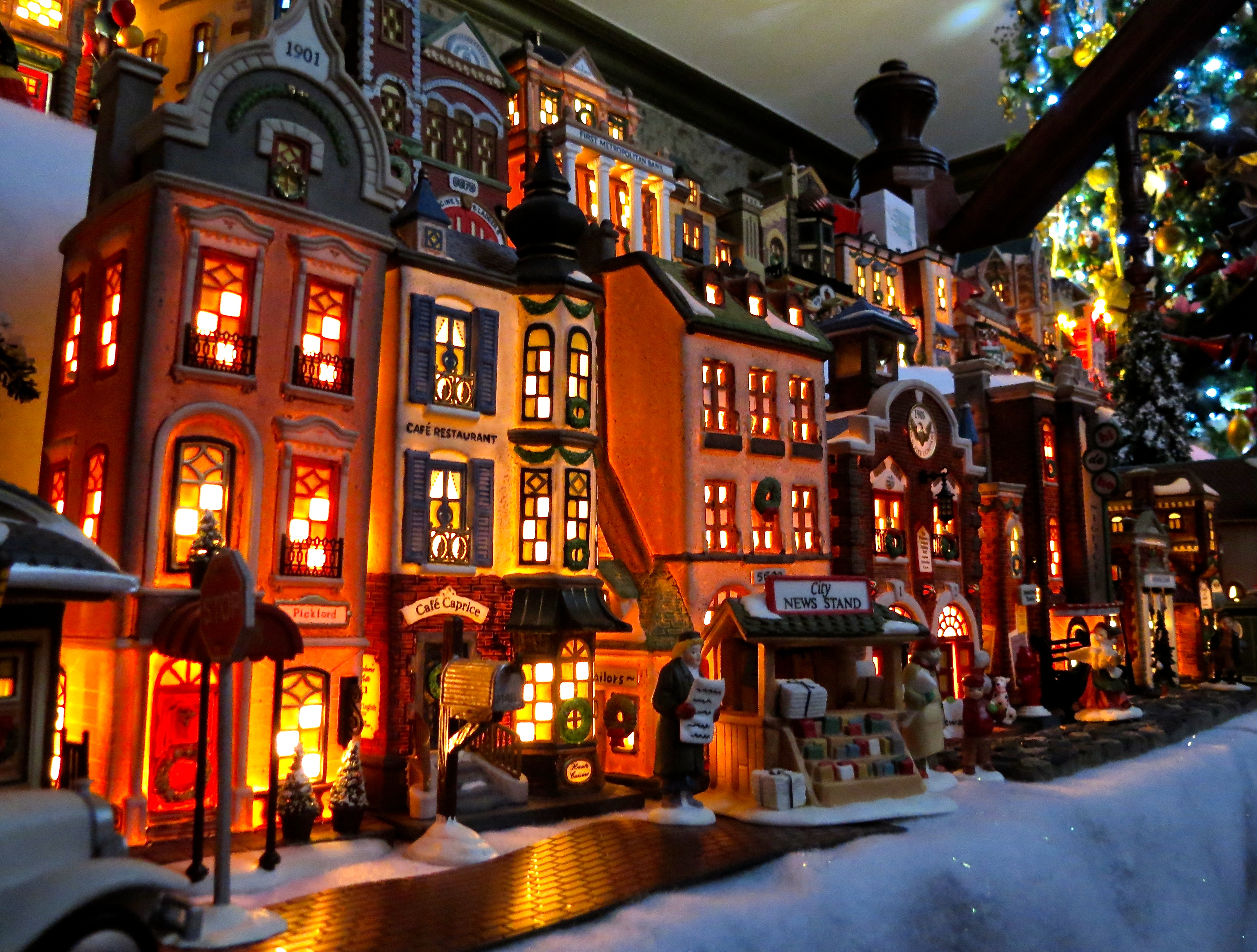
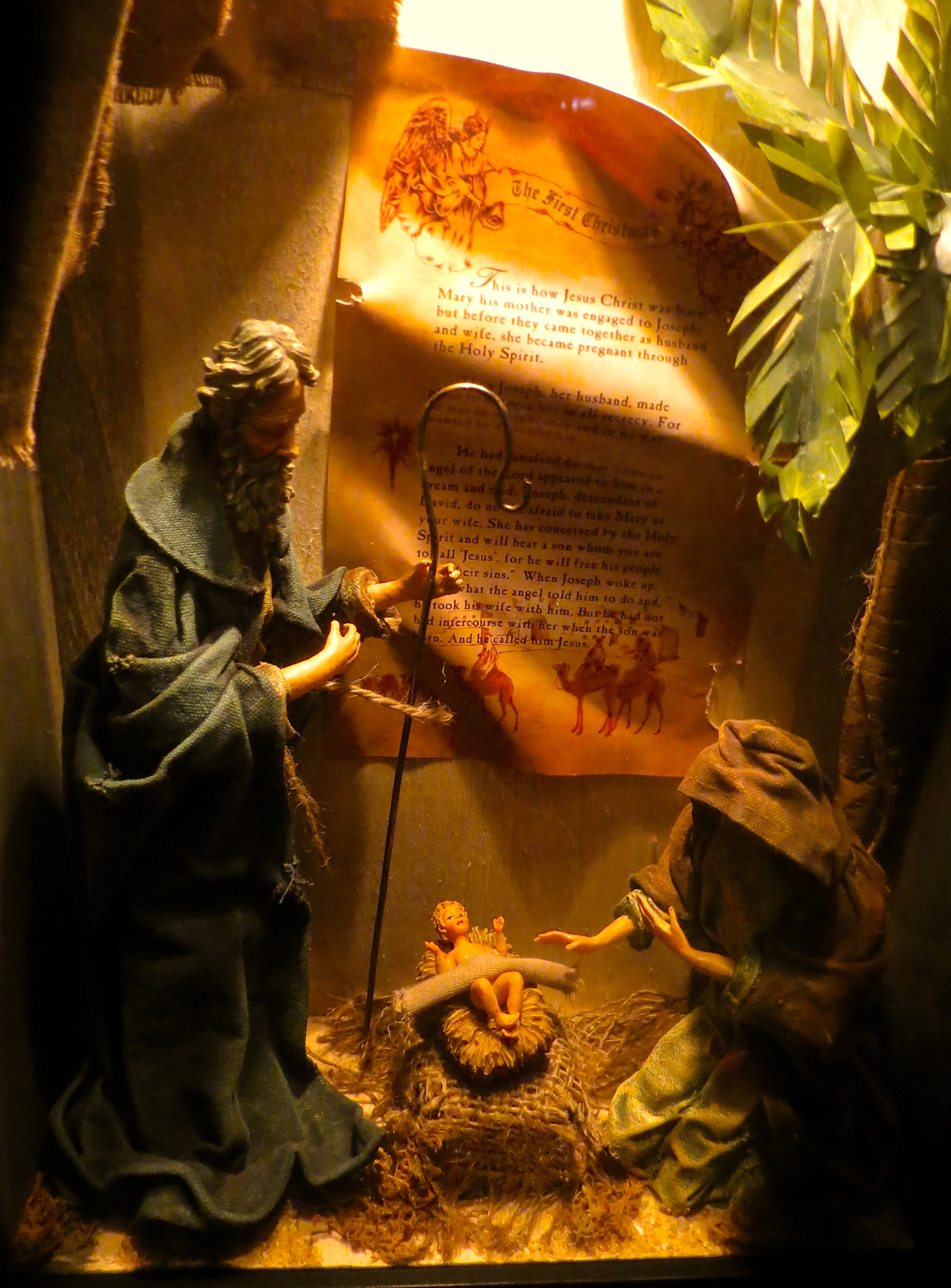
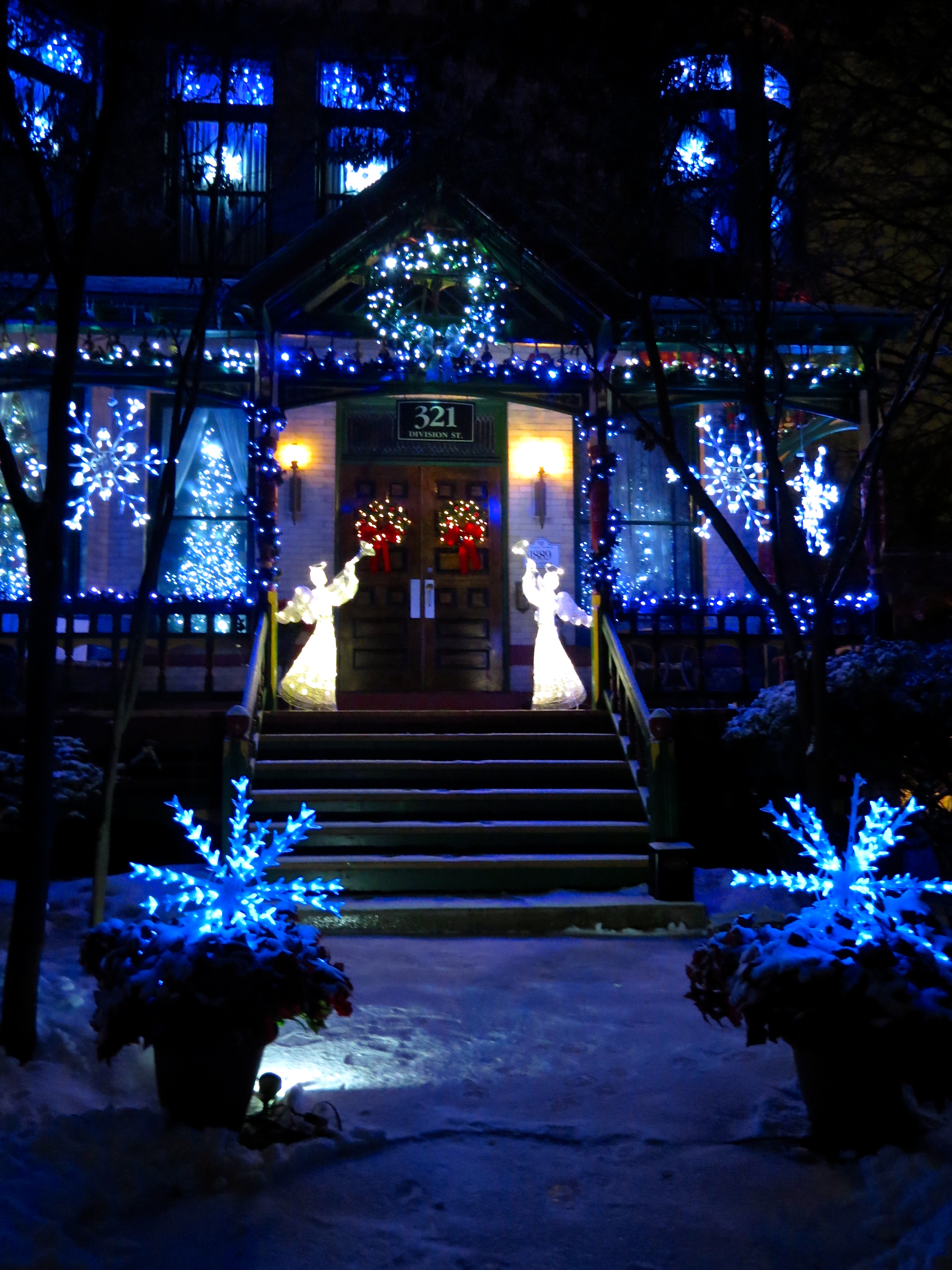
Happy Holidays Everyone! I just wanted to share some photos in and around the house decorated for the holidays. Our house was built in 1889 by John Newman and is frequently referred to as the Butterman Mansion. I hope you enjoy!








Sounds of the Season: My Top 12 Favorite Christmas Recordings
I thought I’d share some of my favorite holiday music with you to help you get in the Christmas Spirit.
As a kid, my favorite thing was to turn all the lights off in the house, except the Christmas lights, pull out all the old Christmas records and crank up the stereo.
When I started putting this list together, I was wondering if I should include some of my old favorites that are out of print. As luck would have it, I found several of them in various formats! I’ll start by mentioning a few more sentimental favorites from my childhood that aren’t readily available.
Firestone and Goodyear released some great Christmas collections when I was a kid. Many are out of print but a few have managed to be released and re-released commercially and fewer still are available as mp3 downloads. I realize many people won’t appreciate these vintage recordings the way I do because the style and recording quality may feel too outdated.
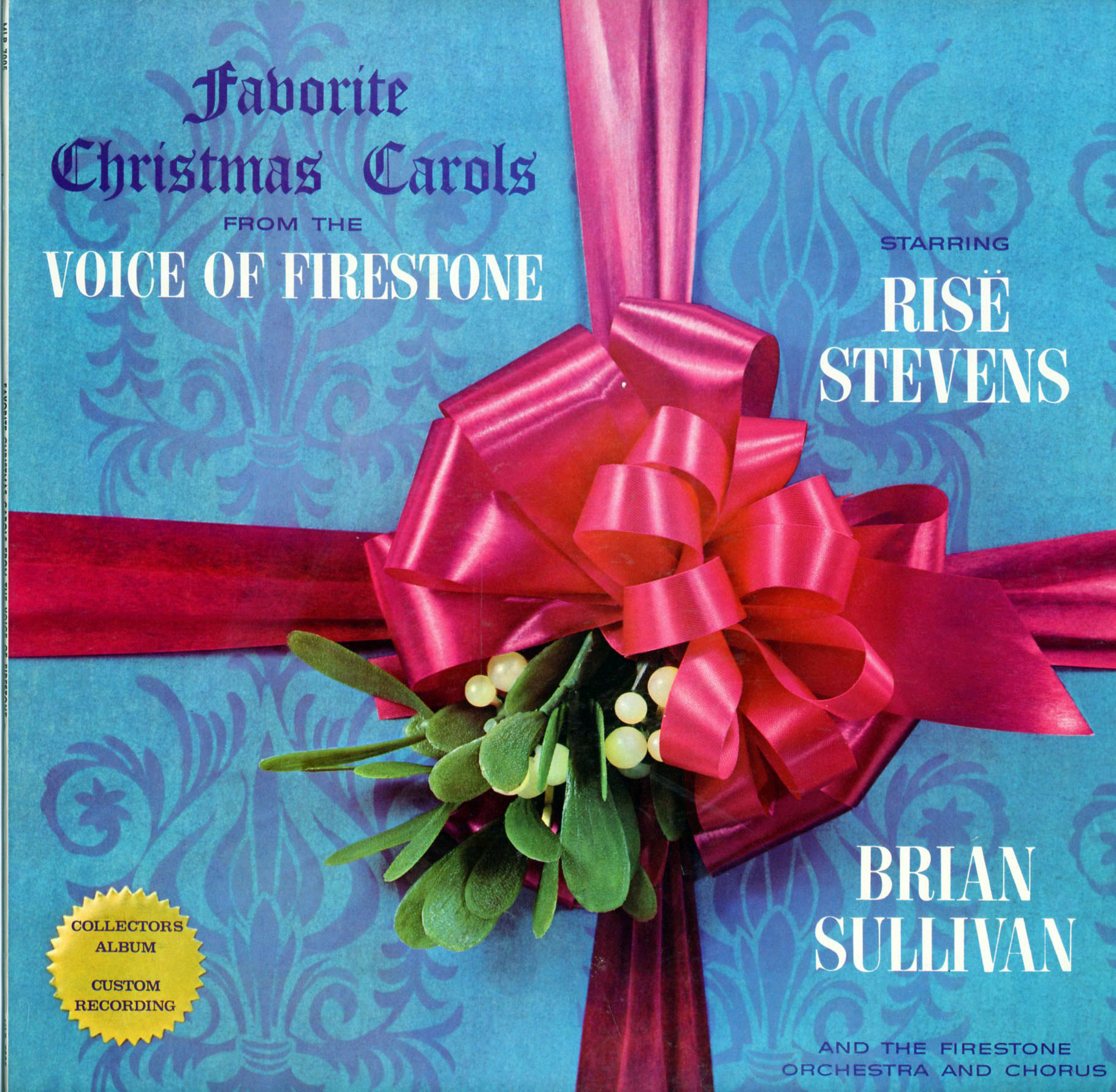 Firestone – Your Favorite Christmas Volume 1 (MLP7005) My parents owned this album and my Grandma had Volume 3. Lots of choral renditions with soloists here. Very nostalgic. I was able to get a clean, digitized copy and I;ll admit, I kind of miss the skips and scratches I remember from our old worn out record.
 Goodyear – Great Songs of Christmas, Volume 6 Featuring many prominent artists of the day. If I think of childhood Christmases, I immediately think of the New Christy Minstrels’ version of We Need A Little Christmas found here. It also includes the best-ever version of Let It Snow! by Steve Lawrence and Eydie Gorme.

Goodyear. Christmas Is (P11417) Another popular artist collection– I can actually remember the excitement of following my Mom into Goodyear to buy this one. I played The Carpenters, Merry Christmas Darling — so many times, I nearly wore it out.
MY TOP 12
O here’s my most current top twelve. I did try to rank these album as best I could– saving the best for last. I hope you find some new, or maybe remind you of some familiar choices!
Number Twelve
 Wrapped In Red by Kelly Clarkson New this year, I hate to list it in last place but it hasn’t had the opportunity to stand the test of time. Clarkson co-wrote five original songs on the album that vocally, once again shows her versatility as an artist. Pop, country, traditional– there’s something for everyone. Undoubtedly, the song I’ll have listened to most this season, will be the original, Winter Dreams (Brandon’s Song). Contemporary and upbeat, I can’t get enough of it.
Number Eleven
 Rudolph the Red-Nosed Reindeer by Burl Ives Pure nostalgia wins this album a spot on my list. Watching Rudolph on TV was a family holiday tradition. It was years before I knew Burl Ives wasn’t a snowman in real life.
Number Ten
 White Christmas by Bing Crosby One of the best-selling Christmas albums of all time, White Christmas (1945) has the distinction of being the longest, continuous in-print recording in the U.S.. second only to the musical cast album, Oklahoma! (1943).
Number Nine
 When My Heart Finds Christmas by Harry Connick, Jr. A long time favorite. Connick’s smooth crooning warms you from the inside out.
Number Eight
 Home For Christmas by Amy Grant I love this album. Re-released and expanded as The Christmas Collection, Two of my all-time favorites are included: Breath of Heaven (Mary’s Song) and My Grown Up Christmas List.
Number Seven
 Faith: A Holiday Album by Kenny G Currently only $7.33 for both the CD AND the MP3 (Auto-Rip) version through Amazon. I love a good soulful instrumental album and this one hits the spot. The perfect background for holiday parties or after dinner music and cuddling by the fire.
Number Six
 The Christmas Collection: The Best of Vanessa Williams: 20th Century Masters Originally released as Star Bright, this collection is hard to beat. I’ve always been a big fan of Williams and this recording is one of her best. It’s a terrific bargain, currently only $4.99 and you receive both the CD AND the MP3 (Auto-Rip) version.
Number Five
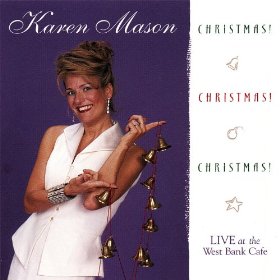 Christmas! Christmas! Christmas! by Karen Mason A live recording by Chicago’s own, Karen Mason. Mason still tours a version of this cabaret production annually, which is brimming with humor, heart and holiday joy. It’s a gem!
Number Four
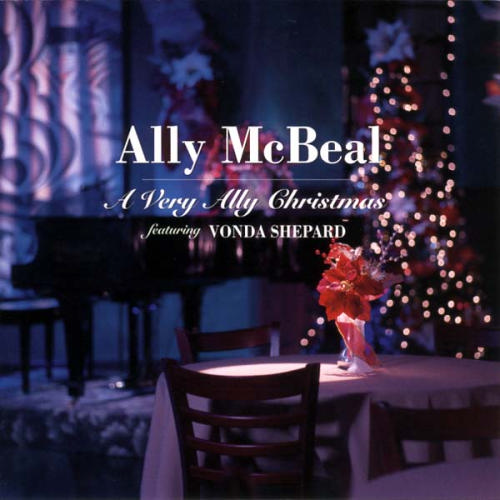 Ally McBeal: A Very Ally Christmas From the hit TV show featuring Vonda Shepard as well as performances by the rest of the cast. Shepard may not have Adele’s dazzling technique but she certain has her heart and soul. Most notable on this album is Robert Downey, Jr.’s heartbreaking rendition of River. Amazon doesn’t currently have the album available for download but it is available on iTunes.
Number Three
 Noel by Josh Groban I can’t resist Groban’s warm smooth voice. If you are looking for a male artist whose sound is a little more traditional– check this one out. You can get both the CD AND the MP3 download together in this version from Amazon Here.
Number Two
 A Christmas Album by Barbra Streisand A perennial favorite, re-issued three times and never out of print, this 1967 album is always on my playlist. It was the best-selling Christmas Album in 1967, spending five weeks at #1 and is believed to be one of the best selling of all time. ( It is not listed in the Top Ten on the Billboard chart, which only records sales from 1991.) It’s probably my most listened to Christmas recording. Over the years, I owned it in every format (except 8-track tape) and I love every song. Streisand’s rendition of Ava Maria remains my favorite to this day. Not bad for a Jewish girl from Brooklyn. You can purchase the CD AND the MP3 download together in this
  version from Amazon for only $4.99 Here.
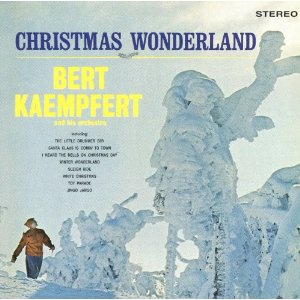 My Number One Favorite Holiday Album of All-Time is:
Christmas Wonderland by Bert Kaempfert Recorded in 1963, this all instrumental album is timeless. I grew up with it and some of you may recognize tracks that were used frequently in seasonal commercials. I spent years looking for it on CD and finally found it a few years back. It was remastered and re-released in 1997 on CD and cassette. It is currently not available as an MP3 download but new CDs are available through Amazon.com starting at $23.99. If you are looking for a great one, I highly recommend it.
Free (and Cheap) Holiday Music at Amazon.com:
Here are some free Holiday MP3 album downloads available as of today (12/17/13):
Green Hill Christmas Music Sampler – Twelve songs by various artists. FREE.
Green Hill – Christmas Music Sampler: 20 Holiday Favorites – Free Download.
Free Must-Have Christmas Masterpieces – Four more songs; various artists. FREE.
Tons of Music For Only 99 Cents:
Big Christmas Box – 280 tracks including a large chunk of Handel’s Messiah for a total of over 13 hours of music! Only 99 cents.
And For Those of You Stressed Out By the Holidays:
Green Hill – One Hour Of Spa Music: An Exclusive Amazon Sampler – Great Artists in this free 9 song download.
Dream Music: For Sleep & Relaxation (Exclusive Amazon Digital Sampler) – 24 free Tracks to help you sleep and relax.
I apologize in advance if any of the prices or links aren’t accurate but they are all current as of this posting. (12/17/13)
Happy listening!
Winter Dreams: A Photo Essay
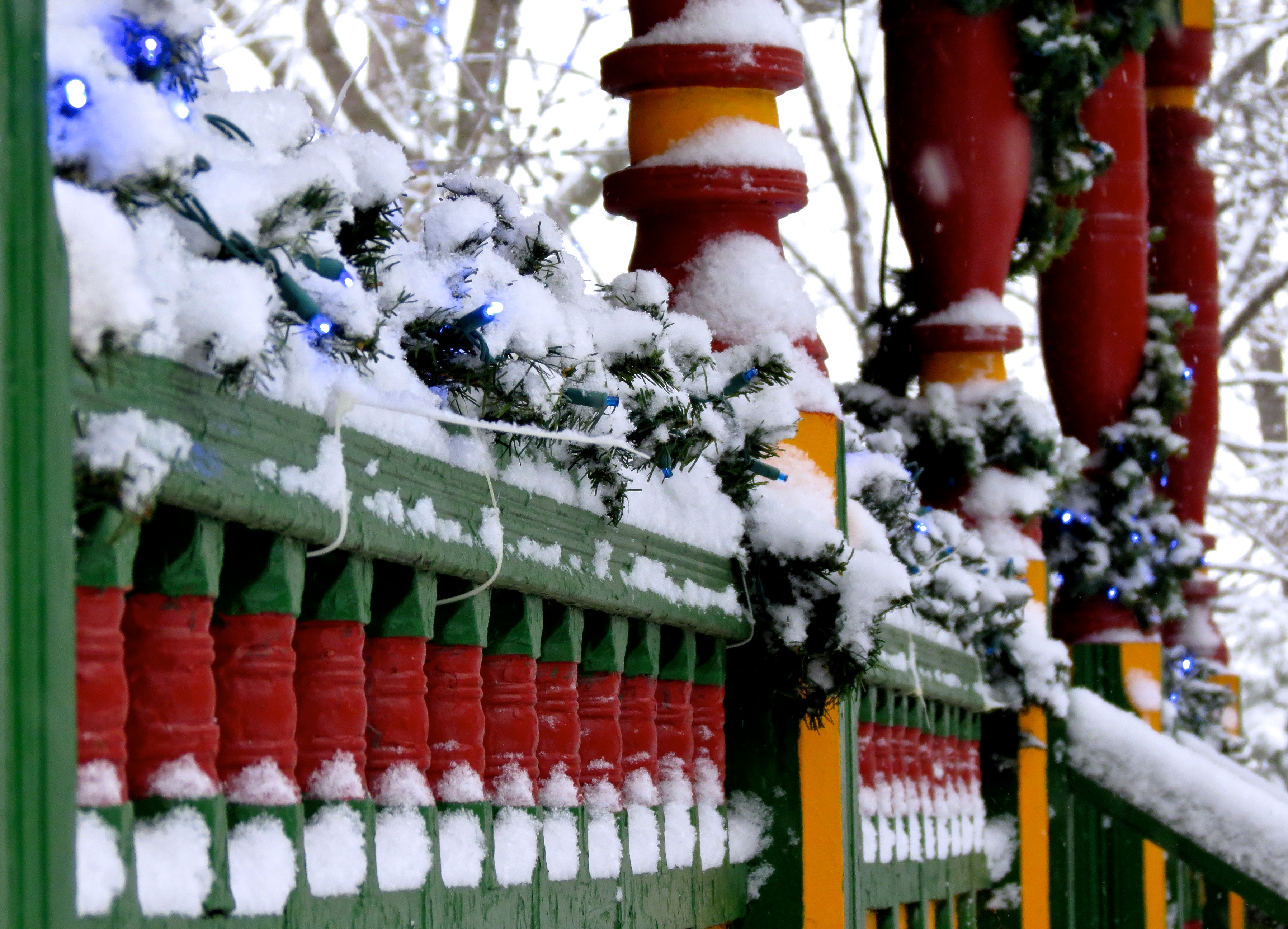
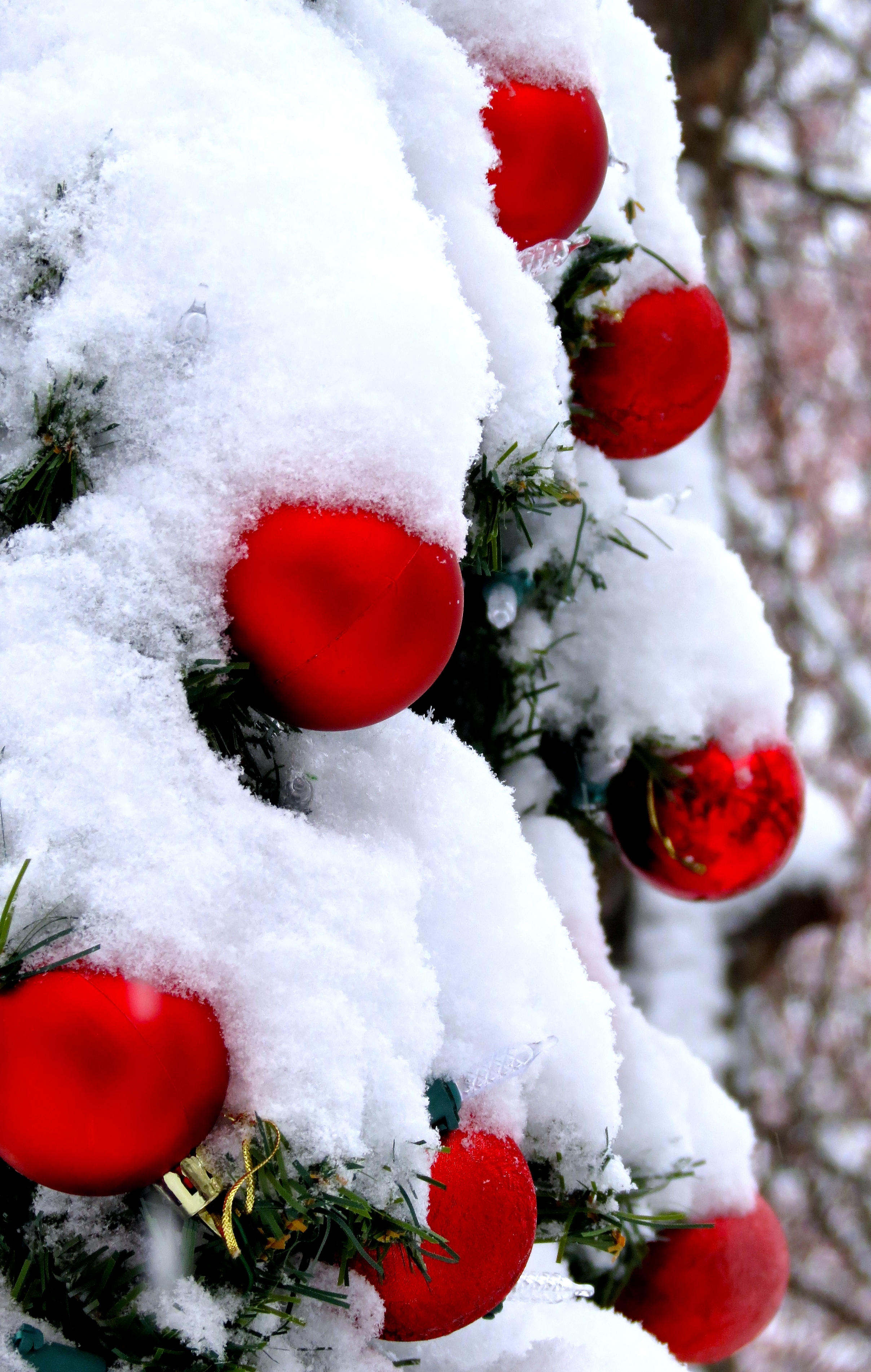
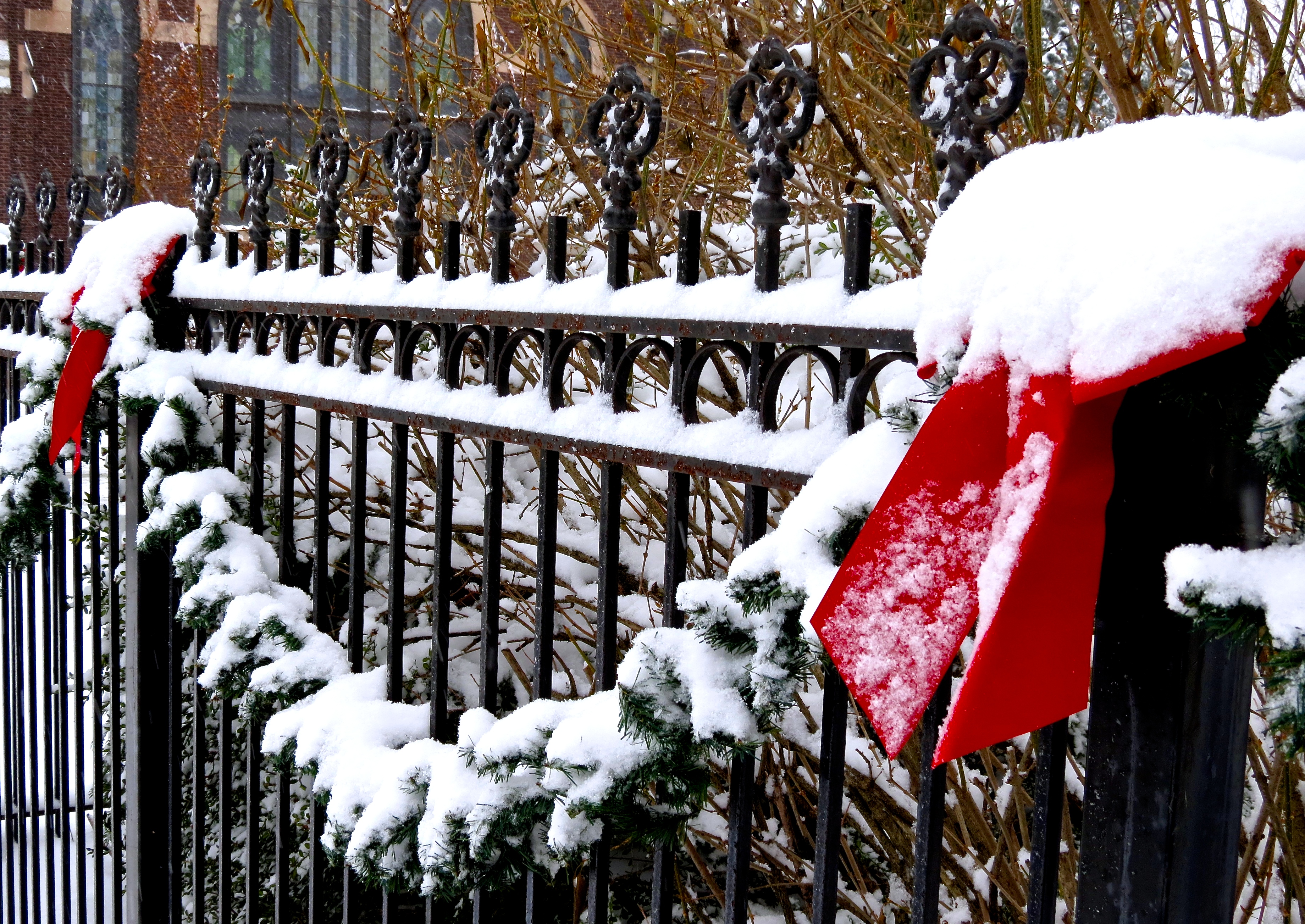
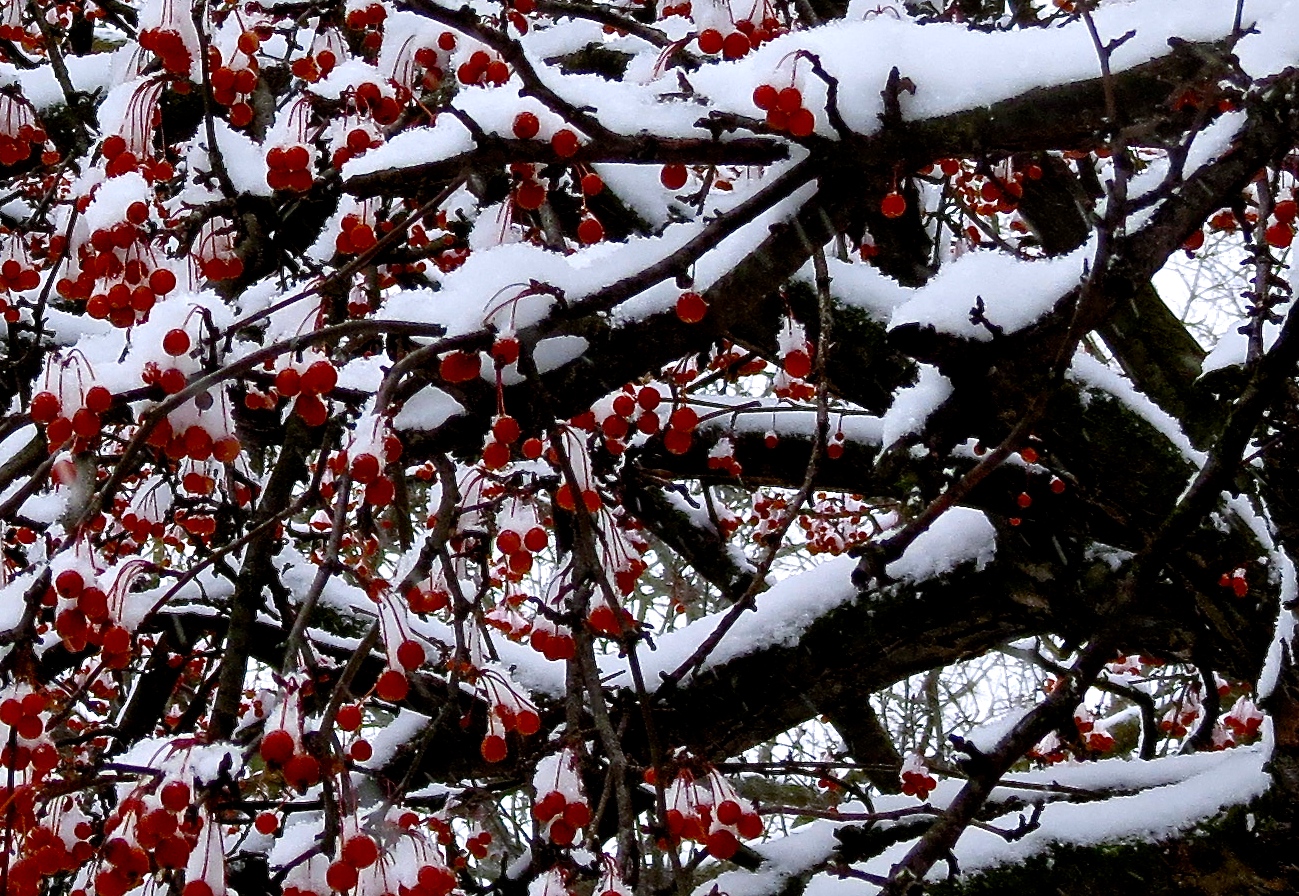
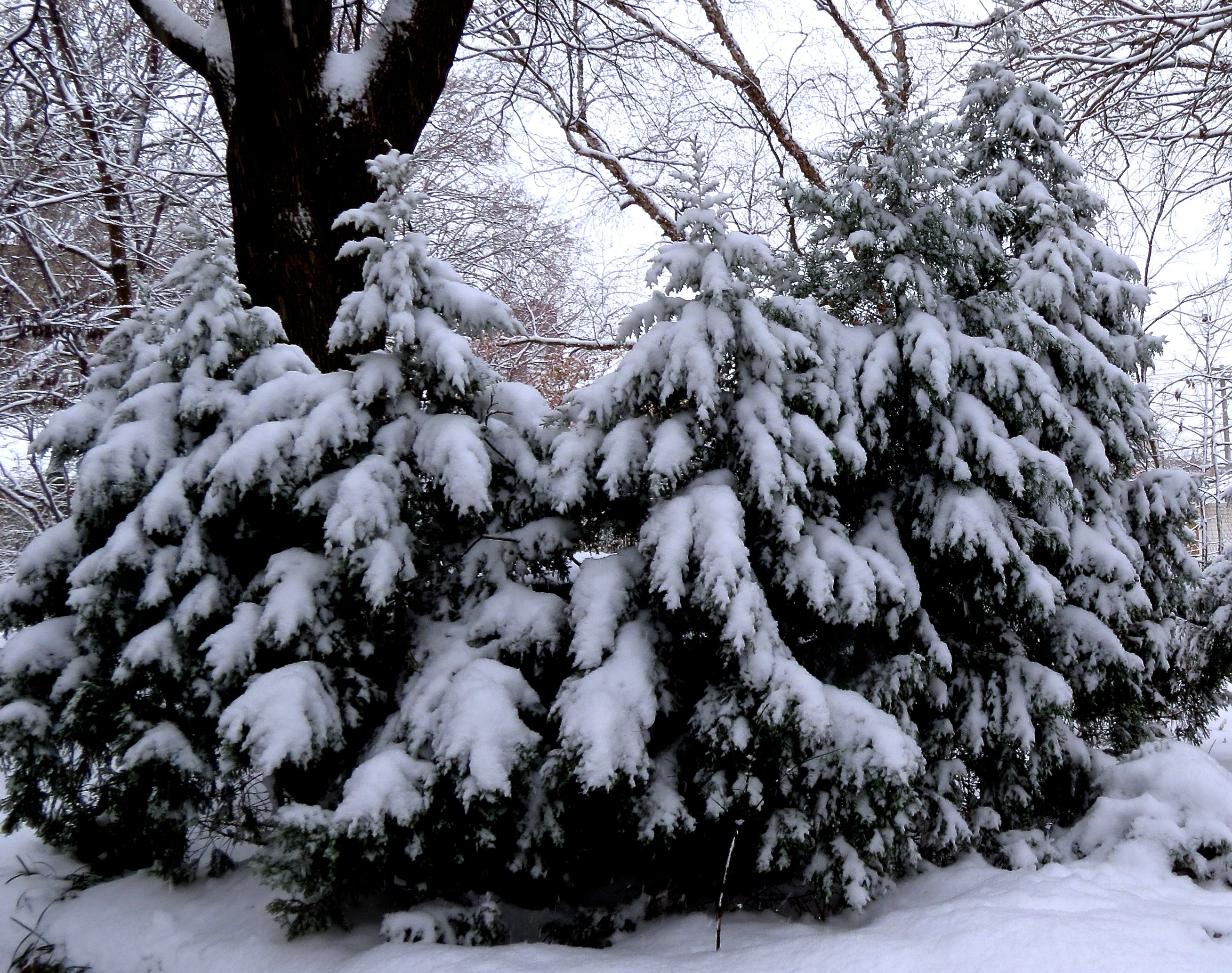
We had a beautiful snow yesterday– so at my Dad’s request, I took the opportunity to shoot some photographs around the house. I hope you enjoy them! (If you click on the photo, you’ll be taken to a larger image.)



Decking the Halls For The Holidays: Part Four- The Easy Holiday Centerpiece
 Accenting the home for the holidays can be as much fun as decorating the tree. It can also be challenging if you aren’t sure what to do. You can always go out and buy a floral arrangement, accent or centerpiece but I find so many items available are overpriced for their marginal quality.
Why not create your own?
You can add charm and warmth to a room with a few small groupings of holiday accents. It’s real simple to create a beautiful centerpiece for your dining table, fairly inexpensively and in a matter of minutes. I’m going to walk you through the steps to creating one simple arrangement and then I’ll share some additional ideas and suggestions to get your creative juices flowing.
I always recommend that you start with an idea and with items you already have on hand. Then purchase only what you need to complete your project. It’s easy to re-purpose bowls, baskets, greenery and other accessories with just a little thought and imagination.
The Easy Holiday Centerpiece
I didn’t purchase anything specifically for this project. All the items I used are inexpensive and easily attainable if you decide to duplicate it for your own home.
Material List:
A Decorative Bowl
Pine Cones (assorted sizes)
A Small Bundle of Cinnamon Sticks
Assorted Artificial Fruit (floral picks)
Artificial Leaves
A Floral Berry Pick
Wire cutters
Your bowl can be as plain or decorative as you want. A basket would also work for this project.
I actually used three bags of pine cones I had on hand, in three sizes (S, M, L)– some of which were painted gold. Of course you can use pine cones you find outside; or they are available, by the bag, at most craft and home stores. (Home Depot has big bags of scented pine cones for under $5, as an example.)
You can use any kind of artificial fruit you’d like. They are available in a wide variety of types, colors and finishes to choose from. I used 2 pears, an apple and 4 pomegranates for this one.
For the leaves, I had used the flowers from an artificial poinsettia bunch for another project; then, cut the leaf stems off and used the leaves for this one. I didn’t have any wire cutters handy so I used an old pair of pruners to cut the stems. You might also find that an old dull pair of scissors will do the job just as well.
I only used one berry pick (stem) as the final accent. The stem was easy to separate and pull apart in sections but could also be cut apart. Again, different sizes, colors and finishes are available and can work well here.

First. lay out your materials so they are all visible and within reach. Remember, there is no wrong way or right way… just your way.
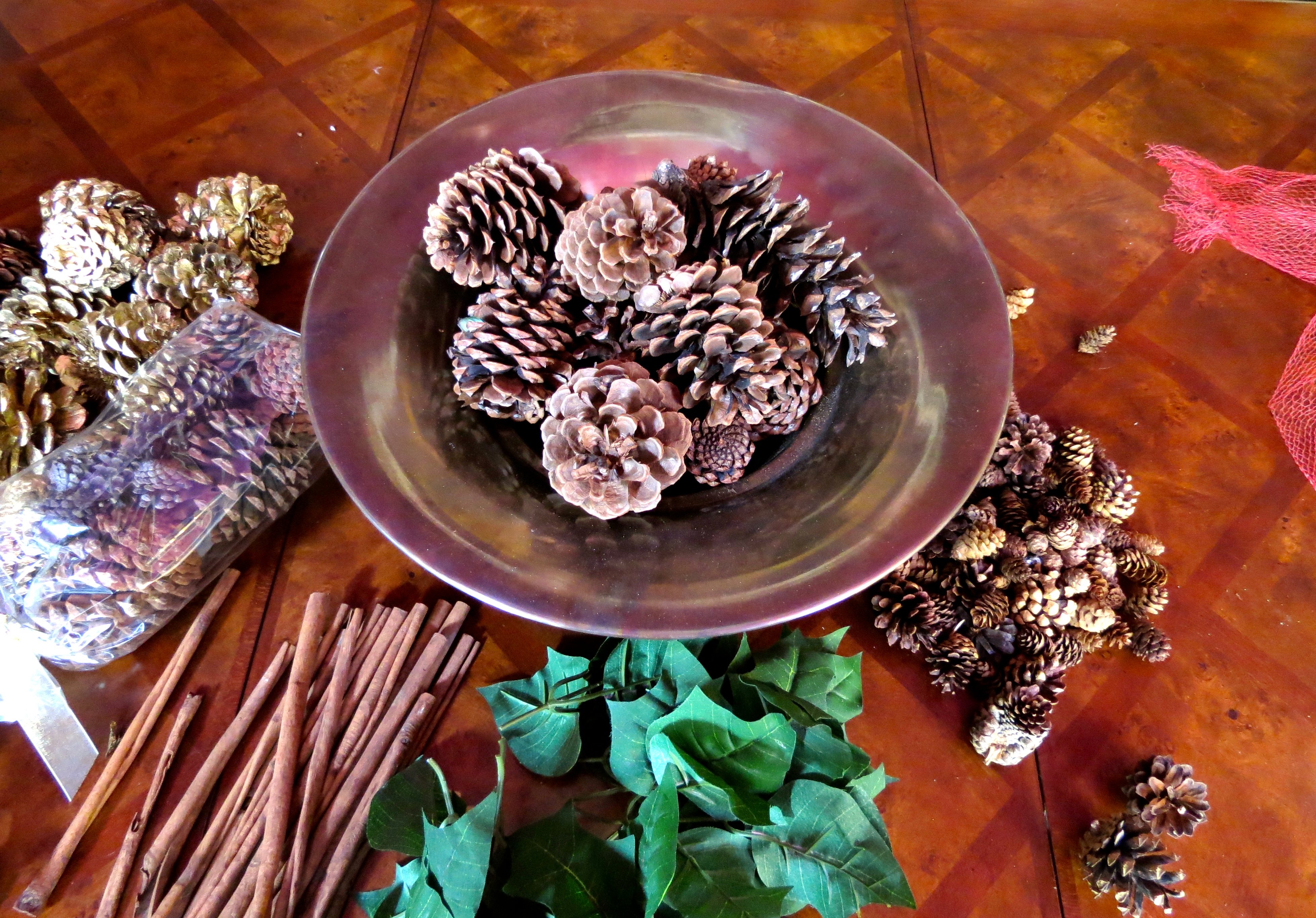
Next, dump your large pine cones in the bowl. Arrange them loosely. As you continue, you can arrange them any way you like.

If using painted pine cones, add the large ones and you can mix them slightly with the unpainted ones or group them on top. Adding them separately gives you the ability to make sure they are visible accents and don’t become buried in your arrangement.
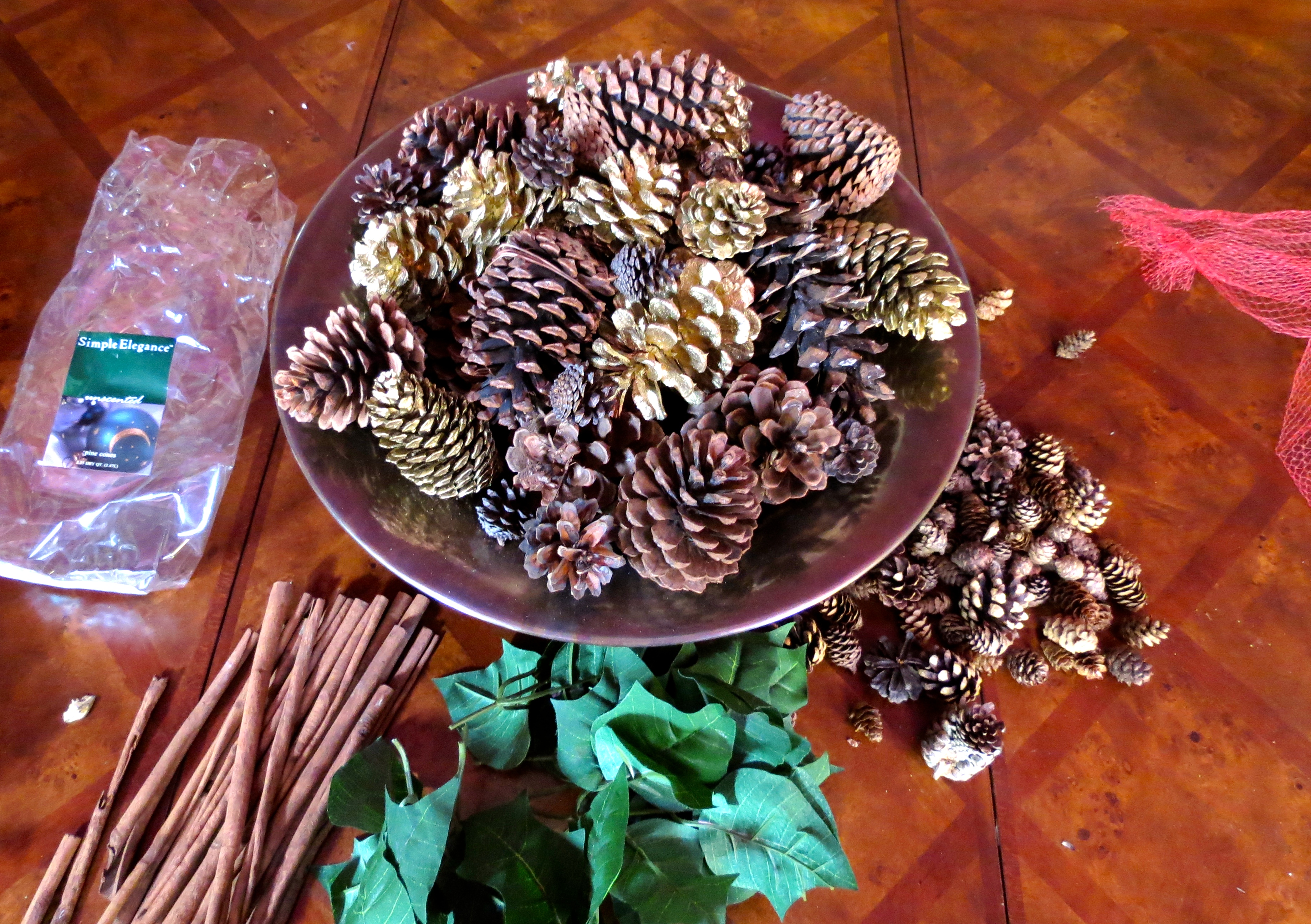
Add all your medium pine cones to the mix. I literally just dump them on top and move a few around to balance them out among the larger ones already in the bowl.

Add the fruit to the bowl. You’ll want to start paying attention to the shape of your centerpiece at this time. Also, make sure you mix up the colors and kinds of fruit you are using for balance.

The cinnamon sticks are next. I randomly placed mine, sticking them in between the pine cones. If you want a more formal look to your arrangement, you may want to start placing things in your arrangement, more symmetrically.

Add the leaves or greenery. You may choose to use more or less, depending on your taste. Use just a few to accent or more to blend all the elements together.

Now, add your small pine cones. let them fill the gaps and voids and make sure to allow some to lay on the leaves and fruit.

At this point, you may want to rearrange some of your elements and get them exactly where you want them. Make sure to look at your project from all angles so it looks good from anywhere in the room. You can always add or subtract items as you go. The final step is to add the pieces of your berry stem as the final accents to your centerpiece.
You’re done! Congratulations!

Here are a couple other examples you may want to try. (I used the same style base bowl in all three examples here.)
For this next centerpiece, I used a large pineapple finial as the center, placed in the bowl, surrounded it with artificial evergreen picks and then accented it with smaller berry and fruit picks.

For my foyer table, I used the same general idea, placing a small tabletop Christmas tree in an urn and sat it in the center of a bowl, then added pine cones, topped them with grape clusters (evenly spaced) and then inserted cinnamon sticks between the grapes. On the tree, I used a large number of crystal berry picks inserted throughout the tree with white poinsettias around the base of the tree in the urn.
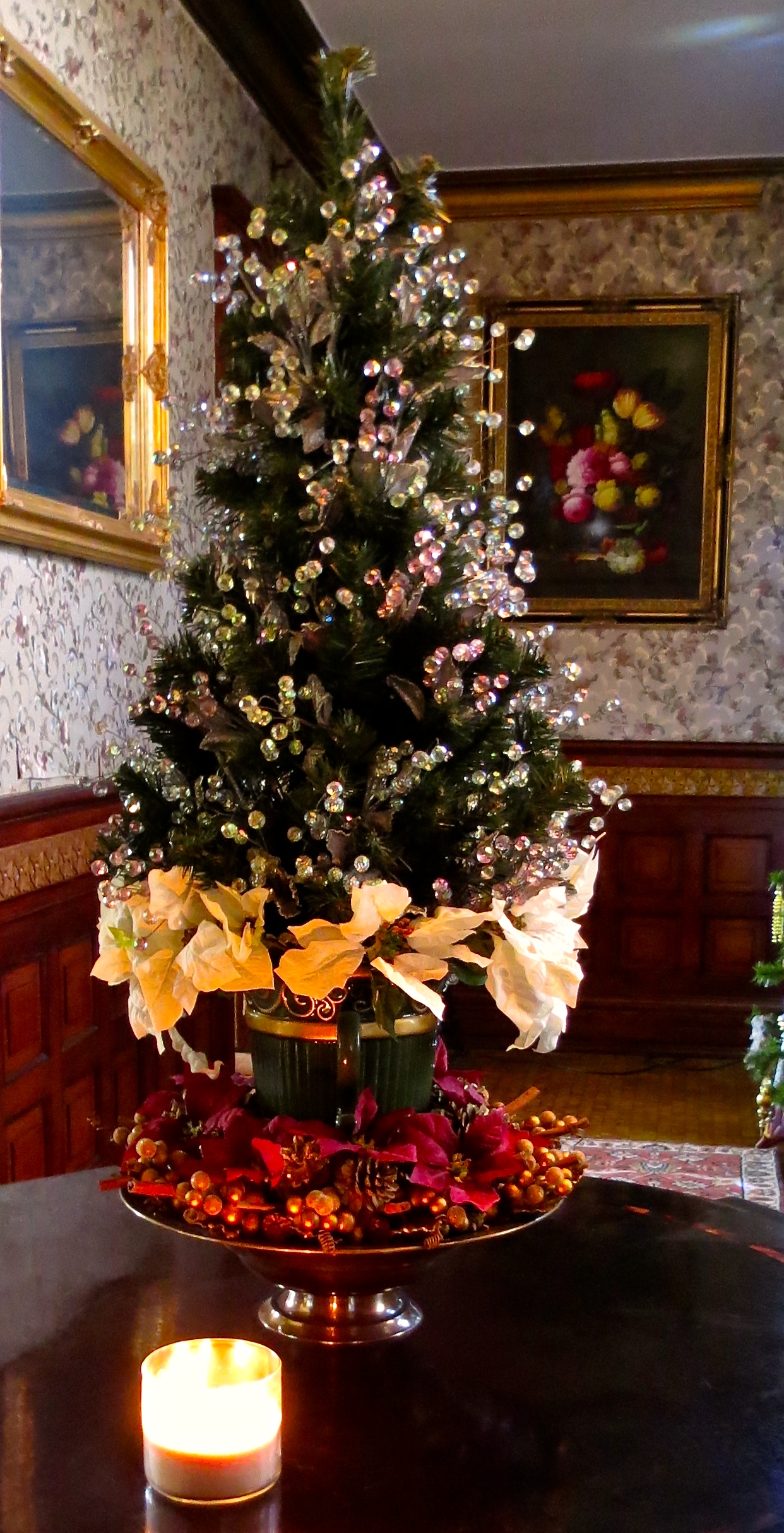
I hope you’ll find these ideas useful. If they inspire you to create your own centerpiece, please share them with me. I’d love to see your unique creations!
Decking the Halls For The Holidays: Part Three- Decorating the Tree

Ornaments Galore!
I love Christmas trees. Of the fourteen Christmases we’ve spent in this old Victorian house, this year it will probably see the fewest number of Christmas trees– with a total of seven if I stick with my plan. In past years, I’ve put up as many as thirty two trees. One in every window and then some. Sounds a little crazy– okay, a LOT crazy– but it’s something I really enjoy.
You can imagine, with that many trees, you have to be a little creative when it comes to decorating all of them. I thought I’d share some general Christmas tree decorating tips, as well as some of the imaginative solutions I’ve come up with over the years to make them unique.
First off, I can’t say I’ve ever really seen an ugly Christmas tree. (Alright, maybe a couple.) Christmas trees can be a personal and unique statement of who you are. It can also be a nostalgic trip through the past. Especially, if you’re one of those people that collects a few new ornaments each year or has ornaments made for, or by members of your family. Displaying them can be fun but also a challenge.
So let’s get started with some general tips and things to consider when planning to decorate a memorable tree. (I’ll be referring to all tree decorations, generally, as ornaments.)
- Know what you have. Before you start your tree, take a look at the ornaments you’ll be using to refresh your memory. Size, color and quantities of similar ornaments, all play a part in the final outcome of your tree.
- Start with an idea. Is there a theme to your tree? Will it be certain colors or highlight certain shapes or ornament styles? You may want to add to subtract certain ornaments from your plan if you have a vision for the final look.
- What element(s) will be your constant to achieve your theme or idea? Several dozen ornaments of a specific color or style? Depending on the size of your tree, you’ll want to make sure you have enough to establish your design element covering the tree.
- Are you decorating the tree by yourself or will this be a family activity? If you want your tree to have a certain overall look and decorating it is going to be a family affair… you may want to pre-decorate with your base ornaments (or design element) before letting the family go to town with the rest. It’s also a good idea to keep fragile ornaments out of the hands of small children.
Example- You have may have lots of unique family ornaments but you want your theme to be red. In order to make sure your tree has an even balance of red ornaments, you may want to space them throughout and then let the family add all the rest.
- Ornaments don’t have to be expensive or necessarily holiday-related if they help achieve your look. Just make sure you have enough ornaments that will specifically carry your theme.
- If you want to highlight or feature a collection of special ornaments– you will probably want to adopt the less is more philosophy or else your special ornaments are likely to get lost.
- Make sure you balance the weight of your heavier ornaments on the sturdier branches and all around the tree. Too much weight on one side can make your tree tip over! Larger, heavier ornaments being concentrated towards the bottom is fine but you should still have a sprinkling throughout as you move towards the top.
- Be creative and be flexible. Don’t be afraid to add another color or style if, through the process, you discover you need something more. There is no wrong or right look– it’s your tree!
Christmas Tree Themes

Mercury glass ornament tree, accented with berry picks.
I’ve done many different themed trees over the years including Victorian trees, floral trees, mercury glass ornament trees, Santa and angel-themed trees, color based trees… Yes, even Beanie Baby trees. I know friends that do sports, hobby, Disney and occupation-themed trees as well. The possibilities are endless here. To be successful, you’ll need to have enough ornaments representing your theme– to stand out and cover your tree in balanced proportions.
Example- If you want to decorate a snowflake tree but you only have four snowflake ornaments, your theme isn’t going to be obvious. Even a dozen or so ornaments of a specific kind, can get lost on your tree if the other elements over power them.
I love mercury glass ornaments. Really nice ones can be quite expensive and I only add a few new ones each year. In order to fill out my themed tree, I’ve added other types of ornaments like painted glass, to be able to fully decorate my tree but still stick to my theme. I also add floral berry picks that add color and fill space without overpowering my featured ornaments.
Stuffing and Filling Your Tree
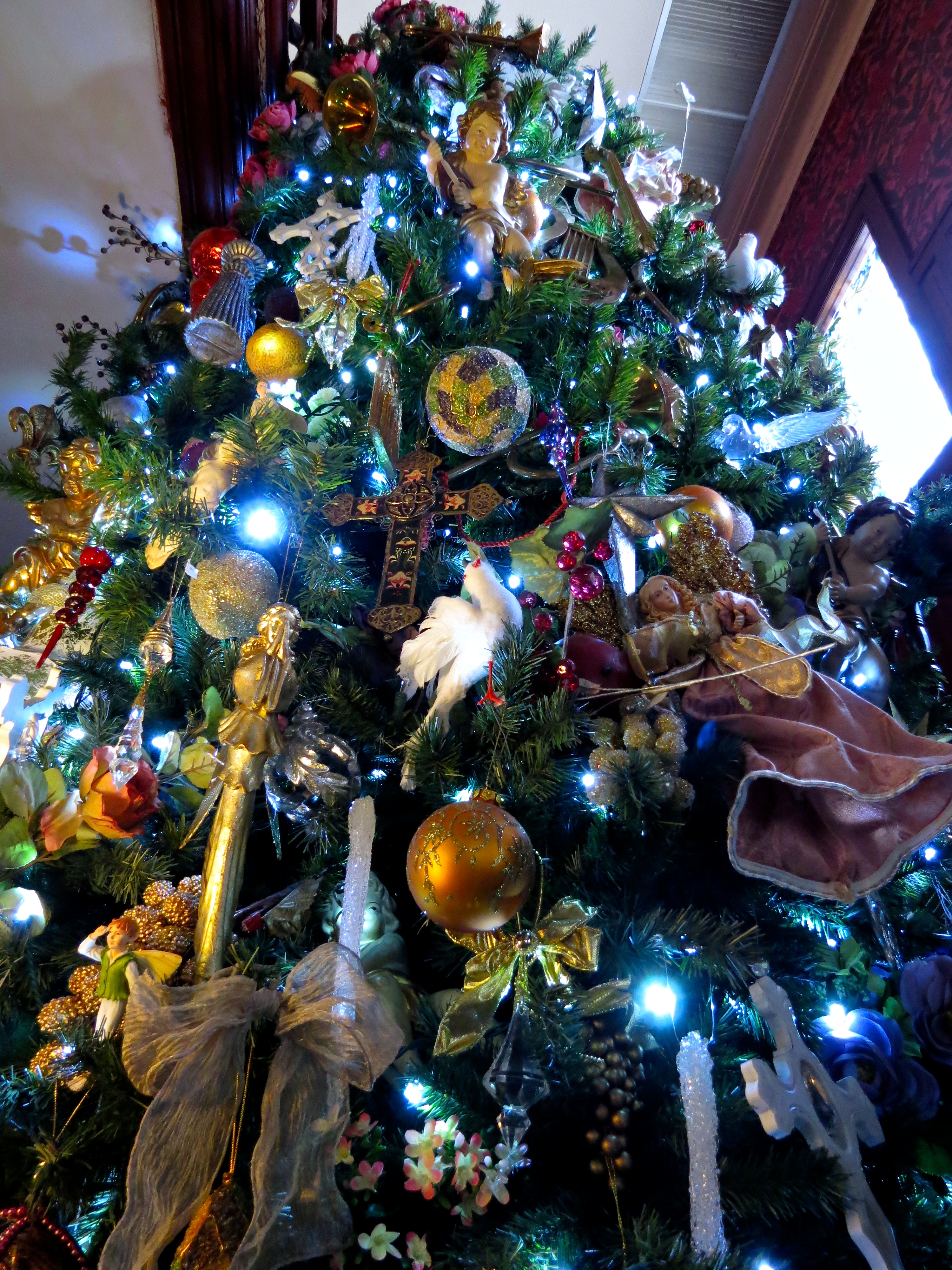
Try ‘stuffing’ the branches to fill gaps in large trees.
Large trees present a number of challenges including the spacing of the branches. Lower branches are frequently farther apart and if you don’t address them, can leave larger empty spaces that ornaments can’t always fill. A few years back, I adopted a method I call stuffing the tree to help solve that problem. This fills the void between branches and gives the tree a fuller look.
One of my favorite ways to stuff a tree is to use floral bunches or bouquets. The first step in decorating my tree is to stuff the voids with the bouquets, deeper in the tree. Spacing is still important. I try to fill the largest spaces first, while still spacing the bouquets throughout the tree for balance, which means also adding them where they may not be needed to fill a hole but are needs to give the tree a consistent look.
Another great inexpensive stuffing is netting or tulle. I cut or tear random-sized pieces and bunch them, stuffing the interior of the tree. It’s easy to use and manipulate between the branches, adding a soft effect to the overall look. This also might be a good solution for someone considering a flocked or specific colored tinsel tree. Tulle is available in a rainbow of colors and it’s not permanent so you could change the color of your tree every year, if you wanted– without breaking the bank.
I’ve also used pinecones, raffia and other everyday greenery to give a fuller, more natural effect.
NOTE: If your tree is especially thin, you may want to stuff your tree before you add the lights.
Though stuffing your tree may not add to your initial design or theme, it does play an important part in the final outcome. It can be subtle or dramatic, depending on what you use and how much of it.
Decorating Your Family Ornament or ‘Everything’ Tree

Family tree with only the ornaments creating the base. design element.
Since I decided to put up fewer trees this year, that leaves me with an abundance of ornaments to either use or put away.
I decided I wanted to use as many of my favorites as possible but still wanted to have a relatively designed look. Here was my solution.
This might help what many people will find they are facing when decorating the typical family Christmas tree.
- I gathered together some red and white ornaments, threw in a few silver ones and used them as my base colors. I inherited a collection of gold laser-cut ornaments (Danbury Mint) that I added next. I could have stopped right there and my tree was looking great. All the ornaments were spaced out with color, shape and style– balanced throughout the tree.
- Next I added all those favorite ornaments I love, again, paying attention to spacing. Always make sure that you don’t let one area get too heavy or unbalanced (too many, too grouped together.)
- I took a step back and made sure my tree still had a good balance of color, shape, etc. Moving a few ornaments, as necessary.
- I finished the tree, accessorizing it with berry floral picks as the finishing touch.

The finished family tree.
One of the main reasons I use a lot of floral picks in my trees is that it really helps to blend the overall tree. If you prefer a cleaner or more dramatic look, use picks sparingly or not at all.
Tree Garland or “Who Tied Up Your Tree?”
The use of garland on your tree can make or break your final designed look. Garland isn’t the easiest thing to use. I’ve seen too many trees that look like they were tied up and being held hostage as opposed to adding to the tree’s design element.
Christmas tree garland can take many forms. You rarely see the traditional popcorn and cranberry garland anymore– and personally, I’ve never had any luck stringing it together successfully. There are the metallic tinsel garlands (thick and thin), bead garlands, floral garlands, even grape vine and rafia can be used.
Do you drape the garland around the tree? In a spiral? Hang it Vertically? Do you swag it? All choices you can make depending on your skill and taste. Keep in mind that the way you hang the garland on your tree will also affect the quantity you will need.
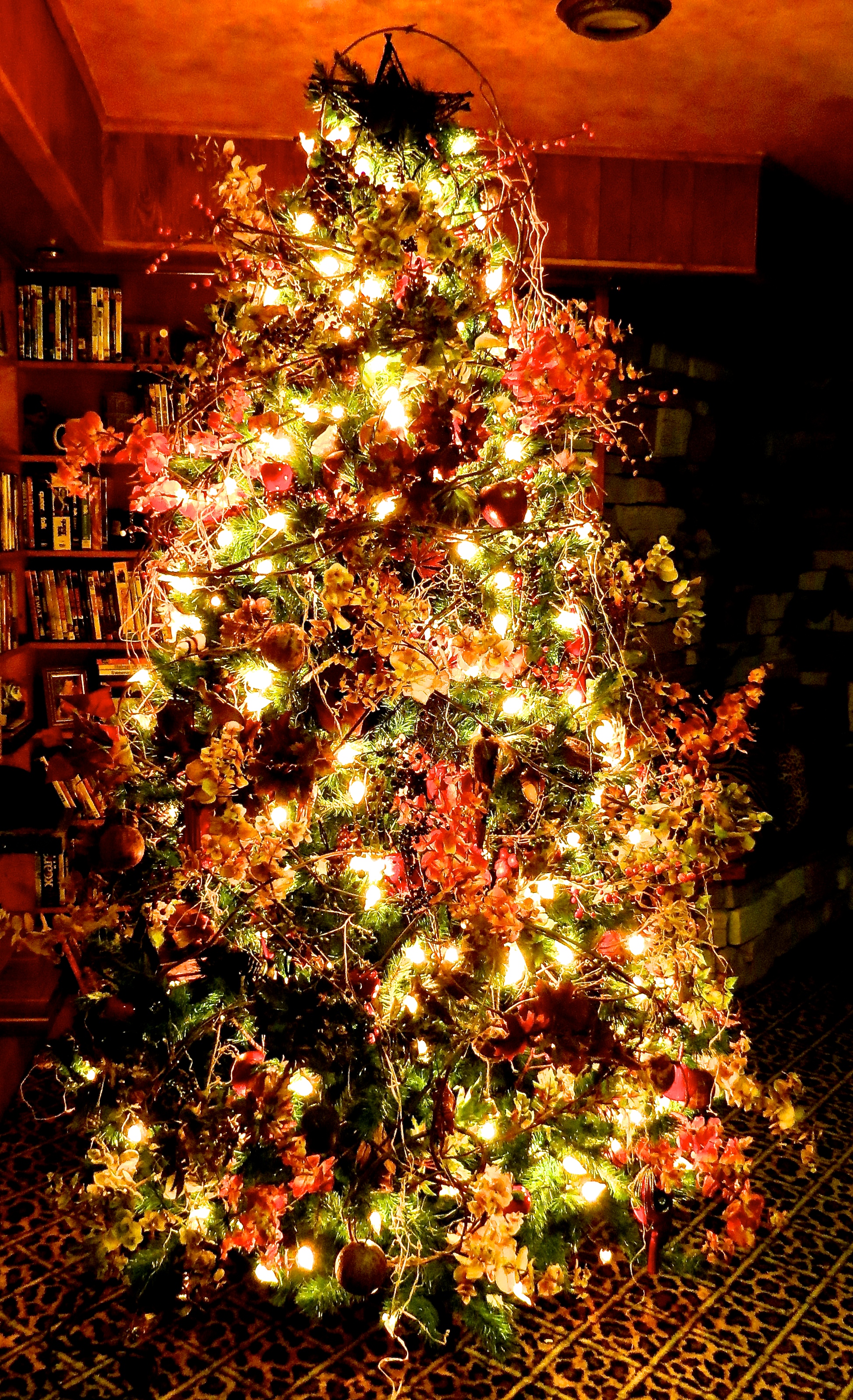
My 7 ft. ‘natural’ tree with grapevine garland.
You can add garland at any point in the decorating process but I prefer to add it first, if at all. When you wait until the end, moving and re-spacing the garland to get it just right can tangle with your ornaments and cause a big mess. You would also have to move a number of ornaments that would be hidden behind the garland. Adding it first allows you to adjust it until it’s just right, before hanging all your precious ornaments.
Christmas Trees and Pets (Children Too!)
You want to make sure you protect your loved ones, whether thay have two tiny feet or four furry paws.
- Cats climb trees! They also like to bat their paws at dangling ornaments. I’ve know more than one person that has come home to find a toppled tree due to a kitty-climber. Make sure your tree is weighted properly and keep an eye out for felines that show too much interest in your tree.
- Ornaments are not dog toys… or are they? My Boxers, even at ten years old, pull ornaments off my tree. I have to keep watch to make sure they leave them alone. It doesn’t matter whether they are round (like a tennis ball), plastic or stuffed (like a chew toy), or long (like a stick)– they all look like toys to them. Dogs being dogs, will chew and possibly swallow even glass ornaments so take precautions to avoid that emergency trip to the vet.
- The rules that apply to toys with small parts should apply to your Christmas decorations. Try to avoid sharp or small ornaments that might be swallowed. Keep the more fragile ornaments out of reach. By all means, supervise small children around your Christmas tree. As hard as you try, no tree is completely childproof, so be safe!
Finally, a word about our foyer tree. We had talked about eliminating many of our other trees and getting one tall tree that would climb through the stairwell from our foyer to the second floor. I decided to experiment this year and found I could combine tree sections from two of our 12 ft. trees and created a 20 ft. tree! The poles of the trees were the same size allowing them to be interchangeable. By bending and manipulating some of the branches, I was able to combine them pretty convincingly.
Best Tip of the Day: With a little thought and creativity– and a focus on color and balance– you can create your most beautiful Christmas tree ever!
Victorian Foyer Tree. I created this 20 ft tree from two 12 ft trees we already owned.

Next Up: Tabletop Centerpieces
Decking the Halls For The Holidays: Part Two- Selecting and Prepping Your Christmas Tree
Live or Artificial… Large or Small… I hope you’ll find some tips here to take a little stress and frustration out of prepping your Christmas tree this year. I highly recommend adults setting up and prepping the tree prior to having young ones participate in the actual decorating.
Choosing Your Tree
There are many things to consider when selecting a new Christmas tree that rely heavily on your own personal taste and the space where it will be displayed. Height , color, fullness and shape are all considerations… pre-lit or not? There are also safety issues to consider, and things you can look for to anticipate the longevity of your tree.
 Live or Artificial? For some a matter of taste, could be a cost or storage issue and for others a necessary tradition.
Live Trees- Benefits include: scent, natural and no storage concerns. I have friends that always insist on using a live Christmas tree. Part of their holiday tradition is going out and cutting their own. Very nostalgic. For those that don’t have that luxury, you are likely purchasing a tree that was cut and stored in a refrigerated truck back in August. No wonder there is often little scent and the needles barely make it past Christmas Eve! I’m not going to say a lot here, there is a lot of information online about things to consider and to watch out for when selecting a healthy, safe, live Christmas tree. Remember, the cost does not indicate the freshness!
Artificial Trees– The possibilities here are endless. Height, color, fullness, thick or thin… it’s out there if you look hard enough. Benefits include: Reusable, many are made from recycled materials, more cost effective over time and they are considered safer to display than live trees.
Best Tip of the Day: Strapped for Cash? Did you know there are lots of people giving away trees on Craigslist.com?
There are affordable options out there but artificial Christmas trees can be quite expensive. Remember no tree is perfect, live or artificial. Here are a few things to consider when purchasing a new artificial tree:
- Fullness and strength of branches. When buying a tree online it’s really difficult to check the quality and details. You want sturdy branches that have lots of tips for a full look.
- Check the tips for needle drops. Better quality trees tend to hold their needles because of how they are manufactured. Cup the tip (a finger of the branch) and run your hand back and forth on it. You should little or no needles fall off on a new, good quality tree. Overtime, of course, the needles will become more fragile. I have one tree that is 10 years old and it is so well made, the only way I can get any needles to fall off is to pluck them off.
- Pre-Lit or Not? Personally, I prefer a tree that is not pre-lit. Even though the lights are hidden in the branches and it makes it easier to prep the tree, the light will inevitably stop working. Finding that one missing bulb or short in the wire in nearly impossible. Removing the lights if they stop working can be difficult but you can always add strings of lights to the tree if they do stop working. NOTE: Pre-lit trees can be very, very heavy. Something to consider for moving and storage.
- Branches. Check to see if the branches are individual and have to be added one by one or if the branches are all hinged to the pole. A tree with individual branches can be stored easier if space is an issue. You have to be careful because the plastic fittings where the branches attach to the pole can crack if there is too much weight or force on the branch. The plastic also becomes more brittle over time causing breakage.
- Collapsible Pop Up Trees? They do exist! I’ve seen them in traditional evergreen styles and collapsible tinsel garland trees, that seem to be in most of the stores this year. These aren’t usually very full and most can’t hold many or even any ornaments. They are easy to set up and to store but I wouldn’t expect that these would last more than a year or two.
- As always, shop after Christmas to get your best bargains. Every tree I’ve used for the past 15 years was purchased after Christmas for 70-90% off!
Prepping Your Tree
Decorating your Christmas tree is the fun part. No one looks forward to setting up and prepping the tree, which for me, starts when I take it out of the box, through adding the lights.
Tree Stands. Whether you are using a live or artificial tree, it’s very important to have a good, strong tree stand that is the right size for your tree. It’s also probably a good idea to make sure your live tree stand can hold plenty of water. Most artificial trees come with stands appropriate for that tree. In rare cases, I’ve had to find a better stand so the tree would stand safely and securely in place. If you are reusing an old tree and have had tipping issues– you need a better stand.

Before
Fluffing the Branches. This obviously only applies to artificial trees. Once your tree is out of the box and assembled in its stand, you need to fluff out all the branches before you add any lights or ornaments. I highly recommend wearing a cheap pair of work gloves during this process to avoid scratches and skin irritation.
Start at the bottom of the tree and work your way around and then up, fanning the tips on every branch as you go so they aren’t laying flat and clumped together. This accomplishes two things:

After
1) It makes the tree appear to be much fuller; and 2) It will actually help stabilize and support the surrounding branches.
(If the tree still looks thin or sparse, I’ll cover what you can do to add fullness in the next blog post– and this works for both artificial and live trees.)
Now you are ready for the lights.
Lighting Your Tree.
Stringing your lights on the tree can be one of the most frustrating parts about decorating. I’ll talk about the different types available in a minute– but here are some things to consider when actually lighting the tree: If you prefer a more sparse or uniformly decorated tree, then you want to try have your lights evenly spaced without holes or dark spots in your tree. If you use a lot of decorations, you don’t have to be as concerned with this as some of the decorations are inevitably going to block some of the lights anyway.
I find to get the best coverage, you should move around the tree completely, all in one direction. Save a few strings of lights to fill any troublesome dark spots once this step is complete. I personally prefer to to move around the tree in circles, from the bottom moving up in a slow spiral (horizonally) instead of stringing the lights up and down (vertically) on the tree. I have tried winding lights around the branches to help hide the strings, only to find: a) it’s very time consuming; b) you need a lot more lights; and c) you still end up needing to run additional strings around the tree to fill the dark spots. After I run the lights completely around the tree, I’ll take my extra strings and move around the tree diagonally, to hit the dark spots and to try and avoid creating a noticeable light pattern.
 Light Types.
LED lights are the newest technology and also the most costly to purchase. The good news is that after a few years, the energy savings will outweigh the initial investment. If you are purchasing white, pay attention whether you are getting cool or warm white. There is a definite difference and you’ll want to avoid accidentally buying both. I’m in the process of switching over to LED lights completely. One of the best things about LED lights is that you can connect up to 40 strings together end to end, eliminating a lot of extra outlets and cords.
Mini lights make up the bulk of what most people currently use today. They can still have different covers or shapes but if you use different styles on the same tree. Make sure you spread out each type evenly or you will likely be disappointed with the result. Most mini lights can be connected end to end with a maximum of 3 strings without blowing fuses on the plugs. Mini lights are currently the most affordable and come in the largest variety of colors and styles.
C-Series lights should not be used indoors, period. These are the larger old fashioned bulbs. They are still available but designated for outdoor use only. They can get extremely hot and become a fire hazard, particularly on live trees. I will admit that I have used them on an artificial tree in the past… and they melted the needles on the branches that they were touching.
Multifunction Mini or LED lights. If you want twinkling lights, flashing or fading these are the ones you want. If you use these, you need to run them around your tree more random than uniform and overlap them to get the desired effect. One of the drawbacks is that they cannot be connected end to end and must each be plugged in separately.
White, Colored Lights or Both?.
Completely based on your individual taste, adding colored lights to your tree can create several things you’ll want to watch for. If you use all one color or use the multicolored strings, you should be fine. If you mix colored strings of lights, you need to make sure you evenly distribute the different colors evenly throughout the tree. If you don’t, you could end up with unwanted patches or blotches or color.
The other day I notice one store selling trendy pink, lime green and lavender lights (the wire was colored too.) If you decide to go with something trendy, keep in mind the cost, longevity of the trend and by all means, make sure you purchase enough to finish the job. Keep in mind that 6 strings may work this year but next year you may need 8 and they are no longer available. Then what? Back to the drawing board.
AND, make sure the lights you are purchasing are green wire and not white wire! You may need to look in the box to be sure. White wire strings of lights are very difficult, if not impossible to hide on a traditional green tree.
Now you’re finally ready to decorate!
After you have all your lights on the tree, you might want to take a moment to vacuum up any dropped needles so they don’t get tracked all over the house, especially if your family will be decorating the tree together.
One Last Thought– Say NO to Canned Snow!! The only situation where this might be a good idea would be a live tree. If you do, try and spray it outdoors or take careful precautions to protect furniture and walls if you must spray the tree indoors. Never spray canned snow on an artificial tree unless you plan on throwing it out after that use. And please, please, PLEASE… only spray a tree BEFORE you add lights or ornaments. The spray will ruin them for future use. If you want the snow effect on your tree, buy a flocked tree. They are some other options that I’ll share with you in the next installment.
If you have any questions or comments, please contact me! I’d be happy to help.
Next Up: Decorating Your Tree– To Stuff or Not to Stuff?
Decking The Halls For The Holidays: Part One- Getting Ready
I thought I’d share a series of posts on one of my favorite pastimes: Decorating for the Holidays. From trees to garlands to centerpieces– for some, decorating can be a daunting task. Whether you’re a novice or a pro, and whether you love or dread decorating, I hope you’ll find a few of my suggestions helpful as you begin adding a little magic to your home.
 Here we are, one week before Thanksgiving and if you haven’t already, its time to start thinking about decking the halls. I want to start with a few tips that might help spark some creativity before you either haul out the old decorations stored in the attic or hit the stores in search of the perfect holiday items.
Most important: Let your creative juices flow! Don’t be afraid to think outside the box. Express Yourself!
Best Tip of the Day: Use Ribbon and Picks & Stems* to hide imperfections and add the finishing touches to your holiday decor.
Five Things to Consider Before You Start:
1. Cost– It might be a good idea to have a budget of how much you want, or can afford to invest in your decorating. It’s very easy to spend more than you intend if you don’t nail down an amount as you start your planning.
Do a little research before you buy anything. What may seem like a simple idea could end up costing you a lot more than you anticipated. Ten ornaments are not going to decorate your whole tree and three strings of lights aren’t going to be bright enough. Be prepared to purchase more than you originally thought you’d need or have a backup plan if you run out.
You can save a lot of money on future decorating by shopping the after Christmas sales where you can usually save 70-90% off retail. In recent years, a lot of retailers are marking down decorations by 50% a week or two before the holidays just to clear the shelves.
Some stores have sales running now. If you wait until after Thanksgiving weekend, you are probably going to pay premium prices. AND– the longer you wait, the smaller the selection.
 For the Christmas Fanatic— Keep your eyes open year round for items that might be used seasonally. I’ve found lots of end-of-season clearance bargains where I can find large quantities of items for pennies on the dollar. I have a Victorian house so it’s easy for me to incorporate spring, wedding, and other specific floral bunches and floral picks & stems* into my holiday decorating. I also have at least one Christmas tree that I decorate with a natural or woodsy theme, making many fall clearance items a perfect addition.
2. Storage– Be realistic about how much space you have for storage. Many holiday decorations are fragile and require careful packaging and storage which takes up even more space. Christmas trees take up a lot of space. I know a lot of city apartment dwellers still prefer buying live over investing in an artificial tree because of limited storage space.
3. Time & Space– Decorating can be time consuming. It can also be very relaxing way to spend your free time if you aren’t in a rush. If this is your first year decorating or you are trying something new– allow for more time. I suggest taking the time to get organized and sort out what you have before you actually start decorating. I always find I’m missing a box or have less of something than I remembered. There’s nothing worse than getting deep into a project and discovering you don’t have enough to finish. When computing your time equation, don’t forget the time you’ll need to take it all down after the holidays are over and store it away.
You can do wonderful things in a smaller space if you put some thought into it. A small tabletop tree in a loft can be as equally effective as a 10 foot tree in a larger home. A few small additions to your space can do wonders to create that holiday atmosphere.
 4. Theme– Are you going to have an individual room theme or overall theme to your decorating? A color theme, perhaps? Themes are great but can be limiting, especially if you are on a tight budget. Keep in mind that trendy styles and colors might not satisfy you in future years. Consider what will work best with your year-round decor and lifestyle first.
When considering color, remember green ornaments don’t stand out on a green tree. Also, colored lights can be a challenge. I found years when simple red or green Christmas lights were impossible to find! Make sure you have enough before you start!
5. Purpose or Repurpose– As much as I love new decorations, I find it’s more fun to find new uses for old ones. There are elements of my decorating that stay the same from year to year and others that I always change, at least make alterations. I often use items in my holiday design that aren’t specifically intended for Christmas decorating.
Try to incorporate items you already have into your holiday look. The everyday items on your mantle or table don’t necessarily have to disappear until January. Unless you want something completely different, try adding a little garland, artificial poinsettias, a few ornaments… and you can achieve the same festive look.
Holiday decorations that may start to look tired and worn and don’t stand up well on their own, may still work perfectly as part of a larger grouping or display.
Keep in mind that effective Holiday Decorating does not necessarily mean you need to completely transform your space into something different. Try simple accessories and you may be able to achieve the same results. No matter how elaborate your decorating plan becomes, don’t let it become so overwhelming that you aren’t able to take the time to relax and enjoy the beautiful atmosphere you’ve worked so hard to create.
*Picks & Stems– Artificial flowers, berries, fruit and baubles used to accent floral arrangement.
Next Up: Selecting and Prepping Your Christmas Tree
Workplace Survival: 12 Rules To Protect Yourself
I finally broke down this morning and filed for unemployment. It’s been three months since I was notified that my contract would not be renewed and I had hoped I would have secured a new job by now. I have some good prospects but for now, the search goes on.
I promised in an earlier blog to talk a little bit about what led up to my release. I’ve waited until now because I didn’t want my words to be fueled by hurt or anger. I finally decided I would rather do it in a positive way and give some advice that might help others who find themselves in similar situations.
Here are my 12 suggestions that might help you survive in the workplace:
Rule #1 Don’t be too good at your job or know too much.
Rule #2 When a superior says, “Don’t Worry” — watch out.
Rule #3 Climbers don’t look down. They don’t have time for you.
Rule #4 Open Door policies can get one slammed in your face.
Rule #5 Keep records and be able to account for everything.
Rule #6 Never feel that your job is secure.
Rule #7 Change isn’t always good but don’t fight it.
Rule #8 Learn to deal with incompetence.
Rule #9 Don’t expect to be treated fairly. Even good people behave badly.
Rule #10 Right doesn’t always win.
Rule #11 Don’t expect rewards for loyalty.
Rule #12 Rules (and policies) are made to be broken (and will be).
Bonus– Rule #13 Work to live, don’t live to work.
Holding a job and being successful at it, isn’t about showing up on time and doing what is expected of you. It’s not about your education or knowledge and expertise. It’s not about your dedication or going the extra mile. Those are all givens. To be successful, you have to be constantly aware of two things: company politics and money. You have to keep your eyes open and your ears to the ground if you want stay aware of what’s really going on behind the scenes.
You, as an employee, are expendable. Simple as that. What makes you important is how you fit into the political and social climate of the workplace and what impact you have on the bottom line.
— I’ll address and explain this set of rules, my experiences and their importance in future blog posts.
Today I do want to explore my Bonus Rule– and I know you’ve heard it before:
RULE #13 WORK TO LIVE, DON’T LIVE TO WORK
It sounds simple enough and yet it is probably the hardest rule to follow. I have always struggled with this, even with jobs that weren’t necessarily in my main field of interest. It is too easy for many of us, to become so vested in our jobs that it’s hard to let it go when we punch out at the end of the day. Unless you own your own business– and even then, you have prioritize what is really important– living a good life and hopefully, sharing it with other people.
Why do we work? To pay bills, provide for families, plan for the future… to live.
Remember that the business doesn’t care about you. Unfortunately, in many cases, neither do employers. You may think they do– but if you step back and look at it clearly, you’ll realize you are there to perform a specific function. You are only one small ingredient in the recipe of success. Being responsible and taking ownership in your job is a wonderful thing. You have to learn to set limits. This is especially difficult when you are doing something you love. When work becomes the only thing, it’s probably time to move on.
I personally have lost years of friendships, family gathering and missed opportunities to experience and enjoy life– either from the necessities of the jobs I’ve held, or by my own drive. You can’t buy back that time.
You may find it necessary to put work first— but at what cost?
That is the most important question.
I Am the Captain of My Soul
 I was having a conversation with my parents today that bounced from life to travel and politics to education. We don’t talk on the phone often but when we do, we’re usually all over the map as we catch up and try to solve all the world’s problems. After I hung up (Do we still say that with cell phones?), this phrase popped in my head:
I am the master of my fate,
I am the captain of my soul.
My fourth grade teacher, Mr. Hill made my class learn the whole poem and recite it, day after day, in class until we all had it memorized and could repeat it by memory on our own. It was the first thing I can recall being asked to memorize and I spent hours at home reciting it from the tattered mimeographed page we’d been given.
Before I looked it up, besides the above phrase, all I could remember was something about a gate and the line, ‘black as the pit from pole to pole’. I’m not even sure I ever knew the title of the poem until now. I just remember Mr. Hill telling us we should live our lives by this. That, we were in charge of our lives and responsible for how we lived.
Mr. Hill was a big, strong African American man teaching elementary school in Florida in the 1970s. I’m sure that, in itself, had its challenges. His larger-than-life presence was enough to scare us at that age and he was the only male teacher I had until middle school. He was both nurturing and warm but he had the ability to scare the bejesus out of you with his intensity. He was also one of the best teachers I had in all my years of public schooling.
I remember he loved math. He taught us well — not to memorize numbers and equations but to understand how and why the equations worked. He made us all feel, no matter how much we struggled, that we could all learn. We were all individuals and our feelings and our experiences mattered. He never treated us like a bunch of bothersome kids he was stuck with for an entire year.
Mr. Hill taught us our subjects and he also related them to life. Which bring me back to the poem.
The poem is William Ernest Hensley’s Invictus. As it turns out, it is not only considered to be one of the best poems ever written by many, it is also considered highly controversial in some circles.
Invictus
Out of the night that covers me,
Black as the Pit from pole to pole,
I thank whatever gods may be
For my unconquerable soul.In the fell clutch of circumstance
I have not winced nor cried aloud.
Under the bludgeonings of chance
My head is bloody, but unbowed.Beyond this place of wrath and tears
Looms but the Horror of the shade,
And yet the menace of the years
Finds, and shall find, me unafraid.It matters not how strait the gate,
How charged with punishments the scroll.
I am the master of my fate:
I am the captain of my soul.— William Ernest Hensley
Choosing that poem for fourth graders, is pretty extraordinary by today’s standards. Even though I didn’t understand the whole poem then as I am able to do today, I did understand that last phrase. It has popped into my thoughts repeatedly throughout my life.
Today, we undervalue the importance of true learning in the classroom. Students aren’t taught how to think. We undervalue great teachers that go beyond the rigid curriculum to teach students morals and responsibility. Most of them are gone now.
Today we simply medicate unruly kids that need focus and guidance. We discourage the question why — or any original thought. Individuality is frowned upon. Just do it has replaced how and why we do it. We aren’t relating studies to real life. We definitely aren’t nurturing life-long learners.
That’s not education.
I guess I was lucky.
Latest Posts
-

The Magic of Macon, France
(NOTE: I will be adding more contentto this post in the very new future! I am reworking some of my blog– I apologize for the…
-

Day and Night in Lyon, France
5/26/17- Lyon is the third largest city in France but it doesn’t feel like a big city. It has a historic and classical feel while…
-

A Taste of Twin Cities: Tournon-sur-Rhône and Tain-l’Hermitage
5/25/17- Today we had the opportunity to explore the twin cities of Tournon-sur-Rhône and Tain-l’Hermitage in the heart of the Côtes du Rhône, wine-producing region…
-

Travel 2017: A Special Concert in Viviers: Day Twelve
We woke up this morning to another beautiful sunrise. This time, docked at Viviers in southern Ardèche, we had the beautiful Viviers Suspension Bridge in…
 How Do You Measure 525600 Minutes?